
How To
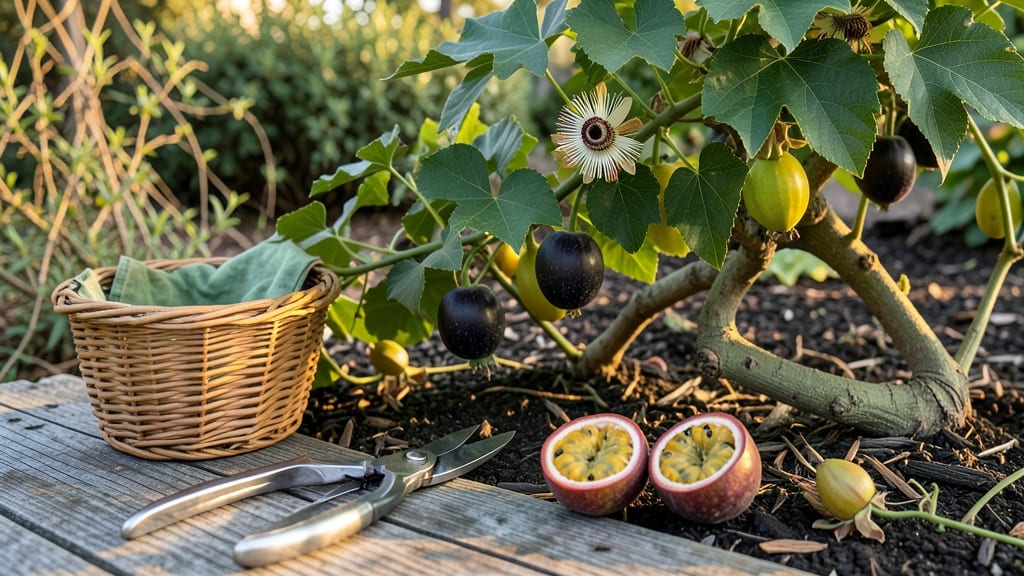
Passion fruit is ready to eat when its skin turns a deep, consistent yellow, orange, or purple and it yields slightly under gentle pressure 🍈 — but there’s more to it than just color.
Picking too early means a bland, seedy mess; too late, and it turns mushy. The key is knowing the five visual and tactile cues that never fail, whether you’re growing the sweet Maracujá or the tangy Banana Passionfruit.
In this guide, I’ll walk you through how to check for ripeness without cutting open the fruit, including the stem test that tells you exactly when to harvest.
You’ll also learn how seasonal timing affects flavor, plus how to store your harvest so it stays fresh for days.


5 Visual signs passion fruit is perfectly ripe (and when to avoid it)
Passion fruit vines produce stunning tropical fruit, but timing your harvest correctly is key to unlocking that explosive sweetness and vibrant flavor. Unlike many fruits, passion fruit doesn't ripen after picking—so knowing the exact visual cues means the difference between a delicious treat and a mealy disappointment.
I’ve learned the hard way that waiting too long or picking too soon ruins the experience, so here’s how to spot the perfect moment.
First, let’s clarify that passion fruit ripeness varies by variety. The most common types—yellow passionfruit and red passionfruit—have different color cues, but the principles of texture and scent apply to both.
Overripe fruit becomes mushy and loses its signature tart-sweet balance, while underripe fruit is hard, seedy, and flavorless. Mastering these visual checks ensures you’re always harvesting at peak ripeness.
🌱 5 Visual Signs Your Passion Fruit Is Perfectly Ripe
- 1. Color Shift: Fruit turns from solid green to deep yellow/orange/purple (depending on variety). Yellow passionfruit should be a bright golden hue, while red passionfruit develops a rich purple-red blush.
- 2. Slight Softness: Gently press the fruit—it should yield slightly (like a ripe peach), not feel rock-hard or mushy. Overripe fruit will dent easily and leak juice.
- 3. Stem Drying: The stem near the fruit’s base will shrink and dry out. A green, plump stem means it’s not ready; a brown, papery stem signals ripeness.
- 4. Easy Twist: The fruit should detach effortlessly with a gentle twist. If it resists, it’s not ripe enough. If it falls off at the slightest touch, it’s overripe.
- 5. Aroma: A sweet, floral scent near the stem (like tropical blossoms) means it’s ready. No smell? It’s not ripe yet.
💡 Pro Tip: Check fruit in the morning when temperatures are cooler—this reduces the risk of bruising and gives you the most accurate ripeness assessment.
One of the biggest mistakes I’ve seen (and made!) is judging passion fruit ripeness by color alone. A yellow passionfruit might look ripe but still be hard inside if the color change isn’t uniform.
Always combine color with the gentle pressure test—this two-step check eliminates guesswork. For red passionfruit, the purple-red hue should cover at least 70% of the fruit before considering it ready.
Seasonal timing also plays a role. In warmer climates like USDA Zones 10-12, passion fruit typically ripens between September and November, while in Zone 9b, you might see fruit as early as August if planted in spring.
If you’re in a cooler zone, consider growing passion fruit in containers and bringing them indoors during winter to extend the harvest window.
Overripe passion fruit is a heartbreak waiting to happen. It becomes mushy, develops a fermented smell (like overripe mango), and the flesh turns watery. The seeds also lose their crisp texture, making the fruit unpalatable.
To avoid this, harvest every 2-3 days once the fruit starts changing color. If you miss the window, store unripe fruit at room temperature—it won’t ripen further, but it’ll soften slightly over a week.
For yellow passionfruit, the golden hue should be vibrant and even. If you see green patches, the fruit needs more time. Meanwhile, red passionfruit often develops a marbled pattern of purple and green—wait until the purple dominates.
Both varieties should have a slightly waxy skin when ripe, not a shiny or dull appearance.
If you’re still unsure, cut one open as a test—this is the ultimate ripeness check. A perfectly ripe passion fruit will have bright yellow-orange pulp (for yellow varieties) or deep red pulp (for red varieties), with crisp, gelatinous seeds embedded in a juicy gel.
If the pulp looks pale or the seeds are mushy, the fruit wasn’t ready.
Remember, passion fruit doesn’t ripen after picking, so always harvest when it’s at its peak. Once you master these visual cues, you’ll never waste another underripe or overripe fruit again. Happy harvesting—your taste buds will thank you!
How to test passion fruit ripeness without cutting it open (pro gardener tricks)
Passion fruit ripeness can be tricky—especially when you don’t want to slice open every fruit to check. The good news? With a few pro gardener tricks, you can tell when passion fruit is ready to eat without damaging a single one.
Start by using your fingers and nose to assess ripeness accurately.
First, focus on the fruit’s color. While green means unripe, the perfect passion fruit will show its mature hue—whether that’s deep yellow, orange, or purple, depending on the variety. But color alone isn’t enough; you’ll need to combine it with texture and scent for the best results.
⚠️ callout warning ⚠️
A passion fruit that’s too soft or smells fermented is overripe. The ideal fruit should yield slightly when pressed—not mushy. If the stem near the fruit feels dry and papery, that’s another green light for harvest.
Next, perform the gentle squeeze test. Grip the passion fruit firmly but gently—it should feel slightly soft, almost like a ripe avocado. If it’s rock-hard, it’s not ready yet. Meanwhile, if it feels mushy or squishy, it’s past its prime and may spoil quickly.
Don’t overlook the stem check. A ripe passion fruit will have a stem that’s dry and slightly shriveled at the base. If the stem is still green and plump, the fruit needs more time on the vine.
This trick works especially well for yellow passion fruit, which can be harder to judge by color alone.
Finally, trust your nose. A ripe passion fruit releases a sweet, tropical aroma—almost like a mix of citrus and honey. If it smells sour or alcoholic, it’s overripe. Sniffing is a quick way to confirm ripeness without any tools or damage.
With these tactile and scent-based tricks, you’ll never guess wrong again. Now you’re ready to harvest perfectly ripe passion fruit every time—no cutting required! 🌱