Why I started Fruit Harvest
I was twenty-four, knee-deep in a raised bed of heirloom tomatoes, when I realized I had no idea how to save the ones that were cracking under the weight of their own fruit.
My dad had always just plucked them off and tossed them in the compost, but I wanted to do better. That afternoon, I spent three hours researching, testing, and finally figuring out that the issue wasn’t the soil—it was the water.
Too much at once, and the vines couldn’t handle it. I wrote it all down in a notebook, scribbled over my own mistakes, and swore I’d share it with someone who needed it.
This site is for anyone who’s ever stared at a wilting plant and wondered what went wrong, or who’s dreamed of filling their kitchen with food they grew themselves.
No fluff, no vague advice—just the lessons I’ve learned, the failures I’ve fixed, and the small triumphs that make gardening worth the dirt under your nails. Whether you’re a beginner with a windowsill herb garden or a veteran with a half-acre plot, there’s something here to help you grow.
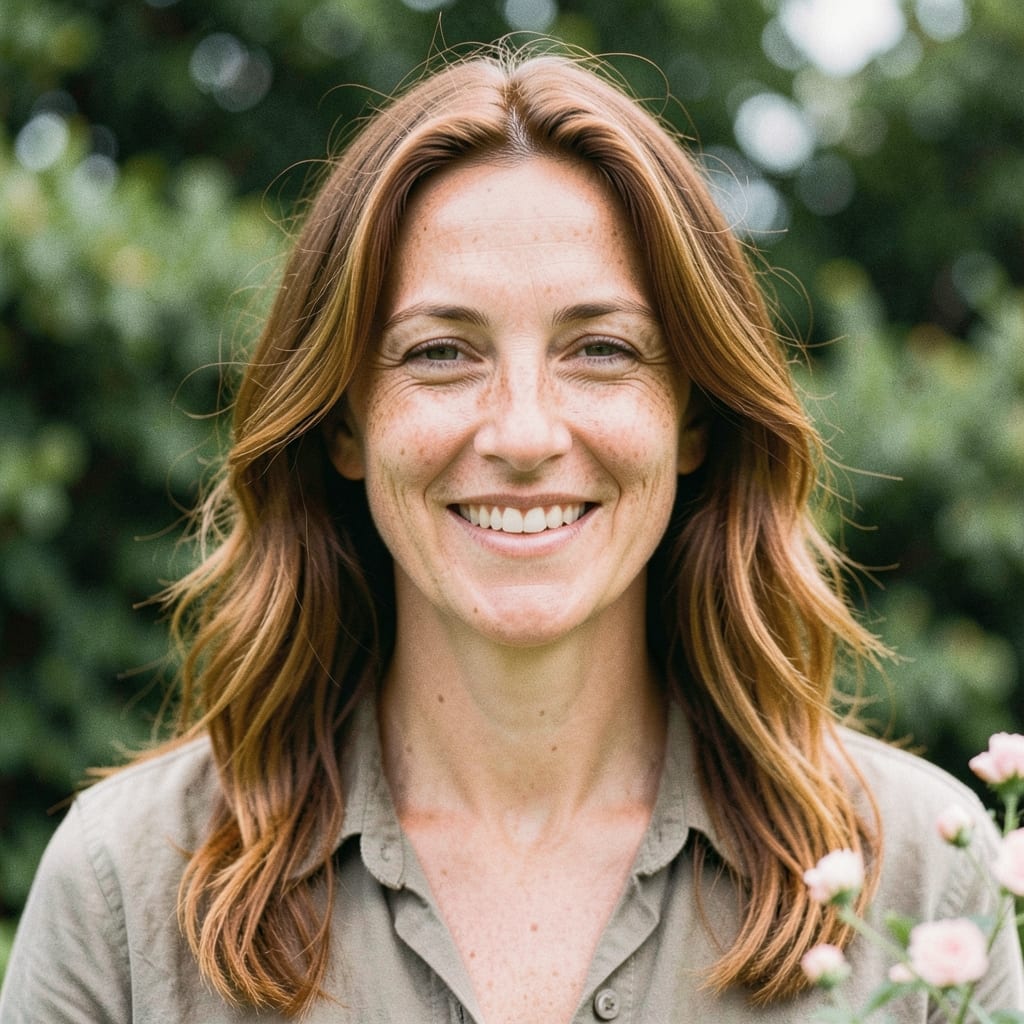
Meet the founder
My dad’s old pruning shears still sit on the hook in my garage, their blades nicked from years of snipping back blackberry canes. He taught me to cut just above a leaf node, always at a 45-degree angle, and never to yank—‘You’ll tear the bark,’ he’d say.
I ignored that last rule once, on a particularly stubborn rosebush, and spent the next week watching it bleed sap. That’s when I learned: gardening isn’t just about what you plant; it’s about how you listen to what’s already there.
The first time I grew something from seed, it was a sunflower in a cracked terracotta pot on my grandmother’s porch. I planted it too deep, and the stem curled like a question mark before it even hit the light.
She laughed and said, ‘Now you know why we start them in trays.’ That was the day I filled a shoebox with seed-starting mix and a cheap heat mat. The sunflowers that came up were crooked, but they grew. And that’s the magic: even the mistakes teach you something.
I still talk to plants. Not out loud—well, maybe sometimes out loud—but I’ll pause mid-watering to check the leaves, run my thumb over the soil to see if it’s dry enough, and mutter under my breath when a slug gets to the lettuce first. My neighbor thinks I’m eccentric.
I think it’s just good manners. Plants respond to attention, even if it’s just you showing up every morning to ask, ‘How are you today?’
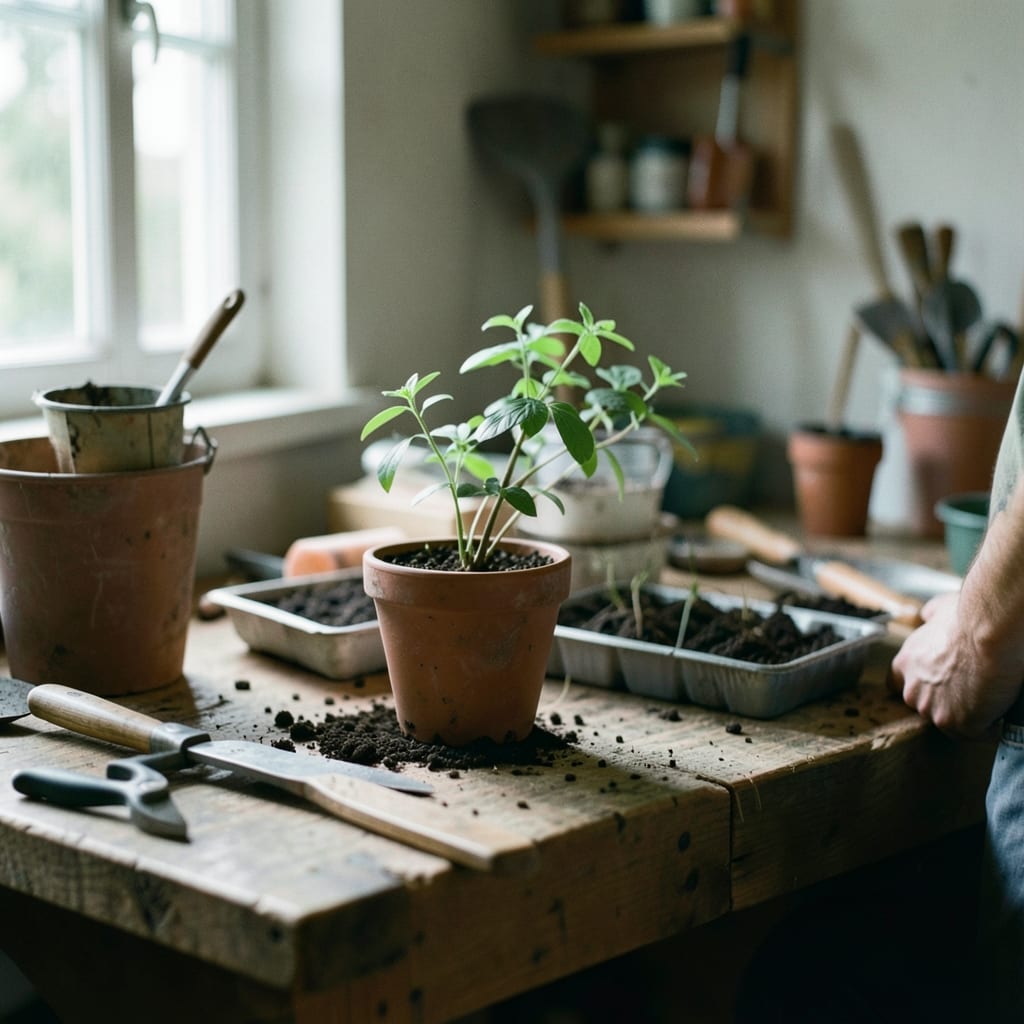
My workspace is a folding table in the corner of the garage, half buried under potting soil, a trowel leaning against a stack of seed packets, and a notebook full of half-finished sketches of trellises I’ll never build.
The light is terrible, but the windows face east, so the morning sun hits the herbs I keep in pots by the door. I write best when the air smells like damp earth and crushed mint. If the page isn’t making sense, I step outside and check the tomatoes.
Meet the mascot

It started as a doodle on a napkin during a lunch break at the farmer’s market. I was sketching the way my dad’s tomato plants used to sprawl—vines reaching in every direction, leaves cupping the first green fruits like secret-keepers.
The first scribble looked like a confused octopus, all tendrils and no structure. My friend (and occasional gardening partner) Maria pointed out that it needed a face, so I added two dots for eyes and a lopsided smile. ‘Now it’s judgmental,’ she said. ‘Perfect.’
The next version was on graph paper, where I tried to give it a body: a stout stem, a pair of broad, slightly wilted leaves, and—because I couldn’t resist—a single strawberry clinging to the vine like it was too heavy to hold.
The strawberry was the first thing to go. ‘It’s a tomato plant,’ Maria reminded me. ‘Not a dessert.’ So I swapped it for a tiny, unripe fruit, still fuzzy with its calyx. The leaves got crisper, the smile more knowing, like it had seen one too many gardens fail.
By the time it became the mascot, it had to fit on a browser tab without looking like a blurry thumbprint. So the leaves became three simple lines, the vine a single curved stem, and the face reduced to a dot for an eye and a dash for a mouth.
I named it *Vine*—not because it’s clever, but because it’s what it is. No grand backstory, no hidden meaning. Just a plant stretching toward the sun, exactly as it should.
What I promise you
This site exists to cut through the guesswork. If I tell you to water your basil every other day, it’s because I’ve seen what happens when you skip it—and it’s not pretty.
If I warn you against planting marigolds too close to tomatoes, it’s because I’ve done it, and the tomatoes still turned out fine, but the marigolds gave up after two weeks. You won’t find vague advice here. You’ll find what actually works, where it works, and why.
What you can hold me to
- Every planting tip includes the zone it’s tested in—if I say ‘direct-sow in May,’ it’s for Zone 6. Adjust for yours.
- Pests and diseases are named exactly, with what killed them (not just ‘spray something’).
- Harvest times are real: not ‘when it’s ready,’ but ‘60–70 days after transplanting, give or take a week.’
- If a method fails (and some will), I’ll tell you how I fixed it—or why I gave up.
How I create a growing guide
A guide starts with a season—specifically, the one I’m in. If it’s April, I’m not writing about winter squash; I’m watching the soil temperature rise, testing the drainage in my raised beds, and deciding which seeds to start indoors.
The first draft is always a list: what to plant, when to plant it, and what to avoid until the frost is gone.
But the real work happens when I notice something’s off—a patch of soil that stays soggy, a seedling that’s leggy before it even hits the light—and I have to stop and ask why.
The first step: reading the soil
Before you plant anything, you dig—literally. Not a shallow scratch, but deep enough to feel the texture: is it crumbly like cake mix, or does it clump like wet clay? I press a handful into my palm and squeeze.
If it holds its shape, it’s too wet; if it falls apart, it’s dry. The goal is somewhere in between, where a loose ball will break when you tap it gently. If the soil smells like rot, you’ve got too much organic matter—compost in layers, not all at once.
If it smells like nothing, you need to feed it.
Watch the water. Pour a cup into a hole, then wait. If it disappears in seconds, your soil drinks like a thirsty dog—add mulch to slow it down. If it pools, your soil is already full—dig in some coarse sand or bark chips to help it drain.
And if the water leaves rings around the hole? That’s salt buildup, and it’s going to kill your plants before they even sprout. Flush it with fresh water until the rings fade. These aren’t optional steps; they’re the difference between a garden that thrives and one that just… survives.
The fix: adjusting the mix
If the soil is too heavy, you’re amending it with perlite or vermiculite—half a cup per square foot, worked in with a fork until it looks like chocolate cake batter. Too sandy? Add peat moss or coconut coir, but not too much: you’re not making mud, you’re making a home.
And if the pH is off (test kits are cheap, and this matters), lime raises it, sulfur lowers it, and neither should be guessed at. I once turned my blueberry bushes into a science experiment by eyeballing the lime, and it took three years to fix.
The fix isn’t just about the dirt. It’s about the timing, too. If your seedlings are stretching toward the light like they’re auditioning for a ballet, you’re not giving them enough. Move them closer to the window, or—if you’re using grow lights—raise them so the leaves almost touch the bulb.
And if the air feels damp? That’s your cue to open a window. Fungal diseases don’t care about your schedule; they’ll take root in the humidity of a closed room. These are the small things that make the difference between a garden and a wish list.
How a page gets onto this site
A page starts with a notebook scribbled in the shade of the trellis, where the ink smears if I’m not careful. I’ll jot down the soil temp, the time of day I noticed the first yellow leaf, and what I did to fix it—even if it was just guessing.
By the time I type it up, some of it’s wrong. Maybe the soil was actually fine, and the problem was the slugs. Maybe the fix worked, but only because it rained the next day. I cut those parts out.
What stays is the lesson: not the perfect outcome, but the path that got me there.
The second draft is where I ask: *Would this help someone else?* If I’m explaining how to prune a tomato plant, I include a diagram—even if it’s just a stick figure with arrows.
If I’m warning about a pest, I describe what it looks like, because ‘tiny green bugs’ isn’t helpful when you’re trying to save your zucchini. And if a page sits for months without an update? That’s my cue to go back outside and check.
Sometimes the answer isn’t in the notebook; it’s in the dirt.
Write to me
I love hearing about the plants that outsmarted you, the ones that grew where you swore they wouldn’t, and the pests that made you laugh instead of cry. Send me photos of your weirdest harvests, your most stubborn weeds, or the time you accidentally grew something you didn’t plant.
And if you’ve got a tip that saved your garden, tell me about it—I’ll test it and add it to the site if it works. The contact page is where to send it all.
Thanks for growing with me.
—Camille
The guides are grouped by category: Advice, Aphids, Blooming, Companion Plants, Container Gardens and Fertilization.