
Plants
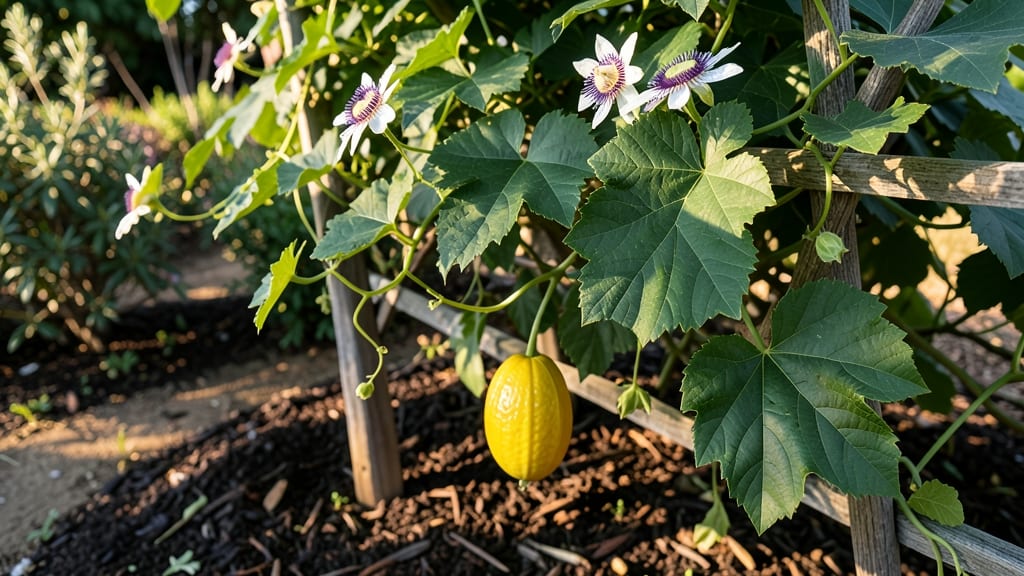
Growing yellow passion fruit delivers tropical sunshine to your garden with sweet-tart fruit that outshines its purple cousin. 🌿 I learned the hard way that these vines need full sun and warm soil to thrive—skimp on either, and you’ll get bitter fruit or no fruit at all.
The key is mimicking their native Brazilian habitat in your backyard. Start with healthy vines (or seeds if you’re patient) in well-draining soil, and stake them early—they’ll climb 15-20 feet if left unchecked. Prune aggressively in late winter to shape the plant and encourage heavy fruiting.
With proper care, you’ll harvest golden, grapefruit-sized fruits in just 12-18 months, and the vines keep producing for years.
📚 In This Guide
- What you need
- Instructions
- Tips and common mistakes
- Wrapping up and next steps
What you need
- ● Yellow passion fruit vines (Passiflora edulis flavicarpa) – 2-3 healthy plants (choose disease-resistant varieties if possible).
- ● Well-draining potting mix – 5-10 gallons per plant (or garden soil amended with compost).
- ● Support structure – A trellis, fence, or sturdy pergola (vines can grow 15-20 feet!).
- ● Organic fertilizer – Balanced 10-10-10 or citrus-specific fertilizer (follow package instructions).
- ● Mulch – Straw or wood chips (2-3 inches) to retain moisture and suppress weeds.
- ● Drip irrigation or hose – Passion fruit loves consistent moisture but hates soggy roots.
- ● Pruning shears – For trimming vines and shaping growth.
- ● Gloves – Passion fruit vines have tiny hooks that can be prickly!
- ● pH test kit – Ideal soil pH: 6.0–7.0 (adjust with lime or sulfur if needed).
- ○ Optional: Copper tape (to deter borers) or neem oil (natural pest control).
Step-by-Step instructions for growing yellow passion fruit vines
Here's my foolproof method for establishing healthy yellow passion fruit vines that thrive in warm climates.
🌱 Step 1: Choose the Right Location and Prepare the Soil
Yellow passion fruit vines need full sun exposure (6+ hours daily) and well-draining soil with a pH between 6.0 and 7.5. I always test my soil first—passion fruit roots hate soggy conditions, and poor drainage leads to root rot. If your soil is heavy clay, amend it with 3-4 inches of compost mixed into the top 12 inches of soil.
Dig a hole twice as wide as the root ball but only slightly deeper. The key here is creating loose soil around the roots—passion fruit vines spread aggressively, so give them room to establish without competition. I like to add a handful of balanced organic fertilizer (10-10-10) to the bottom of the hole to give the plant an immediate nutrient boost.
☀️ Step 2: Plant and Train the Vine for Optimal Growth
Place the vine in the hole, ensuring the graft union (the bump where the vine meets the rootstock) sits 1-2 inches above soil level. This prevents soil from smothering the graft and causing the vine to produce suckers. Backfill with native soil, tamping gently to eliminate air pockets, then water deeply to settle everything.
Passion fruit vines are vigorous climbers, so install a sturdy trellis or fence within 2-3 feet of the planting hole. I use a 6-foot tall wire trellis with horizontal supports every 18 inches to guide the main stem upward. Train the primary vine along the trellis, securing it with soft plant ties every 12 inches—this prevents wind damage and encourages upward growth.
💧 Step 3: Water and Fertilize for Strong Early Growth
Water the vine deeply 2-3 times per week for the first month, keeping the soil consistently moist but never waterlogged. Passion fruit vines are drought-tolerant once established, but young plants need consistent moisture to develop strong roots. You’ll know you’re doing it right when the soil feels damp 2-3 inches down but doesn’t puddle at the surface.
Start fertilizing 4-6 weeks after planting with a low-nitrogen, high-phosphorus fertilizer (5-10-10) to encourage flowering. I apply fertilizer every 6-8 weeks during the growing season, always watering thoroughly after application to prevent root burn. Avoid high-nitrogen fertilizers—they promote leafy growth at the expense of fruit production.
✂️ Step 4: Prune and Maintain for Maximum Fruit Production
Prune the vine in late winter or early spring before new growth begins. Remove any dead, diseased, or crossing branches, then cut back the previous year’s growth by one-third to encourage bushier, more productive growth. This is also the time to trim any suckers growing below the graft union—these will drain energy from the main vine and reduce fruit quality.
As the vine matures, focus on managing side shoots. Allow only 2-3 strong lateral branches to develop from the main stem, pruning others back to 2-3 leaves. This directs the plant’s energy into fruit production rather than excessive foliage. You’ll see the difference in fruit size and yield within a season—larger, sweeter passion fruits are the reward for disciplined pruning.
🍈 Step 5: Harvest and Encourage Year-Round Production
Yellow passion fruit typically ripens 90-120 days after flowering, but the exact timing depends on your climate. Harvest when the fruit turns a vibrant yellow and feels slightly soft when gently squeezed. Twist gently to avoid damaging the vine—if the fruit resists, it’s not ready yet. I harvest in the morning when temperatures are cooler, as the fruit is firmer and less prone to bruising.
To extend the harvest season, prune lightly after the first flush of fruit and fertilize again with a low-nitrogen fertilizer (2-4-4) to encourage a second flowering. Passion fruit vines can produce fruit year-round in warm climates, but they need consistent care to keep up production. Mulch around the base with 2-3 inches of organic mulch to retain moisture and regulate soil temperature—this keeps the roots happy and the vine productive.
Tips & tricks for thriving yellow passion fruit vines
Real talk: Growing yellow passion fruit isn't just about planting and waiting—it's about creating the perfect conditions for this sun-loving perennial to flourish. Here's what I've learned from years of growing these sweet-tart beauties.
Soil Science Matters: The 6.0-7.5 pH range and well-draining soil in Step 1 aren't just suggestions—they're non-negotiable. I've seen passion fruit vines fail spectacularly in heavy clay because roots suffocate. If you're unsure about your soil's pH, grab a testing kit from your local garden center. The 3-4 inches of compost mixed into the top 12 inches of soil creates the perfect loose environment for aggressive root spread. Think of it as creating a fluffy nest for those hungry roots to establish themselves.
Trellis Technique: That 6-foot tall wire trellis with horizontal supports every 18 inches isn't just for show—it's the secret to managing this vine's vigorous growth. I've seen vines reach 20 feet in a single season if left unchecked! Train the main vine along the trellis using soft plant ties every 12 inches to prevent wind damage. This vertical growth pattern also improves airflow around the plant, reducing disease risk. Pro tip: Use ties that can be easily adjusted as the vine grows—they'll need loosening every few weeks.
Watering Wisdom: Those 2-3 times per week waterings in the first month are critical, but timing matters just as much. Water deeply in the morning to give the soil time to dry slightly before evening. Wet foliage at night invites fungal problems. After the first month, you can reduce to once a week during dry spells, but always check that soil is damp 2-3 inches down. Overwatering is just as damaging as underwatering—passion fruit roots need oxygen too!
Pruning Payoff: The one-third reduction of previous year's growth in Step 4 might seem drastic, but trust me on this. This aggressive pruning stimulates bushier growth and more fruit production. I've seen vines that weren't pruned properly produce only a handful of small fruits, while properly pruned vines yield dozens of large, sweet passion fruits. When managing side shoots, remember: 2-3 strong branches are all you need. The rest are just stealing energy from your fruit production.
Pro Tips for Yellow Passion Fruit
- Real talk: Growing yellow passion fruit isn't just about planting and waiting—it's about creating the perfect conditions for this sun-loving perennial to flourish.
- Soil Science Matters: The 6.0-7.5 pH range and well-draining soil in Step 1 aren't just suggestions—they're non-negotiable.
- Trellis Technique: That 6-foot tall wire trellis with horizontal supports every 18 inches isn't just for show—it's the secret to managing this vine's vigorous growth.
Frequently asked questions
Got questions about growing or using yellow passion fruit?
Here are answers to the most common ones—from planting to harvest and beyond!
How long does it take for yellow passion fruit to bear fruit?
Patience is key! With ideal conditions (full sun, well-draining soil, and warm climates), yellow passion fruit vines may take 12–18 months to produce their first fruit. Once established, they can yield year-round in tropical/subtropical zones (zones 9–11). In cooler areas, expect a shorter harvest season.
Can I grow yellow passion fruit in containers?
Yellow passion fruit thrives in 5–10 gallon containers with drainage holes. Use a lightweight potting mix and place the pot in full sun. Just ensure the container is large enough to support the vine’s sprawling growth (up to 20 feet!). Move pots indoors or to a greenhouse in frost-prone areas.
Why aren’t my passion fruit vines flowering or fruiting?
Common culprits include lack of pollinators (hand-pollinate with a brush if bees are scarce), temperature stress (they need warmth—below 50°F halts growth), or nutrient deficiencies. Try fertilizing with a balanced 10-10-10 mix in spring and summer. Pro tip: Prune leggy vines to encourage bushier growth!
What’s the best way to use yellow passion fruit?
This dual-purpose fruit shines in both sweet and savory dishes! Juice it for cocktails, smoothies, or desserts (like passion fruit cheesecake), or use the peel in marinades for meats (try it with grilled chicken!). The seeds add a fun crunch to granola or yogurt. Bonus: Freeze pulp for later use!
Can yellow passion fruit survive frost?
Nope! Yellow passion fruit is a tender perennial and dies back in frost. In cold climates, grow it as an annual or overwinter potted vines indoors near a sunny window. If frost hits, cover young plants with frost cloth, but expect damage if temps drop below 25°F.
Are there alternatives to yellow passion fruit?
If you love the flavor but want variety, try purple passion fruit (more tart), kiwi (similar texture), or tamarind (for a tangy twist). For a sweeter option, carambola (starfruit) pairs well in recipes. Each brings unique flavors—experiment!
Wrapping up and next steps
Growing yellow passion fruit is a rewarding journey that brings vibrant color, tropical charm, and delicious fruit to your garden—even in cooler climates! 🌱 With the right soil, sunlight, and care, you’ll enjoy a year-round harvest of sweet-tart goodness.
Whether you’re a beginner or a seasoned gardener, this sun-loving perennial is perfect for adding flavor and beauty to your space.
Ready to take the next step? Start with a single vine, experiment with pollination, and watch your garden transform. Share your progress or harvest with fellow gardeners—you’ve got this! 🌟