
Plants
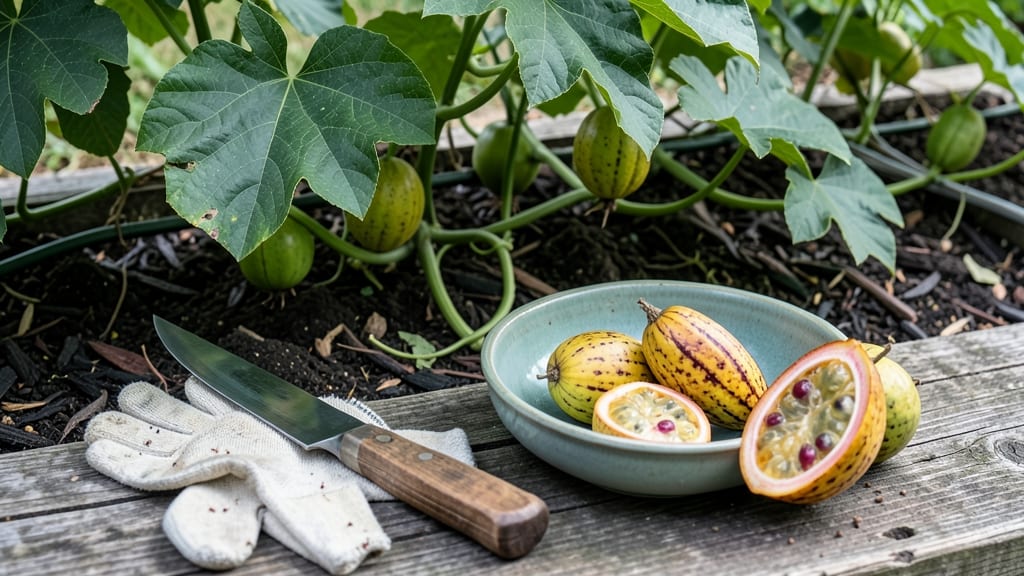
A ripe passion fruit looks like an oval or round fruit with thick, wrinkled skin that turns deep purple or golden-yellow depending on the type. It measures about 2 to 4 inches long and feels slightly soft when squeezed, with a darkened stem end showing full maturity.
A ripe passion fruit's appearance changes dramatically between varieties. 🌿 Purple-skinned types like Maracujá develop a rich, velvety texture with subtle ridges, while yellow Granadilla varieties often have smoother skin that glows brighter as they ripen.
The weight difference is noticeable too—ripe fruits feel heavier for their size due to the pulp inside. I always check the stem first: a deep brown or blackened base means it's ready to harvest, while green or pale stems indicate it needs more time.
What's fascinating is how these visual cues align with taste.
The wrinkled skin isn't just for show—it protects the juicy, vibrant pulp inside that bursts with flavor when ripe. 💫 For gardeners, knowing these signs helps time harvests perfectly, whether you're growing them for fresh eating or making passion fruit juice.
The fruit continues ripening off the vine for about 3-5 days after picking, so don't worry if you harvest slightly early.
💡 In This Article
- Passion Fruit Ripeness Indicators by Variety
- How to Harvest Passion Fruit at Peak Ripeness
Passion fruit ripeness indicators by variety
The most obvious visual clue for ripeness lies in the skin's color and texture. Purple passion fruits, like the popular Maracujá, develop a deep, almost bruise-like hue with pronounced wrinkles that resemble elephant skin.
These wrinkles aren't random—they form as the fruit's outer layer thickens to protect the delicate pulp inside. Yellow varieties, such as Granadilla, take on a sunny, golden glow with smoother skin that feels slightly waxy when ripe.
The color difference comes from varying levels of carotenoids (in yellow) versus anthocyanins (in purple) pigments.
Weight plays a surprising role in determining ripeness. A fully ripe passion fruit should feel noticeably heavy for its size, almost like holding a small melon.
This occurs because the pulp inside becomes more hydrated as it matures, increasing the fruit's overall density. 💫 The stem end provides another key indicator: it darkens to deep brown or black as the fruit ripens, while green or pale stems mean it needs more time.
Interestingly, the stem's color change happens first in purple varieties, while yellow types may show stem darkening slightly later in the ripening process.
Texture differences between varieties extend beyond just visual appeal. Purple passion fruits develop a velvety surface with fine ridges that become more pronounced as they ripen, while yellow varieties maintain a smoother texture that feels almost leathery.
When you gently press the skin, a ripe fruit should yield slightly under finger pressure—like pressing a ripe avocado—without feeling mushy. This firmness indicates the pulp is fully developed but still intact.
The skin's thickness also varies: purple varieties typically have slightly thicker skin (about 1/8-inch) compared to yellow types (1/16-inch), which makes the purple ones more durable during transport.
What most people overlook is how the fruit's aroma changes with ripeness. A ripe passion fruit emits a sweet, tropical scent that's almost floral, while unripe fruits smell more like green vegetation.
This aroma comes from increased volatile organic compounds released as the fruit matures. 🌿 The scent becomes strongest near the stem end, which is where the fruit's natural sugars concentrate during ripening.
For gardeners, this means you can often identify ripe passion fruits just by smell before even checking the color or texture.
Size provides one final clue, though it's less reliable than other indicators. Most ripe passion fruits measure between 2 to 4 inches in length, but some varieties like the giant Granadilla can reach 6 inches when fully mature.
The key is consistency: if a fruit is significantly larger than its siblings on the vine, it's likely overripe. Conversely, fruits that remain small and hard are underripe. The weight-to-size ratio becomes your best friend here—always pick the heavier fruit when choosing between similarly sized options.