
Trees
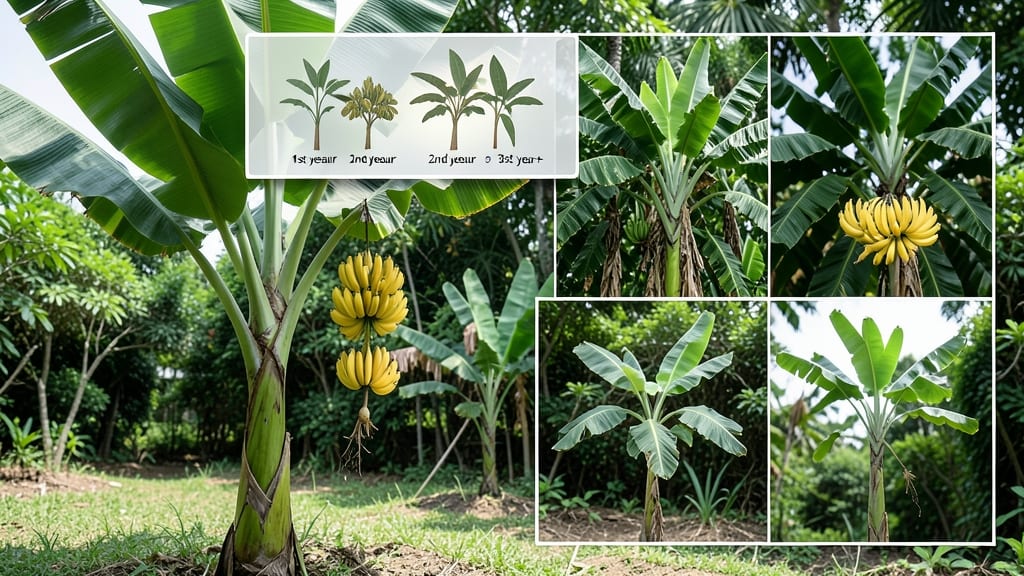
Banana trees produce fruit just once before dying—or regrowing—depending on the variety, and understanding this cycle is the secret to a reliable harvest 🍌.
If you’ve ever wondered why your banana tree isn’t bearing fruit—or when you can finally expect those sweet, creamy clusters—you’re not alone. Most homegrown varieties, like the classic Cavendish, fruit only once in their lifetime, though some tropical types can regrow and produce again.
This cycle depends on factors like climate, care, and even the type of banana tree you’re growing. Dessert varieties, for example, often take 9-12 months from planting to harvest, while plantains can be ready faster.
The key? Proper fertilization, watering, and sunlight to keep your tree healthy and ready to flower.
Below, I’ll break down the timeline for fruiting, how to spot a tree ready to produce, and what you can do to encourage a bountiful harvest—even if your first try didn’t pan out.
Banana tree fruiting cycle: how often do they produce fruit?
Most banana trees produce fruit just once in their lifetime before the pseudostem dies after harvesting. This is true for the popular Cavendish variety and many others grown commercially. The tree’s energy focuses entirely on developing a single flower spike and fruit bunch, leaving little reserve for regrowth.
Commercial growers rely on this cycle by planting multiple suckers (offsets) around the mother plant. Each sucker can grow into a new tree capable of fruiting in about 12-18 months. This strategy ensures a continuous harvest rather than relying on one tree for years.
Here’s how the fruiting cycle works for home gardeners:
| Stage | Duration | Key Features | Homegrower Tip |
|---|---|---|---|
| Planting | 0-6 months | Sucker grows into mature pseudostem (trunk) | Choose healthy, disease-free suckers |
| Vegetative Growth | 6-12 months | Leaves expand; no flowers yet | Fertilize with high-potassium mix |
| Flower Spike | 1-2 weeks | Long purple flower appears from leaf sheath | Protect from strong winds |
| Fruiting | 3-6 months | Bananas develop; pseudostem weakens | Harvest before full ripeness |
| Death | 0-3 months post-harvest | Pseudostem collapses; no regrowth | Save suckers for next cycle |
The flower spike emerges from the center of the pseudostem (the "trunk" made of leaf sheaths). This spike grows rapidly, reaching up to 10 feet long in just days.
Each flower on the spike develops into a hand of bananas, and the entire process from flowering to harvest takes about 3-6 months, depending on the variety.
Some rare varieties, like the Red Dacca or Ice Cream banana, can produce a second bunch if the first is removed early. However, this is not typical for most commercial or homegrown Musa acuminata varieties.
The energy required to produce fruit is so intense that the tree often dies back afterward.
Commercial farms maximize yields by planting hundreds of suckers simultaneously. Each new tree produces just one bunch, but the coordinated planting ensures a year-round supply. Home gardeners can mimic this by planting 2-3 suckers at a time, spacing them out to stagger harvests over months.
If you’re growing bananas in cooler climates (USDA zones 9b-11), the cycle may slow down. Cold stress can delay flowering or reduce fruit quality. Protect your tree with mulch and winter wraps to encourage a healthier cycle next season.
One common misconception is that banana trees are perennial like fruit trees. While the roots may persist, the pseudostem itself is a one-time structure. The real "tree" is the underground corm, which sends up new shoots (suckers) for future harvests.
Saving and replanting these suckers is how you keep your banana patch productive year after year.
For faster fruiting, focus on these three factors: sunlight (6+ hours daily), water (deep, consistent moisture), and fertilizer (balanced NPK with extra potassium). Skipping any of these can delay the flowering stage by months.
Once your tree flowers, count on a 3-6 month wait before harvest, depending on the variety.
🍌
When to expect your first banana harvest: timeline by variety
Banana trees are famously patient, and their fruiting timeline depends heavily on the variety you’re growing. While some varieties like Cavendish may take 9-12 months to produce fruit, others like Lady Finger can bear fruit in as little as 6-9 months.
The key is recognizing the signs of maturity and understanding how climate and care accelerate—or delay—this process.
Most banana trees produce fruit just once per pseudostem (the tree’s trunk-like structure), but with proper care, you can encourage regrowth for multiple harvests. Tropical climates with warm temperatures year-round speed up fruiting, while cooler zones may require container growing or seasonal adjustments to trigger flowering.
Here’s what you need to know about recognizing when your banana tree is ready to flower and fruit, along with variety-specific timelines:
- Month 3-6: Your banana tree should reach 6-10 feet tall with broad leaves. This is when it starts developing its flower bud (a purple or red spike emerging from the center).
- Month 6-9: The flower spike unfurls into a bract (a large, colorful sheath). This is your first sign of an impending fruit bunch! Water and fertilize consistently to support growth.
- Month 9-12: The fruit bunch forms and begins to swell. Bananas will start as small, hard hands (clusters) and gradually enlarge. This stage takes 2-3 months to reach harvest readiness.
- Month 12+: Harvest when bananas are plump, firm, and slightly underripe (yellow with a green tip). After harvesting, the pseudostem will yellow and die back, but new shoots will emerge from the base for future harvests.
If your banana tree isn’t flowering by 12 months, check for common issues like nutrient deficiencies (especially potassium), poor drainage, or inconsistent watering. Some varieties, like Red Dacca, are more sensitive to temperature fluctuations and may need protection from cold drafts or frost.
For faster fruiting, ensure your tree gets 6+ hours of sunlight daily and well-draining, slightly acidic soil (pH 5.5-6.5). A balanced fertilizer with high potassium (like 8-3-9) applied every 6-8 weeks during growing season can also encourage earlier flowering.
Once you spot that first flower spike, count backward: it takes about 3 months for bananas to mature to harvest size. With patience and the right care, you’ll soon be enjoying homegrown bananas straight from your garden! 🍌