
Pruning
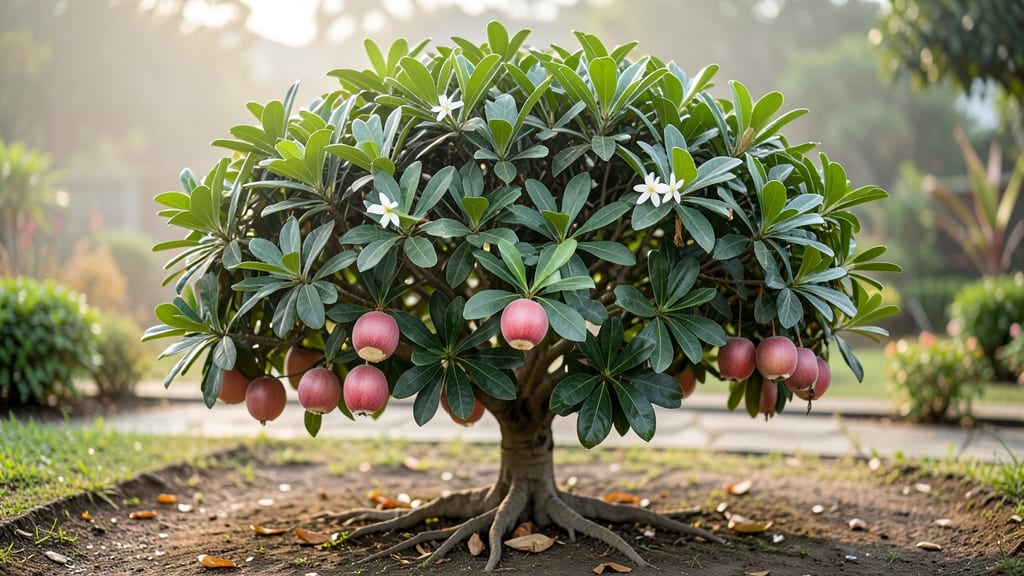
Your icecream fruit tree (Annona squamosa) could be bearing sweet, custard-like fruit in just 12-18 months—if you prune it right. 🌿 I learned the hard way that skipping pruning means dense foliage, fewer fruits, and a tree that looks like a tangled mess.
The key is year-round shaping to keep sunlight reaching the center and air flowing through the branches.
This tropical beauty thrives in zones 10-12, but with a little care, you can grow it in containers and bring it indoors during winter. It loves morning sun and well-draining soil—think sandy loam mixed with compost.
Water deeply but let the top inch dry between sessions, and watch those glossy leaves tell you when it's thirsty. Pruning isn’t just about shaping; it’s about encouraging strong growth and fruit production.
Start with light pruning in early spring to remove dead or crossing branches, then do maintenance trims every 4-6 weeks to keep the canopy open. The goal? A tree that looks like a sunlit umbrella, not a tangled jungle.
By summer, you’ll see new shoots forming where you’ve pruned—proof it’s working. The payoff? A tree that’s productive, healthy, and easy to manage, even in small spaces.
For colder climates, move potted trees indoors before 40°F nights—they’ll drop leaves but bounce back in spring. And here’s the secret: Prune lightly in winter to encourage fresh growth when you bring it back outside. The result? A tree that keeps giving, season after season.
📚 In This Guide
- What you need
- Instructions
- Tips and common mistakes
- Wrapping up and next steps
What you need
- ● Icecream fruit tree sapling – Choose a healthy, disease-free 1-2 year old tree (bare-root or potted).
- ● Well-draining soil mix – Combine 60% topsoil, 20% compost, and 20% coarse sand or perlite for optimal drainage.
- ● Organic fertilizer – A balanced 10-10-10 NPK or citrus-specific fertilizer (e.g., Citrus-Tone).
- ● Mulch – 3-4 inches of wood chips or straw to retain moisture and regulate soil temperature.
- ● Drip irrigation system or hose – For consistent watering (especially in dry climates).
- ● Pruning shears – Bypass pruners (8-10 inches) for clean cuts on small branches.
- ● Loppers – 12-16 inch for thicker branches (2+ inches in diameter).
- ○ Pruning saw – For large branches (optional but helpful for mature trees).
- ● Disinfectant (70% isopropyl alcohol or bleach solution) – To sterilize tools between cuts and prevent disease.
- ● Garden gloves – Thick, cut-resistant to protect your hands.
- ○ Tree wound sealant (optional) – Pruning paste or beeswax to seal large cuts (controversial but useful in humid climates).
- ● USDA Zones 9-11 (or equivalent subtropical/tropical zones). Note: Young trees may need winter protection in cooler zones.
- ● Full sun to partial shade – At least 6+ hours of direct sunlight daily for optimal fruiting.
- ○ Windbreak (optional but recommended) – Young trees benefit from protection from strong winds.
Step-by-step guide to pruning your icecream fruit tree
Here's how I keep my tree producing sweet, creamy fruit year after year with strategic cuts.
✂️ Step 1: Assess and Plan Your Pruning Season
Icecream fruit trees respond best to three pruning sessions—late winter (just before buds swell), summer (after harvest), and light maintenance in fall. Start by examining the canopy for dead, crossing, or overcrowded branches. Use a sharp pruning saw for thick branches over ½ inch and bypass pruners for smaller cuts.
Mark branches to remove with white chalk or tape—this prevents accidental cuts. Focus first on suckers (vigorous shoots at the base) and water sprouts (vertical shoots growing from the trunk or limbs). These compete with fruit production and weaken the tree's structure. I like to sketch a rough map of the tree's shape before making any cuts, which helps visualize the final form.
🌿 Step 2: Perform Late Winter Pruning for Structure
In late winter, when the tree is still dormant, make 25-30% of your total annual pruning cuts. Start by removing dead, diseased, or damaged wood—these branches won’t produce fruit and can harbor pests. Cut back to the collateral bud (a side bud just below the branch collar) to encourage outward growth.
Next, thin the canopy by selectively pruning branches that cross or rub against each other. These create wounds that invite fungal infections. Aim for an open-center shape—this allows sunlight to penetrate the inner branches, which is critical for fruit development. Stop cutting when you can see light filtering through the center of the tree. Avoid heavy pruning now; you want to preserve as many fruit buds as possible.
☀️ Step 3: Summer Pruning for Airflow and Fruit Quality
After the main harvest, perform light summer pruning to improve airflow and reduce disease risk. Remove any shoots growing straight up (water sprouts) and suckers that emerged since winter. These compete with the tree for nutrients and often produce little to no fruit. Cut these back to a leaf bud or lateral branch.
Look for branches with poor fruit set—these may be too shaded or structurally weak. Thin these out to redirect the tree’s energy to more productive limbs. If you notice fruit clusters on the ends of branches, prune back slightly to encourage more lateral branching, which increases next year’s yield. Water the tree deeply after pruning to help it recover and reduce stress.
⏰ Step 4: Light Fall Maintenance for Winter Readiness
In early fall, perform a light maintenance pruning to prepare the tree for winter. Remove any dead or diseased branches that appeared over the summer. Prune back overly vigorous shoots that grew since summer, cutting to a healthy bud or lateral branch. Avoid heavy pruning now—you want the tree to harden off before cold weather.
Focus on shaping the outer canopy to maintain an open structure. This prevents snow or ice buildup in winter, which can break branches. Apply a thin layer of mulch (2-3 inches) around the base to insulate roots, but keep it 6 inches away from the trunk to prevent rot. This step ensures the tree enters dormancy strong and emerges healthier in spring.
🌱 Step 5: Post-Pruning Care for Recovery
After each pruning session, sanitize your tools with rubbing alcohol to prevent spreading disease. Apply a balanced fertilizer (10-10-10) in early spring to replenish nutrients lost during pruning. Monitor the tree for new growth—healthy shoots should emerge within 2-4 weeks of winter pruning.
If you notice yellowing leaves or stunted growth, it could signal over-pruning or nutrient deficiency. Adjust future cuts to be lighter and supplement with organic compost or fruit-tree-specific fertilizer. Keep an eye out for pests or fungal signs (like powdery mildew) and treat early with neem oil or copper fungicide if needed. Patience is key—your tree will reward you with a bountiful harvest in just a season or two.
Tips & tricks for pruning your icecream fruit tree
These strategic insights will help you maintain a thriving, fruit-bearing Icecream Fruit Tree with minimal stress and maximum yield.
Seasonal Timing: The three-pruning schedule in late winter, summer, and fall is non-negotiable for this tree. Late winter cuts (25-30% of total) should happen when buds are still dormant but swelling—this is when the tree is most resilient. Summer pruning right after harvest prevents disease buildup from summer rains, while fall maintenance prepares the tree for winter dormancy. I mark these dates on my calendar to avoid missing windows, especially since Icecream Fruit Trees have a shorter dormant period than many fruit varieties.
Visual Pruning Cues: In Step 2, when aiming for an open-center shape, look for these visual cues: branches that cross should be removed first, followed by those growing inward toward the center. The goal is to see light through the canopy when you stand directly beneath it. For branches over ½ inch thick, make clean cuts just outside the branch collar (that swollen area where the branch meets the trunk) to prevent damage to the tree's healing tissues. I use a small mirror to check hard-to-see angles—it's worth the investment for precision.
Post-Pruning Recovery: After each session, especially the heavy winter pruning, monitor for new growth within 2-4 weeks. If you don't see fresh shoots emerging, you may have pruned too aggressively. The 10-10-10 balanced fertilizer application in early spring is crucial—it replenishes nutrients lost during pruning and supports the tree's recovery. I also recommend applying a thin layer of compost around the drip line (not the trunk) after pruning to provide additional nutrients without overwhelming the tree.
Equipment Essentials: Your pruning saw and bypass pruners should be as sharp as your focus. Dull tools cause unnecessary damage to branches, making them more susceptible to disease. I keep a small file in my tool kit to sharpen blades between sessions. For branches thicker than ½ inch, a pruning saw with a curved blade works best—it reduces the risk of tearing bark. Always sanitize tools with rubbing alcohol between cuts, especially when dealing with diseased branches, to prevent cross-contamination.
Pro Tips for Icecream Fruit Tree
- These strategic insights will help you maintain a thriving, fruit-bearing Icecream Fruit Tree with minimal stress and maximum yield.
- Seasonal Timing: The three-pruning schedule in late winter, summer, and fall is non-negotiable for this tree.
- Visual Pruning Cues: In Step 2, when aiming for an open-center shape, look for these visual cues: branches that cross should be removed first, followed by those growing inward toward the center.
Frequently asked questions
Got questions about growing and maintaining your icecream fruit tree? You’re not alone! Here are some of the most common queries—plus quick, actionable answers to keep your tree thriving year-round.
How often should I prune my icecream fruit tree for optimal fruit production?
Prune your icecream fruit tree twice a year: once in late winter or early spring (before new growth) to shape the canopy and remove dead wood, and again in summer (after fruiting) to encourage air circulation and future blooms. Light trimming between harvests can also prevent overcrowding. Pro tip: Avoid heavy pruning during flowering to protect potential fruit.
When is the best time to harvest icecream fruit?
Harvest when the fruit is fully colored but still slightly firm—typically late summer to early fall, depending on your climate. Overripe fruit softens quickly, so pick regularly (every 3–5 days) to avoid dropping. For best flavor, harvest in the morning when sugars are highest. Fun fact: The name "icecream fruit" comes from its creamy texture when ripe!
Can I grow an icecream fruit tree in a pot? What size container do I need?
Yes! Icecream fruit trees thrive in pots if given enough space. Use a 15–20 gallon container with drainage holes and a mix of well-draining soil (like cactus/succulent blend). Place in full sun (6+ hours daily) and repot every 2–3 years to prevent root bind. Warning: Potted trees may produce smaller yields than in-ground plants.
What pests or diseases should I watch for, and how do I treat them?
Common issues include:
- Scale insects: Wipe off with soapy water or use neem oil.
- Powdery mildew: Prune for airflow; spray with baking soda solution (1 tsp per quart of water).
- Root rot: Ensure pots drain well and avoid overwatering.
What’s a good alternative if I can’t grow an icecream fruit tree?
If your climate isn’t ideal, try these low-maintenance, fruit-bearing trees:
- Loquat: Cold-hardy, evergreen, and produces sweet fruit.
- Fig: Thrives in heat, drought-tolerant, and fast-growing.
- Dwarf citrus (like calamondin): Compact, great for containers.
Wrapping up and next steps
Growing an icecream fruit tree with a lush, fruit-laden canopy is totally within reach—especially when you master the art of year-round pruning! 🌿 By keeping your tree healthy, open, and well-lit, you’ll enjoy bountiful harvests and stunning blooms for seasons to come.
Start small, stay consistent, and don’t forget to celebrate those first sweet rewards!
Ready to take the next step? Grab your pruners and schedule your first pruning session—whether it’s shaping the canopy or removing dead branches. Your icecream fruit tree will thank you with juicy, vibrant fruit and a thriving, picturesque presence in your garden! 🌟