
How To
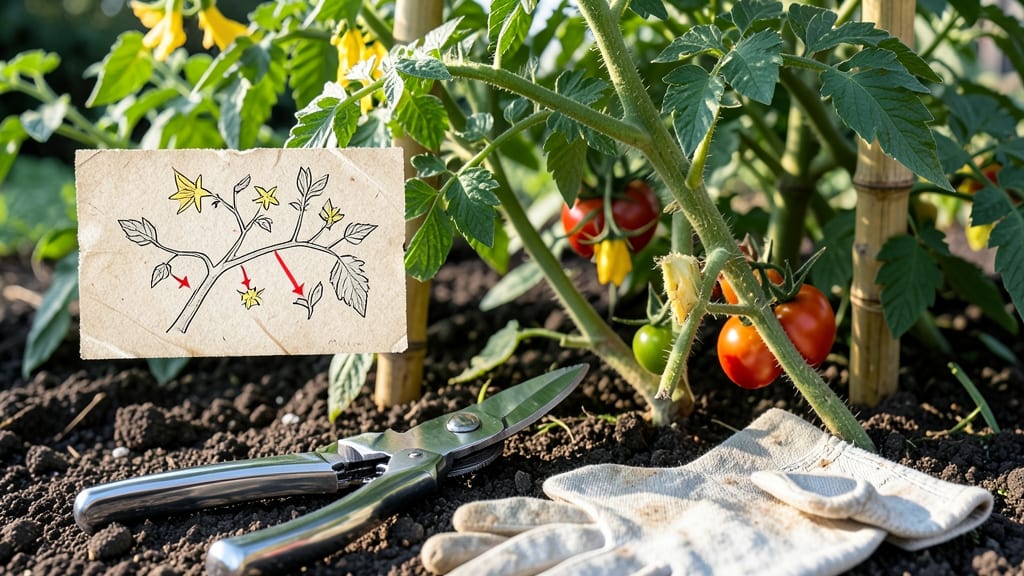
Pruning tomato plants for more fruit isn't about cutting back—it's about redirecting energy to where it matters most. 🌱 I used to think pruning meant hacking away at my plants, but the right cuts actually boost yields by 20-30% while keeping plants healthy and productive.
The secret lies in removing the right growth at the right time, which sounds tricky but becomes second nature after just a few harvests.
Start by identifying suckers—those little shoots that grow between the main stem and branches—and pinch them off early in the season. Use clean pruners or even your fingers for this job, and always work on cloudy mornings or early evenings to avoid stressing the plant.
For indeterminate varieties, focus on keeping the main stem strong and removing lower leaves to improve airflow, while determinate types need minimal pruning. The key is balance: too much pruning stunts growth, but the right cuts send energy straight to the fruit.
📚 In This Guide
- What you need
- Instructions
- Tips and common mistakes
- Wrapping up and next steps
What you need
- ● Pruning shears or sharp bypass pruners – Choose sterilized, sharp tools (avoid dull blades to prevent tearing). A 5-7 inch pair with a 1/4-inch cutting capacity works best.
- ○ Gloves (optional but recommended) – Wear gardening gloves to protect hands from thorns, dirt, and sap. Nitrile or leather gloves are ideal.
- ● Disinfectant (rubbing alcohol or bleach solution) – Clean tools with 70% isopropyl alcohol or a 1:9 bleach-to-water mix before and after pruning to prevent disease spread.
- ● Garden twine or plant ties – Use 3-5 feet of twine (1/8-inch wide) or soft plant ties to support stems after pruning.
- ● Stake or trellis system – Install 5-6 foot bamboo stakes or a tomato cage (6+ feet tall) to provide structural support for indeterminate varieties.
- ● Watering can or hose with a gentle spray nozzle – Keep plants hydrated, especially after pruning. Use lukewarm water to avoid shocking the plant.
- ● Compost or mulch – 2-3 inches of organic mulch (straw, wood chips, or grass clippings) to retain moisture and suppress weeds.
- ● Hand pruners (for smaller cuts) – Great for delicate trimming in tight spaces.
- ○ Plant growth regulator (optional) – Products like seaweed extract can help stimulate root and fruit growth post-pruning.
- ● Garden journal or markers – Label stakes or use a waterproof marker to track pruning dates and plant progress.
- ● Sunscreen and a hat – Because pruning sessions can get long in the garden! ☀️
Instructions for pruning tomato plants to maximize fruit production
Here’s the method I’ve used for years to turn lanky tomato plants into heavy-fruiting powerhouses.
✂️ Step 1: Remove Suckers When They’re Small
Suckers are the little shoots that grow in the crotch between the main stem and a branch. Pinch them off when they’re no bigger than your pinky nail—this prevents them from draining energy from your fruit. I do this every 7-10 days during the growing season, usually in the morning when the plant is turgid and easier to handle.
Use clean pruning shears or your fingers to avoid tearing the stem. If you wait until suckers grow larger, you’ll create unnecessary wounds that invite disease. Focus on the first few suckers near the base first—they compete most aggressively with your main fruit clusters.
🌱 Step 2: Prune Lower Leaves for Airflow
Once your plant reaches 18-24 inches tall, start removing the bottom 6-12 inches of leaves. This improves airflow and reduces humidity near the soil, cutting down on fungal diseases like blight. I like to do this in stages—remove a few leaves at a time over 2-3 weeks so the plant adjusts without shock.
Leave a few leaves near the top to keep photosynthesis going strong. You’ll know you’ve done it right when the plant’s lower stem looks clean and the foliage above is lush and green. This step is especially critical if your garden gets humid or rainy summers.
☀️ Step 3: Limit Vertical Growth to 4-5 Main Stems
Determinate tomatoes naturally stop growing, but indeterminate varieties keep climbing indefinitely. For maximum fruit, stop pruning upward growth when you have 4-5 main stems. This ensures energy goes to fruit production rather than endless vines. I tie the main stem to a sturdy stake or trellis to support the weight.
Watch for lateral branches that form above your target height—these will produce flowers but often drop off before ripening. If you see a branch growing above your 5th main stem, pinch it off immediately. This is where many gardeners go wrong—they let the plant grow too tall and end up with fewer, smaller tomatoes.
⏰ Step 4: Thin Fruit Clusters for Larger Tomatoes
When your plant has 3-4 flowers per cluster, leave only the strongest-looking flower and pinch off the rest. This might seem counterintuitive, but it forces the plant to put all its energy into growing fewer, larger tomatoes. I do this every 10-14 days as new clusters form.
Look for flowers with the deepest color and sturdiest stems—these are your winners. You’ll see the difference in just a few weeks: instead of dozens of tiny tomatoes, you’ll end up with a handful of beefsteak-sized beauties. This step works best when combined with consistent watering and balanced fertilizer.
🌿 Step 5: Prune Damaged or Diseased Foliage Immediately
Yellow leaves, brown spots, or wilting branches need to go—no exceptions. Use sterilized pruners to cut back to healthy tissue, and remove the debris from your garden immediately. I dip my pruners in rubbing alcohol between cuts to prevent spreading disease. This is your last line of defense against blight and other fungal infections.
If you see signs of disease, prune aggressively but don’t panic. Tomatoes are resilient, and removing infected leaves often saves the rest of the plant. The goal is to keep your plant’s energy focused on producing fruit rather than fighting off pathogens. You’ll know you’re on the right track when your plant looks vigorous and the remaining leaves are a deep, healthy green.
Tips & tricks for pruning tomato plants to maximize fruit production
Here's what nobody tells you about pruning—these are the tricks that turn good tomato yields into spectacular ones.
Timing Secret: The 7-10 day sucker removal schedule in Step 1 works best when you do it in the morning. Plants are fully hydrated then, making the stems easier to pinch without tearing. I've found that waiting until afternoon can make the stems more brittle, increasing the risk of creating wounds that invite disease. Also, always prune on dry days—wet leaves or stems can harbor bacteria and spread it through your cuts.
Pruning Technique: When removing suckers in Step 1, don't just pinch them off—make a clean break just above a leaf node. This ensures the plant can heal properly and prevents those little shoots from growing back. For larger suckers, use clean pruning shears to make a sharp cut at a 45-degree angle. I keep a small bottle of rubbing alcohol with me to wipe down my shears between cuts, which helps prevent cross-contamination of any potential diseases.
Visual Cues for Step 2: In Step 2, when you're pruning lower leaves for airflow, look for these signs you're doing it right: the plant's lower stem should look clean and the remaining foliage should be concentrated in the upper third. You'll notice the plant's growth habit changes—it starts focusing energy upward rather than spreading out. If you see new leaves growing below your target 6-12 inch zone, keep pruning them off. This might seem counterintuitive, but it prevents the plant from reverting to its old habits.
Growth Monitoring: For Step 3, when limiting growth to 4-5 main stems, I recommend checking your plant's progress weekly. Indeterminate varieties grow surprisingly fast—what seems like adequate height one week can become overgrowth the next. Keep a small notebook by your garden to track which stems are producing the most flowers. This helps you make informed decisions about which lateral branches to keep and which to remove. Remember, the goal is quality over quantity—you want those beefsteak-sized tomatoes, not dozens of tiny ones.
Pro Tips for Prune Tomato Plants For More Fruit
- Here's what nobody tells you about pruning—these are the tricks that turn good tomato yields into spectacular ones.
- Timing Secret: The 7-10 day sucker removal schedule in Step 1 works best when you do it in the morning. Plants are fu...
- Pruning Technique: When removing suckers in Step 1, don't just pinch them off—make a clean break just above a leaf no...
Frequently asked questions
Got questions about pruning tomato plants for bigger harvests?
You’re not alone! Here are answers to the most common concerns—so you can prune like a pro and enjoy that juicy payoff.
When is the best time to prune tomato plants?
Prune determinate tomatoes (bush types) sparingly or not at all—they produce fruit all at once and don’t need heavy pruning. For indeterminate varieties (vining types), start pruning when plants are 12–18 inches tall and continue as they grow. Morning is ideal—it gives wounds time to heal before evening humidity sets in.
Do I really need to remove suckers?
Yes! Suckers (those tiny shoots in the leaf axils) steal energy from fruit production. Removing them redirects nutrients to existing flowers and tomatoes. Skip this step, and you’ll end up with fewer, smaller fruits. Pro tip: Pinch suckers larger than a pencil in half—don’t yank them out, or you risk damaging the main stem.
What if I prune too much or too late?
Over-pruning stresses the plant, reducing yields or even killing it. Rule of thumb: Never remove more than 1/3 of the plant’s foliage at once. Pruning too late (after flowers form) can limit sunlight to developing fruit. If you’ve already gone overboard, stop pruning and focus on watering deeply and fertilizing lightly to recover.
Can I prune tomato plants in containers?
Container tomatoes benefit even more from pruning since space is limited. Use the same techniques as for in-ground plants, but prune slightly less aggressively—containers dry out faster, and heavy pruning can stress roots. Bonus: Pruning helps prevent overcrowding, which reduces airflow and increases disease risk (like blight).
Will pruning affect the flavor of my tomatoes?
Not if done right! Pruning improves flavor by focusing the plant’s energy on fewer, sweeter, more flavorful fruits. However, over-pruning can lead to watery, less flavorful tomatoes. Balance is key: prune to encourage airflow and sunlight, but leave enough leaves to support photosynthesis. Think of it like giving your plant a spa day—less stress = better results!
What if my tomato plant looks sad after pruning?
Don’t panic! A little post-pruning shock is normal. Revive your plant by:
- Watering deeply (1–2 inches per week, depending on weather).
- Avoiding fertilizer for 1–2 weeks to let it recover.
- Providing shade (like a breathable cloth) if temps exceed 90°F (32°C).
Wrapping up and next steps
Pruning your tomato plants isn’t just about trimming—it’s about unlocking their full potential! By mastering the four strategic cuts (suckers, leaves, stems, and flowers), you’ll guide your plants to focus energy on juicy, abundant fruit while keeping them healthy and productive. 🌱✨
Now that you’re armed with the know-how, grab those shears and get pruning! Start small—even a few cuts make a difference—and watch your tomato harvest grow. Happy gardening, and may your vine ripen with success! 🍅💚
Next step: Track your progress! Snap photos of your pruned plants and compare them to unpruned ones—you’ll be amazed at the difference! 📸