
Trees
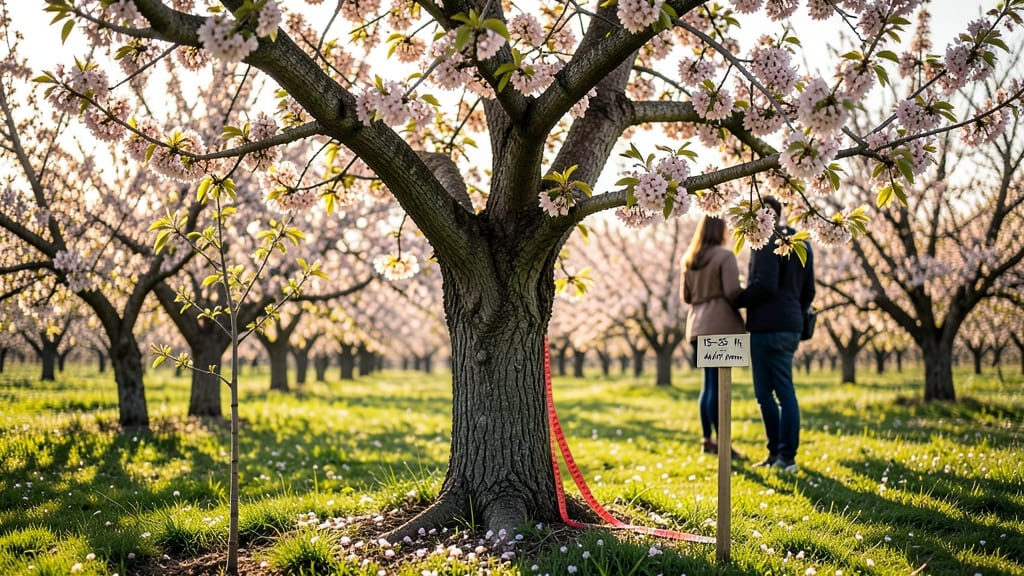
How tall do cherry fruit trees grow? They range from just 8 feet for dwarf varieties up to towering 40 feet for standard types, making height the first question when planning your orchard.
If you're dreaming of homegrown cherries but limited by space, understanding cherry tree height variations could mean the difference between a backyard orchard and a balcony-friendly dwarf variety.
Standard varieties like the Black Tartarian reach heights of 20-30 feet, while semi-dwarfs such as Montmorency stay between 12-18 feet, and compact dwarfs like Stella top out at just 6-10 feet.
Below, I’ll break down how to choose the right size for your garden, the pruning secrets to control growth, and which varieties thrive in tight spaces—so you can enjoy fresh 🍒 without sacrificing yard space.


Cherry tree height ranges: dwarf vs semi-dwarf vs standard varieties explained
Choosing the right cherry tree size is crucial for maximizing your harvest while working with your available space. Whether you have a sprawling backyard or a cozy balcony, understanding the height differences between dwarf, semi-dwarf, and standard varieties will help you make the best selection for your garden.
These variations aren't just about aesthetics—they directly impact fruit production, maintenance ease, and even harvesting convenience.
The height of your cherry tree can change dramatically based on its variety, but also on factors like soil quality, pruning practices, and climate conditions.
For example, a dwarf variety might reach 6-10 feet in ideal conditions, while the same tree could struggle to grow beyond 4-6 feet in poor soil or with aggressive pruning. Let's explore how these factors interact to determine your tree's ultimate height.
| Variety Type | Mature Height Range | Growth Rate (Annual) | Best For | Spacing Needs |
|---|---|---|---|---|
| Dwarf | 6-10 ft | 1-2 ft/year | Containers, small yards, urban gardens | 6-8 ft between trees |
| Semi-Dwarf | 12-16 ft | 2-3 ft/year | Medium yards, patio orchards | 12-15 ft between trees |
| Standard | 20-30 ft | 3-5 ft/year | Large backyards, orchards | 20-25 ft between trees |
Dwarf cherry trees are the perfect solution for gardeners with limited space. These trees typically reach 6-10 feet at maturity, making them ideal for containers or small urban gardens. Varieties like Stella and Lapins are popular choices because they produce abundant fruit without taking up much room.
The slower growth rate of dwarf trees also means you'll spend less time on maintenance pruning, which is a bonus for busy gardeners.
Semi-dwarf varieties strike a balance between manageable size and robust fruit production. These trees usually grow to 12-16 feet, making them suitable for medium-sized yards or patio orchards. They offer more fruit than dwarf varieties while still being easier to maintain than standard trees.
Semi-dwarfs like Montmorency are excellent for tart cherry lovers and thrive in both residential and commercial settings.
If you have ample space and want the classic orchard experience, standard cherry trees are the way to go. These majestic trees can reach 20-30 feet or taller, producing large quantities of fruit. However, their size requires careful planning for spacing and long-term maintenance.
Standard varieties like Bing and Rainier are beloved for their sweet, juicy cherries but need regular pruning to manage their height and shape.
Your cherry tree's growth rate is heavily influenced by soil conditions. Well-draining, fertile soil rich in organic matter promotes faster and healthier growth. Conduct a soil test before planting to check the pH level—cherry trees prefer slightly acidic soil with a pH between 6.0 and 6.5.
Amending your soil with compost or a balanced fertilizer can give your tree the nutrients it needs to reach its full potential height.
Pruning plays a critical role in controlling your cherry tree's height and shape. Regular pruning not only keeps the tree manageable but also improves air circulation and fruit production. For dwarf and semi-dwarf varieties, light pruning in late winter or early spring is usually sufficient.
Standard trees may require more aggressive pruning to maintain their height and prevent branches from becoming too heavy with fruit.
Climate also affects how tall your cherry tree will grow. Trees in warmer climates with longer growing seasons tend to grow faster and reach their mature height sooner. In cooler climates, growth may be slower, but with proper care, your tree can still thrive.
Cold-hardy varieties like Montmorency are excellent choices for northern gardens, while heat-tolerant types like Rainier suit southern climates better.
When planning your garden layout, consider not only the mature height of your cherry tree but also its canopy spread. Dwarf trees typically have a spread of 4-6 feet, while standard trees can reach 15-20 feet wide.
Proper spacing ensures good airflow, reduces disease risk, and makes harvesting easier. Always follow the spacing guidelines for your specific variety to avoid overcrowding.
For container-growing enthusiasts, dwarf cherry trees are the best choice. Select a large pot with at least 15-20 gallons of capacity and ensure it has drainage holes. Place your container in a sunny spot and water deeply when the top inch of soil feels dry.
With the right care, containerized dwarf cherry trees can produce fruit just as abundantly as their in-ground counterparts.
Best cherry tree varieties for small gardens and containers
If you love the idea of harvesting fresh cherries but have limited space, don't worry—there are compact cherry tree varieties perfect for small gardens and even containers. These dwarf and semi-dwarf varieties produce delicious fruit without taking up excessive room, making them ideal for urban gardens, patios, or balconies.
When selecting a cherry tree for small spaces, focus on mature height, fruiting habits, and container suitability. Some varieties thrive in pots, while others prefer in-ground planting but still stay under 10 feet tall.
Let’s explore the top 5 compact cherry varieties that deliver big flavor in small packages.
The Stella cherry tree is my top pick for small gardens—it tops out at just 6–8 feet and thrives in containers as small as 15-gallon pots. Its sweet cherries ripen early in June, making it perfect for quick harvests.
For tart cherry lovers, the Lapins variety is a great choice, reaching 8–10 feet and producing flavorful fruit ideal for pies and jams.
If you're growing in containers, prioritize well-draining soil and large pots (at least 20 gallons for tart varieties). Use a balanced fertilizer like 10-10-10 in early spring to encourage healthy growth. Remember, container-grown trees need more frequent watering than in-ground plants, especially during hot summer months.
For ground planting, the Black Tartarian is a fantastic option—it stays under 12 feet but requires more space than container varieties. Pair it with a pollinator variety like Stella for better fruit set. Always plant cherries in full sun (6+ hours daily) and well-draining soil to prevent root rot.
No matter which variety you choose, regular pruning in late winter will keep your cherry tree compact and productive. Focus on removing dead or crossing branches and thinning out overcrowded areas to improve air circulation.
With the right care, even a small-space cherry tree can yield hundreds of juicy cherries each season.