
Companion Plants
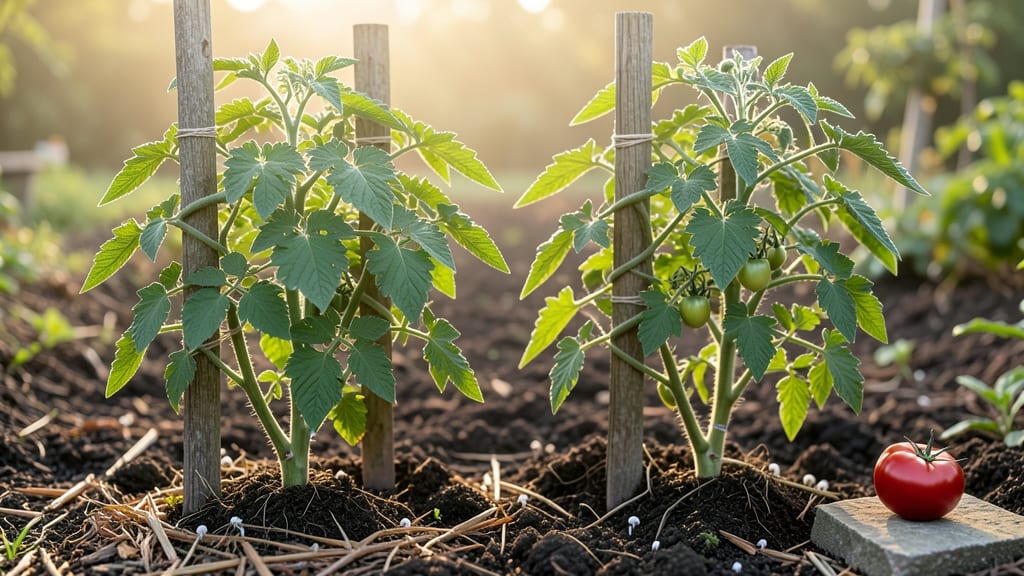
You don’t need two tomato plants to produce fruit—most varieties are self-pollinating, meaning a single plant’s flowers can fertilize themselves via wind or insects. Hybrid and heirloom tomatoes often thrive alone, though some indeterminate types may benefit from cross-pollination for better yields.
Most home gardeners assume they need two tomato plants to ensure fruit production, but the truth is far simpler. 🌱 The vast majority of tomato varieties—especially heirloom and hybrid types—are perfectly capable of self-pollinating through natural wind currents or visiting insects.
This means a single plant can produce fruit without needing a partner. The key difference lies in plant growth habits: determinate varieties (bush types) often set fruit more reliably alone, while indeterminate varieties (vining types) may benefit from occasional cross-pollination for optimal yields.
What many gardeners don’t realize is that even when you have just one plant, you can actively improve pollination. Gently shaking the plant or using a small brush to transfer pollen between flowers can dramatically increase fruit set.
This simple technique works especially well for cherry tomatoes and other small-fruited varieties that rely heavily on self-pollination. The misconception about needing two plants likely stems from older gardening advice that didn’t account for modern hybrid varieties bred specifically for efficient self-pollination.
💡 In This Article
- How Tomato Pollination Works: Self-Fertilization vs Cross-Pollination
- Maximizing Fruit Production: Tips for Single-Plant Tomato Gardens
How tomato pollination works: self-fertilization vs cross-pollination
Tomato flowers contain both male and female reproductive parts in the same bloom—a structure called perfect flowers. The male parts are the stamens (with pollen-producing anthers), while the female part is the pistil (with a stigma that catches pollen).
When wind blows or bees land on flowers, pollen from the stamens transfers to the pistil's stigma, triggering fertilization. This self-pollination process happens naturally in 90% of tomato varieties, including popular hybrids like 'Celebrity' and heirlooms like 'Brandywine'. 🌬️
The efficiency of self-pollination varies by variety. Cherry tomatoes often set fruit more reliably alone because their small flowers produce abundant pollen that easily reaches the stigma. In contrast, larger tomato varieties like beefsteaks may need occasional help—especially in still air or indoor growing conditions.
The flower's anatomy plays a role too: some varieties have stigmas positioned to catch pollen more effectively than others.
Determinate tomatoes (bush types) typically handle self-pollination better because their compact growth encourages wind movement between flowers. Indeterminate varieties (vining types) may produce more fruit when cross-pollinated, as their sprawling growth can create isolated flowers that miss pollen transfer.
The key difference lies in flower positioning—determinate plants have flowers clustered together, while indeterminate plants have flowers spaced along long stems.
What often confuses gardeners is the 3-5% of tomato varieties that are not self-pollinating, including some wild species. These require cross-pollination between plants to set fruit. However, nearly all commercial varieties—whether hybrid or heirloom—are bred for self-sufficiency.
The misconception likely stems from older gardening practices where growers planted multiple plants as a precaution rather than necessity.
For visual learners, imagine a tomato flower as a tiny factory: the stamens produce pollen (the raw material), while the pistil acts as the assembly line. When pollen lands on the stigma, it triggers the ovary to develop into fruit.
This process happens within 24-48 hours of successful pollination, which is why you'll often see flowers drop off if fertilization fails.
Understanding this mechanism explains why some gardeners report uneven fruit set—even with a single plant. Factors like temperature extremes (below 55°F or above 95°F), humidity levels, or lack of airflow can disrupt pollination.
The good news? You can often improve results by gently tapping plants or placing them near bee-friendly flowers like marigolds or basil.