
Light Requirements
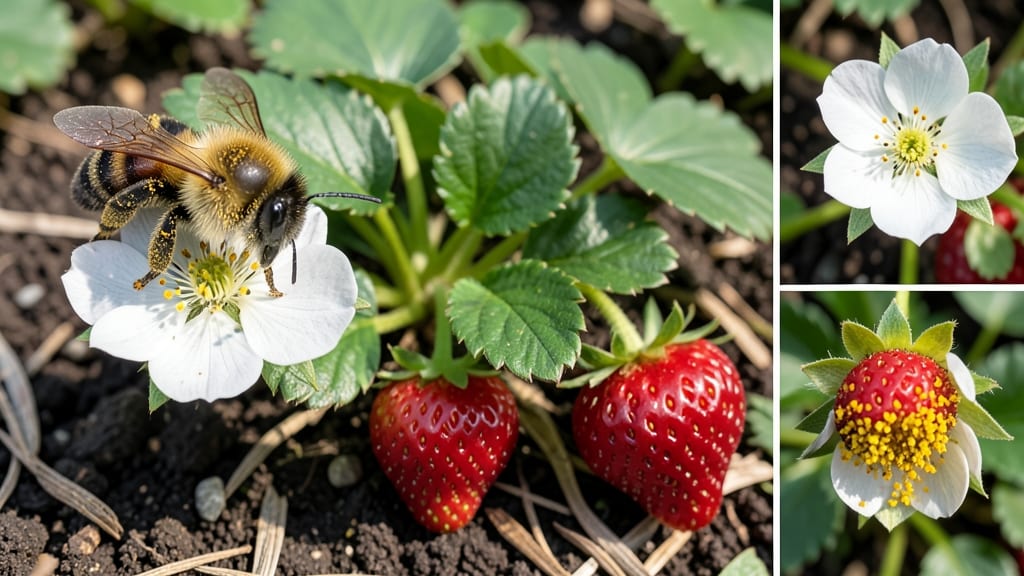
Strawberries need pollinators to produce fruit, but they can self-pollinate through wind or vibrations. While bees and other insects boost fruit production, certain varieties thrive even with minimal pollination, especially in controlled environments like greenhouses.
Strawberries have a clever trick up their leafy sleeves—many varieties can self-pollinate when pollen moves between flower parts through natural forces. 🌬️ The flower's unique structure, with its "receptacle" (where fruit develops) surrounded by petals, makes this possible.
Some gardeners swear by gently shaking plants on calm days to mimic wind pollination, while others plant highly self-sufficient varieties like 'Albion' or 'Seascape' that produce well even without bees. This adaptability is why strawberries remain a top choice for both home gardens and commercial greenhouses.
What's fascinating is how this self-pollination works: the flower's anthers (pollen producers) sit close enough to the stigma (pollen receiver) that even a breeze or raindrop can trigger fertilization. However, cross-pollination by bees still increases fruit size and sweetness—making it a win-win when you can attract pollinators.
For container growers or urban gardeners with limited pollinator access, choosing the right variety and occasional hand-pollination can make all the difference.
💡 In This Article
- How Strawberry Flowers Self-Pollinate Naturally
- Maximizing Strawberry Fruit Production Without Pollinators
How strawberry flowers self-pollinate naturally
The strawberry flower's unique anatomy makes self-pollination possible. Unlike many plants, strawberries have their receptacle (the part that becomes fruit) surrounded by petals, with anthers positioned just 0.5-1.5 millimeters away from the stigma.
This close proximity allows pollen to transfer through gentle forces like wind speeds as low as 3-5 mph or even vibrations from raindrops or passing animals.
When wind blows, the flower's delicate petals sway slightly, causing pollen grains—each about 0.02-0.03 millimeters in diameter—to dislodge from the anthers and land on the receptive stigma.
Raindrops create similar effects through their impact and surface tension, while vibrations from garden tools or even foot traffic can achieve the same result. The flower's pistil (female reproductive part) remains open for 3-5 days, maximizing opportunities for successful self-pollination.
Not all strawberry varieties self-pollinate equally. Junebearing types like 'Jewel' often require more pollination assistance, while everbearing varieties such as 'Seascape' tend to be more self-sufficient due to their higher pollen production and larger flower clusters.
The difference lies in their genetic makeup—some varieties evolved in areas with consistent wind patterns or low pollinator populations, making them better adapted to self-reliance.
Temperature plays a crucial role too. Strawberry flowers thrive between 55-85°F, with optimal pollination occurring at 70-75°F. Below 50°F, pollen viability drops significantly, while above 90°F, the flowers may close prematurely.
This is why greenhouse growers can achieve 80-90% self-pollination rates by controlling these conditions, compared to 50-70% in open fields where pollinators are more variable.
What makes this process even more remarkable is the flower's secondary pollination mechanism. If wind or vibrations fail, strawberries can also self-pollinate through a process called autogamy, where pollen from the same flower's anthers directly contacts the stigma without external help.
This built-in redundancy explains why strawberries often produce some fruit even in isolated environments like balconies or windowsills.
The sensory experience of self-pollination becomes evident when you observe the flowers. Successful self-pollination often results in plump, bright red berries with firm, juicy flesh, though they may be slightly smaller than bee-pollinated counterparts.
The aroma of ripe strawberries—filled with 250+ volatile compounds including esters and aldehydes—becomes more concentrated when the plant focuses its energy on fewer, well-pollinated fruits.