
Plants
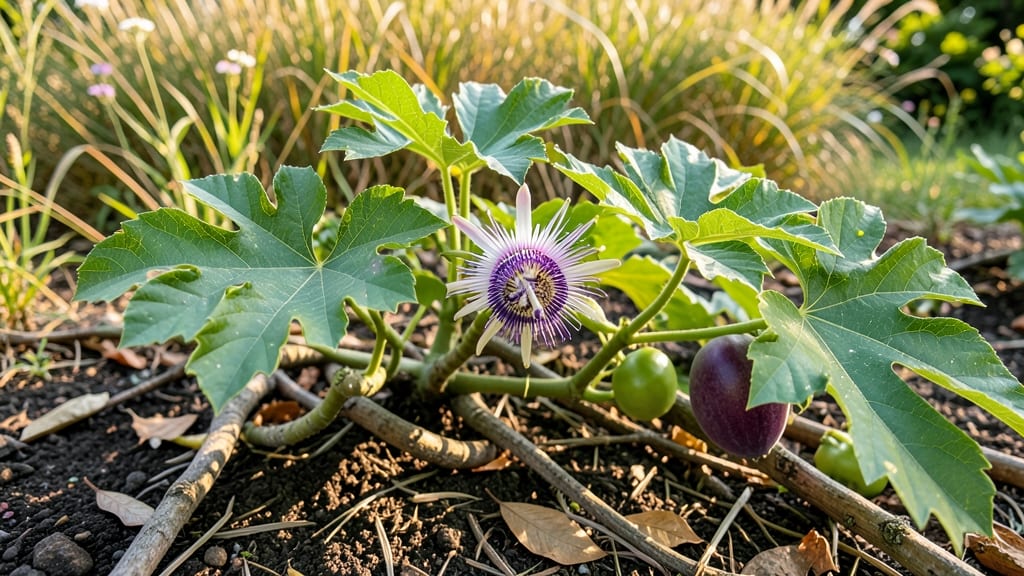
Passion fruit looks like an oval or egg-shaped tropical fruit with a thick, wrinkled skin that shifts from deep purple to yellow-green when fully ripe. The glossy exterior often has a slightly rough texture, and the fruit grows 2-4 inches long with a tough stem at its base.
When you first spot passion fruit at the market, its distinctive wrinkled, leathery rind immediately sets it apart from other tropical fruits. 🌿 The color alone tells you a lot—purple-skinned varieties (like the common Passiflora edulis) are tart and best for juices, while yellow-green ones (such as Passiflora ligularis) tend to be sweeter and great for eating fresh.
The size can vary too, with some reaching nearly 5 inches in specialty varieties. What’s fascinating is how the fruit’s interior contrasts with its tough exterior: once you slice it open, you’ll find a vibrant, jelly-like pulp packed with tiny black seeds.
This fruit’s unique shape and texture make it instantly recognizable, but don’t let the wrinkled skin fool you—it’s actually quite protective.
The hard stem at one end is a dead giveaway, and if you run your fingers over the rind, you’ll notice a slight glossy sheen that develops as it ripens.
Whether you’re buying it fresh or spotting it in a recipe, these visual clues help you pick the perfect passion fruit every time.
💡 In This Article
- Identifying Passion Fruit by Color and Texture
- Passion Fruit Anatomy: Rinds, Seeds, and Pulpy Interiors
Identifying passion fruit by color and texture
The passion fruit's rind color is your first clue about its flavor profile and ripeness. Purple-skinned varieties, like the Passiflora edulis (commonly called purple granadilla), develop a deep, almost violet hue when fully ripe, signaling a tart, tangy taste perfect for juices or cocktails.
Underneath the wrinkled surface, the flesh is a vibrant yellow-orange pulp. Meanwhile, yellow passion fruits (Passiflora ligularis) transition from pale green to a bright golden-yellow when ripe, offering a sweeter, more mango-like flavor that's ideal for fresh eating or desserts. 🌈
The texture of the rind varies between varieties too. Purple passion fruits tend to have a thicker, more leathery skin that's slightly rough to the touch, almost like a cross between a grape and a small melon.
Yellow varieties often feel slightly smoother and thinner, though both types develop a subtle glossy sheen when ripe.
Interestingly, the fruit's shape can differ by species—some grow perfectly oval like a small egg, while others develop a more elongated, almost cylindrical form, especially in tropical climates where they receive more sunlight.
What's fascinating about passion fruit is how its exterior protects its delicate interior. The wrinkled rind isn't just for show—it's a natural adaptation that helps regulate moisture loss while the fruit matures on the vine.
The hard, woody stem at one end serves as a natural anchor and water conduit when growing, but once harvested, it becomes a dead giveaway for identifying passion fruit. This stem is typically 1-2 inches long and feels surprisingly sturdy compared to the fruit's soft interior.
Temperature and growing conditions also affect the fruit's appearance. Passion fruits grown in cooler climates may develop more pronounced wrinkles and a deeper purple color, while those in tropical regions often have smoother skins and brighter yellow hues.
The size can vary dramatically too—while most grocery store varieties measure 2-4 inches, some heirloom varieties like the Passiflora quadrangularis (giant granadilla) can reach 6-8 inches in length, with a thick, almost spiky rind that's completely inedible.
Here's a quick visual comparison to help you identify passion fruit:
- Purple varieties: Deep violet rind, tart flavor, wrinkled texture, 2-3 inches long
- Yellow varieties: Bright golden-yellow rind, sweeter taste, slightly smoother skin, 2.5-4 inches long
- Giant granadilla: Thick green rind, 6-8 inches long, inedible skin but sweet pulp
The key is to gently press the fruit—ripe passion fruits will yield slightly to pressure, while unripe ones feel firm and hard. That glossy sheen on the rind is your best indicator of ripeness, as it develops as the fruit's natural sugars concentrate during maturation. 🌿