
Container Gardens
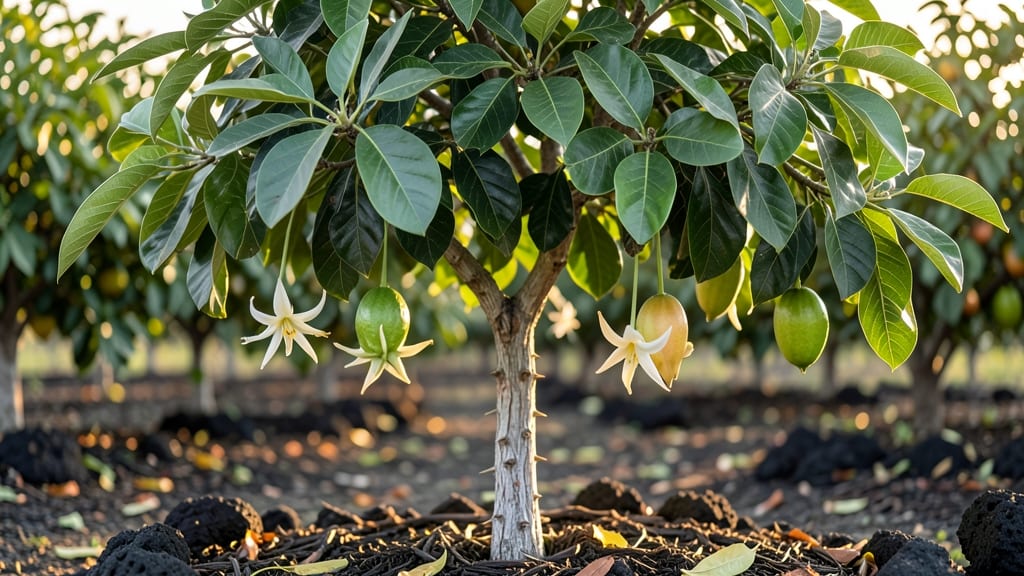
Star fruit grows best in USDA hardiness zones 10 through 12, where frost never occurs and temperatures remain above 30°F year-round. Varieties like 'Carabao' adapt better to cooler microclimates, while 'Red Fleshed' thrives in tropical heat and high humidity. For successful growth, plant in well-draining soil with full sun exposure.
Understanding these zones helps you choose the right variety for your climate.
Star fruit is sensitive to cold—even brief dips below 30°F can damage leaves and fruit—so gardeners in zones 9 or lower should consider container growing or protected microclimates like greenhouses. 🌱 The 'Carabao' variety, for example, can handle slightly drier conditions, making it ideal for inland areas, while 'Red Fleshed' needs consistent moisture and warmth.
Soil pH between 6.0 and 7.5 and at least 6 hours of direct sunlight daily are non-negotiable for healthy growth.
If you're pushing the limits in cooler zones, opt for dwarf varieties or use black plastic mulch to retain heat around the roots. Container growing also works well—just ensure pots have drainage holes and are large enough (at least 15 gallons) to support the plant's root system.
The key is mimicking tropical conditions as closely as possible.
💡 In This Article
- USDA Zones for Star Fruit Cultivation
- Best Star Fruit Varieties by Climate
USDA zones for star fruit cultivation
Star fruit, or Averrhoa carambola, is a tropical fruit that demands warmth to thrive, making USDA zones 10 through 12 its natural habitat. These zones represent areas where winter temperatures rarely drop below 30°F (-1°C), which is the critical threshold for star fruit survival.
Below this temperature, the plant's leaves and fruit can suffer irreversible damage, while prolonged exposure to 25°F (-4°C) or lower will kill the tree entirely. The reason for this sensitivity lies in the plant's origin—star fruit evolved in Southeast Asia's tropical climates, where temperatures hover between 70-90°F (21-32°C) year-round.
The plant's growth cycle is directly tied to temperature. Star fruit trees enter dormancy when nighttime temperatures fall below 60°F (15°C), which stunts flowering and fruiting. In zones 10-12, the consistent warmth allows for continuous growth and fruiting, often producing 2-3 harvests per year if properly cared for.
Coastal areas within these zones benefit from milder microclimates, with ocean breezes moderating temperatures and increasing humidity—ideal conditions for star fruit. In contrast, inland regions may experience more extreme heat during the day and cooler nights, requiring additional care like windbreaks or mulching to maintain stable soil temperatures.
For gardeners in zones 9 or below, the challenge shifts to creating artificial tropical conditions. The plant's roots are particularly sensitive to cold, so using 15-gallon containers with insulating materials like coconut coir helps regulate temperature.
Another critical factor is frost protection—even a single night below 32°F (0°C) can devastate a star fruit tree. In these cooler zones, growers often use frost cloths or move potted plants to sheltered areas during winter.
The trade-off is slower growth and potentially smaller fruit, but with proper care, star fruit can still produce edible fruit in zones as low as 9 with 6+ hours of daily sunlight.
Soil temperature plays an equally important role. Star fruit roots thrive when soil stays above 65°F (18°C), which is why well-draining, sandy loam soil is ideal—it warms quickly in the sun and drains excess moisture.
In cooler zones, black plastic mulch can raise soil temperatures by 5-10°F (3-6°C), creating a warmer root zone. This technique is particularly effective in spring and fall when air temperatures fluctuate. Without these adjustments, the plant's root system can become stressed, leading to yellowing leaves and poor fruit development.
One often-overlooked factor is humidity. Star fruit originates from regions with 70-90% relative humidity, and low humidity can cause the plant to drop flowers and fruit prematurely. In arid zones 10-12, like parts of Southern California, growers must supplement with regular misting or drip irrigation to maintain leaf moisture.
The plant's waxy leaves help retain water, but they're not foolproof—prolonged dry spells can still stress the tree. This is why coastal zones often see more successful star fruit cultivation, as ocean mist provides natural humidity.
For those in zones 10-12, the primary challenge isn't cold but rather managing heat stress. Temperatures above 95°F (35°C) can cause leaf scorch, while prolonged dry heat leads to smaller fruit. Mulching with organic matter like wood chips helps retain soil moisture and regulates temperature swings.
In these ideal zones, star fruit trees can grow 15-25 feet tall and produce fruit within 3-5 years of planting, but proper zone management ensures they reach their full potential.