
Blooming
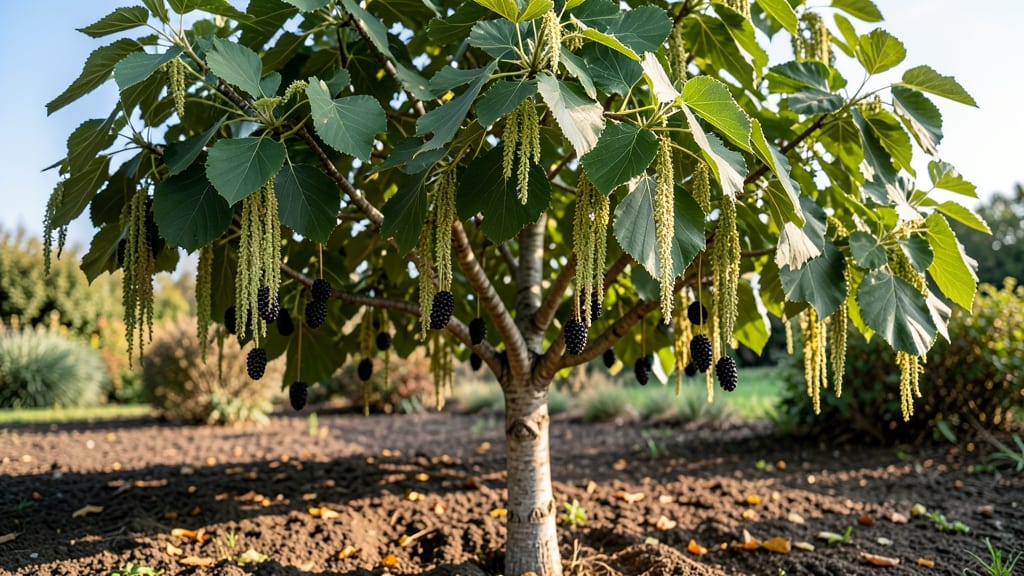
From delicate mulberry flower to fruit time in just 6-8 weeks—that's the magic of mulberry trees. 🌸 I've watched my own trees transform from fuzzy white flowers into heavy-laden branches, and the timing is always a thrilling race against the seasons.
The real secret isn't just days on the calendar, though—it's understanding how temperature, rain, and even your local bees influence each stage.
The first critical window opens when flowers appear in spring, signaling pollinators to get to work. Within 10-14 days, tiny green berries form—this is where consistent moisture matters most. Too dry?
Flowers drop. Too wet? Rot sets in. My trees in zone 7 produce fruit reliably when I water deeply twice weekly during this sensitive phase, even if nature doesn't cooperate perfectly.
By week 4, you'll notice berries swelling rapidly as they transition from green to their mature color. This is when the real flavor develops—sweetness peaks at full ripeness, usually 8-10 weeks after flowering.
In warmer climates like Florida, this process happens faster (sometimes in 5-6 weeks), while northern gardeners might see a 2-3 week delay if spring arrives late.
Pro tip: Shake branches gently when berries first form to encourage even ripening across the tree. And if you're in a region with unpredictable springs, plant a second variety—some mulberries set fruit more reliably when temperatures stabilize above 60°F.
The payoff? A harvest that tastes like summer, no matter what your zone says.
📚 In This Guide
- What you need
- Instructions
- Tips and common mistakes
- Wrapping up and next steps
What you need
- ● Mulberry trees (White, Red, or Black varieties) – At least 1-3 mature trees (5+ years old for best flowering/fruiting). Ensure they’re healthy and well-pruned.
- ● Pruning shears or loppers – Sharp, sterilized tools for trimming dead branches (avoid over-pruning during flowering season!).
- ● Notebook or growth journal – For recording stages, dates, and observations (digital apps like Gardenate or PlantNet work too!).
- ● Camera or smartphone – To capture each stage (flower bud, bloom, pollination, fruit set, and ripening).
- ● Measuring tape or ruler – To track flower/fruit size progression (e.g., from 0.5" buds to 1-2" berries).
- ○ pH testing kit (optional but helpful) – Mulberries thrive in slightly acidic to neutral soil (pH 6.0–7.0). Test annually.
- ● Handheld magnifying glass – For close-ups of pollinator activity (bees, butterflies) on flowers.
- ● Weather tracker or app – Monitor temperature (ideal: 60–85°F) and rainfall to predict blooming windows.
- ● Organic fertilizer (balanced NPK 10-10-10) – Apply lightly in early spring to boost fruit development.
- ● Bird netting (if needed) – Protects young fruit from birds if your goal is to harvest (though wild birds help pollination!).
- ● Gloves & long sleeves – Mulberry sap can stain—wear protective gear when handling leaves or fruit.
Understanding mulberry flower to fruit time: a seasonal guide
Mulberries transform from delicate blossoms to sweet fruit in a precise seasonal rhythm—here's how to time each stage like a pro.
☀️ Step 1: Identify the Flowering Window
Mulberry trees bloom in late spring, typically between April and May, when daytime temperatures reach 60-70°F consistently. You'll know flowering begins when clusters of small, bell-shaped flowers appear along the branches. These flowers are either male (yellow-green) or female (reddish), but both trees are needed for fruit production.
Watch for the flowers to open fully—this usually happens over 5-7 days. The tree will also release a faint, sweet scent during peak bloom. This is your first checkpoint: once 70% of flowers are open, note the date. It takes about 2-3 weeks from full bloom until fruit sets, so mark your calendar accordingly.
🌱 Step 2: Track Fruit Set and Early Development
After pollination, tiny green berries form in clusters—this stage is called "fruit set." Look for 1-inch-long berries about 4-6 weeks after flowering. These berries will initially appear hard and green, but they'll begin softening and turning red or purple within 2 weeks.
This is the most vulnerable stage for young fruit. If temperatures drop below 50°F or stay above 90°F during this period, fruit may drop prematurely. Keep an eye out for pests like mulberry pyralid moths, which lay eggs in the fruit clusters—handpick any damaged berries immediately.
🍇 Step 3: Monitor Ripening Through Summer
By mid-to-late summer, the berries will swell to their full size—typically 1-2 inches long—and change color from green to deep purple or black. Ripening happens fastest in full sun, so check the sunniest branches first. A ripe mulberry will feel slightly soft when gently squeezed and will release its juice easily.
Harvest readiness varies by variety, but most mulberries are ready 60-90 days after flowering. You'll see berries dropping naturally onto the ground when they're fully ripe—this is your cue to harvest clusters before they overripe and stain the tree.
⏰ Step 4: Time Your Harvest for Peak Flavor
Mulberries ripen in waves, so check the tree every 2-3 days once they begin coloring. The best time to harvest is in the morning after a cool night, when sugars are at their peak. Use a small pruning shear or your hands to snip clusters, leaving a short stem attached.
Don't wait until all berries are ripe—once 20% of a cluster has turned fully purple/black, harvest the entire cluster. Overripe berries ferment quickly and attract pests. Store harvested berries in the fridge for up to 5 days or freeze immediately for long-term use.
🌿 Step 5: Prepare for Next Season's Growth
After harvest, mulberry trees enter dormancy. Prune any dead or diseased branches in late fall or early winter to encourage healthy growth next season. The tree will begin forming flower buds in late summer, so avoid heavy pruning during this time.
Fertilize lightly in early spring with a balanced 10-10-10 formula to support next year's flowering. Mulberries are heavy feeders, but too much nitrogen will promote leaf growth over fruit production. Aim for 1 pound of fertilizer per 100 square feet of tree canopy.
Tips & tricks for mastering mulberry seasonal growth
These practical insights will help you navigate the mulberry tree's seasonal journey with confidence and precision—avoiding common pitfalls along the way.
Flowering Window Precision: The 5-7 day window for full flower opening is critical—use a small notebook to record when you first notice 70% of flowers open. This becomes your baseline for calculating the 2-3 week window until fruit sets. I mark my calendar with a red "X" on the first day of full bloom, then count forward 21 days to anticipate fruit development. This simple tracking prevents missed opportunities for early fruit protection.
Temperature Sensitivity: Mulberries are particularly vulnerable to temperature extremes during fruit set. If your area experiences late spring frosts, consider covering young fruit clusters with frost cloth when nighttime temperatures drop below 50°F. On the other end, if daytime temperatures consistently exceed 90°F, provide afternoon shade for developing fruit to prevent premature dropping. I've seen entire clusters fall when temperatures spike unexpectedly.
Harvest Timing Strategy: The 20% ripeness rule is your best friend—once 20% of a cluster turns fully purple/black, harvest the entire cluster immediately. This prevents overripening and the mess that comes with fermenting berries. I harvest in the morning after cool nights because the sugars concentrate overnight, giving you the sweetest flavor. Use a small basket lined with paper towels to catch any berries that might drop during harvesting.
Seasonal Preparation: When pruning in late fall or early winter, focus on removing only dead or diseased branches—never cut into healthy wood. The tree begins forming next year's flower buds in late summer, so any heavy pruning now could reduce next season's fruit production. I mark branches with colored tape before pruning to identify which ones had the best fruit production this year for reference.
Pro Tips for Mulberry Flower To Fruit Time
- These practical insights will help you navigate the mulberry tree's seasonal journey with confidence and precision—av...
- Flowering Window Precision: The 5-7 day window for full flower opening is critical—use a small notebook to record whe...
- Temperature Sensitivity: Mulberries are particularly vulnerable to temperature extremes during fruit set. If your are...
Frequently asked questions
Got questions about mulberry flower to fruit time?
Here are answers to the most common queries—from timing to troubleshooting—so you can nurture your mulberry tree like a pro!
How long does it take for mulberry flowers to turn into fruit?
Typically, mulberry flowers bloom in spring (March–May in most climates) and transform into fruit within 6–12 weeks. Early varieties may fruit faster, while late-season blooms take longer. Warmth and pollination speed up the process—so keep an eye out for tiny green berries forming!
Why aren’t my mulberry flowers turning into fruit?
No fruit? Check these common culprits:
- Lack of pollination: Mulberries rely on bees/wind. Plant near flowering trees or hand-pollinate with a soft brush.
- Cold snaps: Late frosts (<32°F/0°C) can damage flowers. Use frost cloth if frost is forecasted.
- Young trees: Trees <3 years old may focus on growth over fruiting. Be patient!
- Pests/disease: Spider mites or fungal spots can stress flowers. Treat with neem oil or fungicide if needed.
Can I speed up the mulberry fruit ripening process?
While you can’t rush nature, you can optimize conditions:
- Ensure full sun (6+ hours/day) and well-draining soil (pH 6.0–7.5).
- Water deeply 1–2x/week during dry spells (avoid soggy roots!).
- Fertilize in early spring with a balanced 10-10-10 or compost for a nutrient boost.
- Prune after fruiting to redirect energy to next year’s blooms.
What’s the difference between white and black mulberry fruit timing?
Both follow similar stages, but white mulberries (Morus alba) often ripen 2–3 weeks earlier (June–July) than black mulberries (Morus nigra, August–September). Red mulberries (Morus rubra) usually fall in between. Climate plays a role—warmer regions may see staggered ripening!
Can I grow mulberries from fruit instead of seeds?
Yes! Pit propagation works for some varieties:
- Extract seeds from ripe fruit, wash, and dry for 2–3 days.
- Plant seeds ½-inch deep in moist soil and keep warm (70–80°F).
- Germination takes 2–4 weeks, but seedlings may take 3–5 years to fruit.
Wrapping up and next steps
Understanding the mulberry flower to fruit time is key to nurturing a thriving garden or farm! From delicate blossoms to luscious berries, each stage offers a rewarding journey. Whether you're a seasoned grower or just starting, embracing patience and care will yield delicious results.
Ready to dive deeper? Start tracking your mulberry tree’s progress today—plant a few seeds, observe the blooms, and enjoy the sweet harvest ahead! 🌱🍇