
Propagation
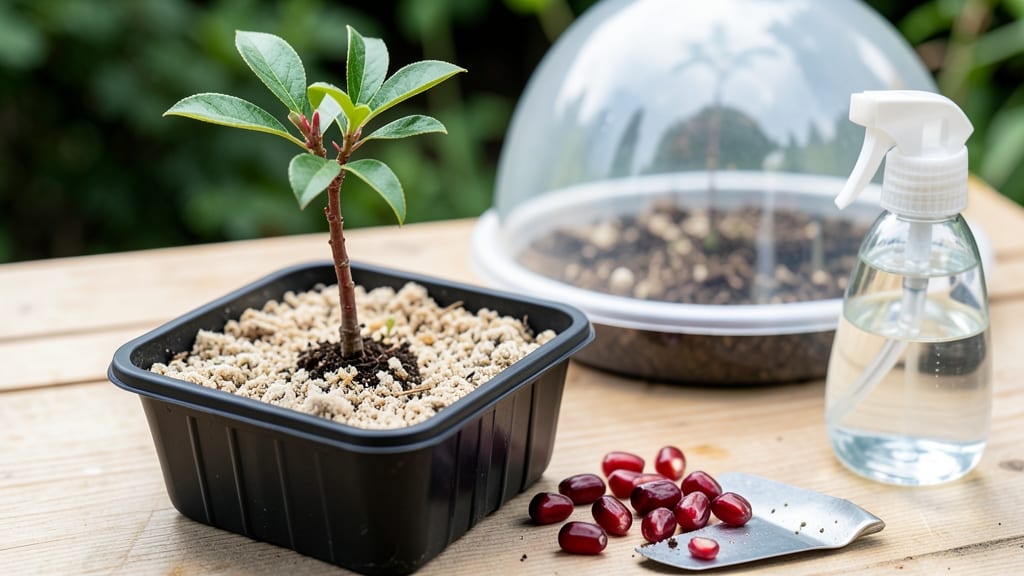
Growing pomegranates from store-bought fruit lets you turn a $3 snack into a thriving small tree—if you know the secret to breaking seed dormancy. 🌱 I’ve sprouted pomegranates three times now, and the key isn’t just planting the seeds—it’s the cold treatment that tricks them into germinating after weeks of stubborn silence.
Most people give up after two weeks, but with this method, you’ll see sprouts in 4-6 weeks, not months.
The process starts with fresh seeds (never dried ones) and a zip-top bag in the fridge for 30 days—this mimics winter’s natural dormancy break. You’ll need well-draining soil, a sunny windowsill or grow light, and patience for the slow start.
Pomegranate seedlings are tough once established, but those first few weeks require consistent moisture without soggy soil. Think of it like raising a finicky toddler: gentle care, not smothering.
By week six, you’ll have dark-green seedlings with two true leaves—ready to transplant outdoors after your last frost. These aren’t just pretty plants; they’ll produce fruit in 3-5 years, and the first harvest tastes like nothing from the store.
The real magic? Watching those bright red flowers appear in summer, knowing you grew it all from a seed.
Works best in zones 7-11, but even cooler climates can grow them in containers. Here’s where most gardeners trip up—and how to avoid it.
📚 In This Guide
- What you need
- Instructions
- Tips and common mistakes
- Wrapping up and next steps
What you need
- ● Fresh pomegranate fruit – Choose a ripe, organic pomegranate (preferably one grown in warm climates for better seed viability).
- ● Seeds – Extract at least 5-10 healthy seeds from the fruit (discard any damaged or soft seeds).
- ● Well-draining potting mix – A blend of 50% cactus/succulent soil and 50% perlite or sand (sterilized and moisture-controlled).
- ● Small pots or seed trays – Use 2-3 inch diameter pots (one per seed) or a tray with individual cells.
- ● Spray bottle – For gentle watering to avoid displacing seeds.
- ● Clear plastic wrap or humidity dome – To create a mini greenhouse effect.
- ● Grow lights or sunny windowsill – Pomegranate seeds need bright, indirect light (6-8 hours/day).
- ● Tweezers or toothpick – For carefully placing seeds into the soil.
- ○ Fertilizer (balanced, water-soluble) – Optional for faster growth (use half-strength once sprouts appear).
- ○ Thermometer (optional) – Ideal soil temp for germination: 70-80°F (21-27°C).
- ○ Heat mat (optional) – Speeds up germination if your space is cool.
- ● Larger container (6+ inches) – For transplanting seedlings once they’re 3-4 inches tall.
Step-by-step instructions for growing pomegranate seedlings from fruit
Here's how to turn a store-bought pomegranate into sturdy seedlings ready for transplanting in just a few weeks.
🌱 Step 1: Extract and Prepare the Seeds
Cut open a fresh pomegranate and scoop out the seeds with their white membranes intact. Rinse them thoroughly under cool water to remove any remaining fruit pulp—this prevents mold during germination. Spread the seeds on a clean paper towel and let them air dry for 24 hours at room temperature. This step is crucial because damp seeds can rot before sprouting.
Once dry, separate the seeds from their membranes by gently rubbing them between your fingers. You'll need about 4-6 seeds per pot to ensure at least one strong seedling emerges. I like to soak the cleaned seeds in lukewarm water for 12 hours before planting—this softens the tough outer coating and speeds up germination.
🪴 Step 2: Fill Containers with Moistened Potting Mix
Use 4-inch diameter pots filled with a well-draining seed-starting mix (never garden soil—it's too dense). Moisten the mix until it feels like a damp sponge when squeezed, but no water should drip out. Press the soil down lightly to remove air pockets, then create ¼-inch deep planting holes using your finger or a pencil.
Here's the thing—pomegranate seeds need warmth to germinate. Place the pots in a seedling heat mat set to 75-80°F, or position them on top of your refrigerator. Without extra warmth, germination can take 3-4 weeks instead of the usual 2-3 weeks. You'll see tiny sprouts emerge within 7-14 days if conditions are right.
💧 Step 3: Plant and Maintain Ideal Moisture
Plant 2-3 seeds per pot at the ¼-inch depth, spacing them 1 inch apart. Cover lightly with additional soil and mist the surface with water until evenly damp. Place a clear plastic dome or wrap the pots in plastic wrap to retain humidity—pomegranate seeds need 80-90% humidity to sprout consistently.
Check moisture daily but resist watering until the soil surface feels dry to the touch. Overwatering at this stage causes damping-off, a fungal disease that collapses seedlings overnight. Once sprouts appear, remove the plastic immediately to prevent mold. You'll know moisture is right when the soil looks slightly damp but not glistening.
☀️ Step 4: Provide Light and Gradually Harden Off
Move the pots to a bright, indirect light location as soon as sprouts emerge—no direct sun yet. Use a grow light if natural light is weak, keeping it 3-4 inches above the seedlings for 12-14 hours daily. Pomegranate seedlings grow slowly at first, so patience is key. You'll see the first true leaves (not the initial seed leaves) appear in 3-4 weeks.
When seedlings reach 3-4 inches tall with 4-5 true leaves, start hardening them off. Place pots outside in a sheltered, shaded spot for 1 hour daily, gradually increasing time over 10 days. This prepares them for transplanting. Real talk: If you skip hardening, seedlings will wilt dramatically when moved to the garden.
Tips & tricks for growing pomegranate seedlings
Confession: I nearly gave up on my first batch of pomegranate seedlings after they took three weeks to sprout. These tricks will help you avoid my mistakes and get sturdy seedlings in just 4-6 weeks.
Seed Preparation: The 24-hour drying period is non-negotiable—don't rush this step. I learned this the hard way after losing seeds to mold. For extra insurance, place your drying seeds in a single layer on a wire rack over a paper towel to maximize airflow. This prevents moisture buildup that leads to rot. Once dry, the seeds should feel slightly papery when rubbed between your fingers.
Warmth Secret: That 75-80°F heat range is critical, but not all heat sources work equally. I've found that placing pots on top of a refrigerator works surprisingly well, but avoid direct heat sources like radiators. The goal is consistent warmth without temperature fluctuations. If you don't have a heat mat, try a sunny windowsill during the day combined with a warm spot at night.
Moisture Management: The 80-90% humidity requirement is tricky to maintain without plastic domes. I use a spray bottle to mist the soil surface daily—just enough to keep it damp but not soggy. Watch for condensation on the plastic wrap; if you see droplets forming, remove the cover for 30 minutes to let excess moisture escape. This prevents the fungal issues that can wipe out seedlings overnight.
Light Transition: When moving seedlings to natural light after sprouting, don't rush the process. I gradually increase exposure over 5-7 days by moving them closer to the window each morning. Sudden bright light can scorch tender seedlings. For indoor growers, position your grow light 3-4 inches above the seedlings and adjust the height as they grow to maintain consistent light intensity.
Pro Tips for Grow Pomegranate From Fruit
- Confession: I nearly gave up on my first batch of pomegranate seedlings after they took three weeks to sprout. These ...
- Seed Preparation: The 24-hour drying period is non-negotiable—don't rush this step. I learned this the hard way after...
- Warmth Secret: That 75-80°F heat range is critical, but not all heat sources work equally. I've found that placing po...
Frequently asked questions
Got questions?
Growing a pomegranate from fruit is exciting, but it’s natural to have doubts—especially when it comes to timing, care, or troubleshooting. Here are answers to the most common questions to help you grow with confidence!
Can I grow a pomegranate from any fruit, or does it need to be organic?
You can use store-bought pomegranate seeds, but organic or fresh fruit is ideal. Store-bought seeds may be treated to prevent sprouting, so if your seeds don’t germinate, try soaking them in warm water for 24 hours to break dormancy. For best results, use seeds from a ripe, organic pomegranate!
How long does it take for pomegranate seeds to sprout?
Patience is key! Seeds usually sprout within 2–4 weeks if kept moist and warm. If you don’t see sprouts after 4 weeks, gently check for mold or rot—adjust moisture levels if needed. Some seeds may take up to 6 weeks, so don’t give up too soon!
What’s the best temperature for germinating pomegranate seeds?
Pomegranate seeds thrive in warmth (70–85°F or 21–29°C). Place your seed tray near a sunny window or use a heat mat to maintain consistent warmth. Avoid cold drafts or sudden temperature drops, which can stunt growth or kill seedlings.
Can I grow pomegranates indoors, or do they need outdoor conditions?
Yes! Start indoors in pots for the first 6–8 weeks to protect seedlings from pests and temperature swings. Once hardened off (acclimated to outdoor conditions), transplant them outside in USDA Zones 7–11. If you live in a colder zone, grow them in containers and bring them inside during winter.
Why aren’t my pomegranate seeds sprouting? Troubleshooting tips!
If your seeds aren’t sprouting, check these common issues:
- Too dry or too wet: Keep soil consistently moist (not soggy).
- Poor drainage: Ensure pots have drainage holes to prevent rot.
- Cold temperatures: Seeds need warmth to germinate.
- Old or treated seeds: Try soaking seeds in water for 24 hours.
Wrapping up and next steps
Growing a pomegranate from fruit is a rewarding journey that combines patience and care—just like nurturing any new life! 🌱 By following these steps, you’ll soon have a thriving seedling ready to thrive in your garden or container.
Once your pomegranate plant is established, don’t stop there: transplant it outdoors (if your climate allows) or continue nurturing it indoors with proper sunlight and watering. Watch as your little effort blooms into something truly special!
Pro tip: Keep an eye out for those vibrant flowers—your first harvest could be just a few years away! 🌸