
Propagation
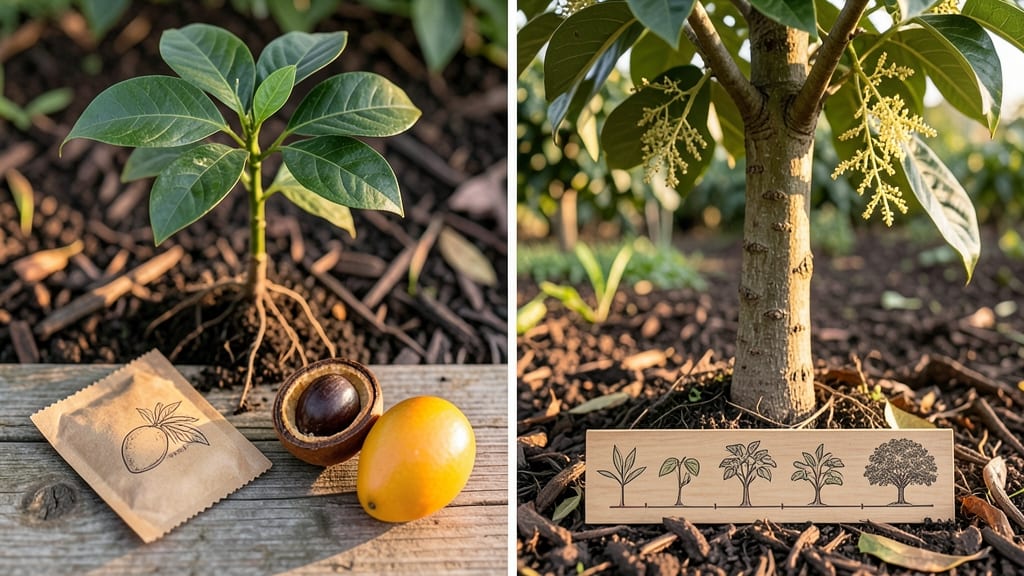
A mango tree grown from seed might take 5-12 years before bearing fruit—and that’s the short version. 🌱 Honestly, I’ve seen seed-grown trees take over a decade to produce anything edible, while grafted varieties fruit in just 3-5 years.
The difference isn’t just luck; it’s genetics, care, and a little horticultural patience.
Seed-grown trees develop from wild or unknown varieties, meaning their fruiting timeline is unpredictable. Grafted trees, on the other hand, inherit the parent plant’s traits—including faster maturity. Climate plays a role too: tropical zones speed up growth, while cooler areas can stretch fruiting by years.
Even with perfect care, a seedling’s first blossoms might wilt before fruiting, teaching me that nature has its own schedule.
You’ll know fruiting is near when the tree hits 15-20 feet tall with thick, sturdy branches. That’s when it starts putting energy into flowers instead of just leaves. Pruning to open the canopy and fertilizing with potassium-rich amendments can nudge the process along—but don’t expect miracles.
The real reward? That first ripe mango, sweeter than any store-bought fruit, is worth every wait.
For impatient gardeners, grafting a known variety onto a seedling’s rootstock is the fastest route to fruit. But if you’re growing from seed for the adventure, embrace the journey—your tree’s unique story begins with that first pit. The timeline varies, but the payoff? Unmatched satisfaction.
Biological Factors Delaying Fruit
When you plant a mango seed, you’re not just waiting for a tree—you’re waiting for a complex biological process to unfold. Several natural factors influence how long it takes for a mango tree to bear fruit from seed, and understanding these can help you manage expectations and optimize growth.
Here’s why the timeline stretches longer than you might hope:
Mango seeds are recalcitrant, meaning they don’t dry out well and must be planted immediately after extraction. Unlike some seeds that sprout in days, mango seeds can take:
- 2 to 6 weeks to germinate under ideal conditions (warmth, moisture, and shade).
- Longer in cooler climates—if temperatures drop below 60°F (15°C), germination may stall or fail entirely.
- Variable success rates—only about 30-50% of seeds germinate reliably, as many are genetically weak or damaged during extraction.
Pro Tip: 💡 Soak the seed in water for 24 hours before planting to kickstart hydration and improve germination odds.
The mango variety you choose directly impacts fruit-bearing time. Here’s how genetics play a role:
| Variety | Fruit-Bearing Time (Seed-Grown) | Why It Takes So Long |
|---|---|---|
| Alphonso | 8–12 years | Hybrid vigor is lost in seedlings; purebred traits take generations to stabilize. |
| Keitt | 10–15 years | Requires specific pollination triggers; seedlings may lack the exact genetic markers. |
| Kent | 7–10 years | Faster-maturing but still prone to inconsistent flowering due to genetic variability. |
| Local/Unknown | 5–8 years (or never) | Wild or hybrid seeds may never fruit at all if they’re not true to type. |
Key Insight: 🔍 Seed-grown mangoes often produce fruit that’s smaller, less sweet, or inconsistent in quality compared to grafted trees. This is because grafting preserves the exact genetic traits of the parent tree.
Mango trees are tropical creatures, and they demand specific conditions to thrive. If these aren’t met, the tree may:
- Take longer to mature (or never fruit at all).
- Suffer stunted growth due to stress, delaying reproductive maturity.
Critical Climate Factors:
- Temperature: Mangoes need warmth year-round (ideal: 75–90°F / 24–32°C). Below 50°F (10°C), growth halts, and flowering is disrupted.
- Sunlight: 6+ hours of direct sun daily is non-negotiable. Shade-loving seedlings may never develop the energy to flower.
- Soil: Well-draining, slightly acidic soil (pH 5.0–7.0) is essential. Poor soil = weak roots = delayed fruiting.
- Water: Overwatering or drought stresses the tree. Seedlings need consistent moisture but must avoid waterlogged roots.
Pro Tip: 🌡️ If you’re in a cooler climate, grow the tree in a large container and bring it indoors during winter to protect it from cold snaps.
Even with perfect conditions, a mango tree won’t fruit until it reaches physiological maturity—a stage where it has:
- Developed a strong root system (often 3–5 years in).
- Built sufficient energy reserves (stored as starch in roots and trunk).
- Reached a critical height and canopy size (usually 10–20 feet tall).
Why this matters: Before a tree can produce fruit, it must allocate energy to:
- Leaf and branch growth (photosynthesis).
- Root expansion (water and nutrient uptake).
- Flower bud formation (a process triggered by day length, temperature shifts, and hormonal balance).
Fun Fact: 🌸 Some mango trees only flower after experiencing a dry season followed by heavy rains—a natural cue in their tropical homeland.
Even if your tree flowers, lack of pollination can prevent fruit from forming. Mangoes rely on:
- Bees, bats, or wind to transfer pollen between flowers.
- Perfect flower timing—some varieties are self-incompatible, meaning they need another tree nearby to cross-pollinate.
Actionable Fix: 🐝 If you have only one seedling, hand-pollinate flowers using a small brush to transfer pollen from one flower to another.
Sometimes, human error slows down fruiting. Avoid these pitfalls:
- Transplanting too soon (seedlings need 1–2 years in the ground before moving).
- Over-pruning young trees (removing too many branches reduces energy for growth).
- Using chemical fertilizers (organic, balanced fertilizers work better for young trees).
- Ignoring pests/diseases (aphids, scale insects, or fungal infections can weaken the tree).
Pro Tip: ✨ Apply compost tea or fish emulsion in early spring to give your seedling a nutrient boost without burning its roots.
Speed Up Fruit Production Naturally
Growing a mango tree from seed is a rewarding but slow process—one that demands patience, care, and the right techniques to encourage faster fruiting.
Below are practical solutions tailored to common challenges, along with prevention tips to help your seedling thrive and bear fruit sooner (though still within the 3–7 year range for most varieties).
Cause: Weak seedlings struggle to develop strong roots or stems due to poor soil, lack of nutrients, or improper watering.
Solution:
- 🔥 Boost Soil Fertility Use a well-draining, nutrient-rich mix of:
- 50% garden soil
- 30% compost or aged manure
- 20% perlite or sand (for aeration) Pro Tip: 💡 Add a slow-release fertilizer (like 10-10-10) at planting to kickstart growth.
- 👨🍳 Transplant Carefully
- Move seedlings to larger pots (5+ gallons) or the ground after 6–12 months when roots fill the container.
- Hardening off (acclimating to outdoor conditions) over 2 weeks reduces shock.
- ☀️ Optimize Sunlight Mango trees need 6+ hours of direct sun daily. If indoors, use grow lights for 12–14 hours/day.
Prevention: ✅ Monitor soil moisture—overwatering rots roots, while underwatering stunts growth. Water deeply 2–3 times/week in dry climates. ✅ Avoid cold drafts or temperatures below 50°F (10°C)—mangoes are tropical!
Cause: Immature trees lack energy to flower due to nutrient deficiencies, stress, or insufficient sunlight.
Solution:
- 🍳 Feed for Blooms Switch to a high-phosphorus fertilizer (like 5-10-10) 6 months before expected flowering (Year 2–3). Phosphorus promotes root and flower development. Pro Tip: 🌡️ Apply Epsom salt (magnesium sulfate) monthly during growing season—magnesium boosts chlorophyll for energy production.
- 🌿 Prune Strategically
- Remove suckers (shoots at the base) to direct energy to the main trunk.
- Trim overcrowded branches to improve airflow and sunlight penetration.
- 🌞 Simulate Seasonal Triggers Mangoes flower in response to temperature shifts. In controlled climates:
- Reduce water slightly for 2 weeks to stress the tree (mimics dry season).
- Drop nighttime temps to 60–65°F (15–18°C) for 1–2 weeks (use a fan or AC).
Prevention: ✅ Avoid heavy pruning in the first 2 years—let the tree establish its structure. ✅ Mulch with organic matter (like straw) to retain moisture and nutrients.
Cause: Young trees may produce small, poor-quality fruit that falls off due to insects, disease, or hormonal imbalances.
Solution:
- 🔪 Protect Against Pests
- Scale insects and fruit flies sap energy. Spray with neem oil or soapy water weekly during fruiting season.
- Birds? Cover fruit with netting once buds form.
- 💊 Balance Hormones
- Thin fruit when small (leave 1–2 per cluster) to reduce competition for nutrients.
- Apply boron-rich fertilizer (like borax, 1 tsp/gallon) to prevent blossom end rot or weak fruit walls.
- 🍎 Hand-Pollinate (If Needed) Mangoes are self-pollinating, but humidity can hinder pollen transfer. Gently shake branches during peak bloom (morning hours) to aid pollination.
Prevention: ✨ Test soil pH (ideal: 6.0–7.5). Adjust with lime (to raise pH) or sulfur (to lower) if needed. ✨ Avoid over-fertilizing with nitrogen—it promotes leaves over fruit.
Cause: Some mango varieties (like ‘Keitt’ or ‘Haden’) take longer to fruit from seed due to genetic traits.
Solution:
- 🌱 Choose Grafting for Faster Results If patience is low, graft a known fruiting variety onto your seedling’s strong rootstock. This can cut fruiting time by 1–2 years. How-to:
- Select a scion (cutting from a fruiting tree) in dormant season.
- Make a clean "T-cut" on both the scion and seedling.
- Wrap with grafting tape and seal with grafting wax.
- 🌿 Select Faster-Maturing Varieties If starting from seed, pick dwarf or early-bearing types like:
- ‘Julie’ (3–5 years)
- ‘Cogshall’ (4–6 years)
- ‘Kent’ (5–7 years)
Prevention: ✅ Research parent trees—if possible, collect seeds from fast-maturing varieties for quicker results. ✅ Label seedlings by variety and planting date to track progress.
Final Note: While these steps optimize your mango tree’s growth, remember—seed-grown trees are unpredictable. For guaranteed fruiting, grafting remains the fastest method. But with care, your patient efforts will pay off with juicy, homegrown mangos! 🥭✨
Frequently asked questions
Why do seed-grown mango trees take so much longer to fruit than grafted ones?
Seedlings grow from random genetic combinations, meaning their fruiting traits are unpredictable. Grafted trees inherit the parent plant's exact characteristics—including faster maturity. Seedlings may also produce smaller, less flavorful fruit because their genetics aren't optimized for commercial varieties.
Can I speed up fruiting by fertilizing more?
Too much fertilizer—especially nitrogen—can actually delay fruiting by encouraging leaf growth over flowers. Focus on balanced organic fertilizers with phosphorus and potassium during the second and third years. A high-nitrogen boost too early will make your tree grow tall but fruitless!
What's the earliest a mango tree grown from seed can bear fruit?
The absolute fastest recorded time is about 3 years, but this is rare. Most seed-grown trees take 5-7 years minimum, with many varieties needing 8-12 years. Dwarf varieties like 'Julie' or 'Cogshall' are your best bets for quicker results.
How do I know if my seedling will ever fruit?
Watch for these signs of potential: thick trunk growth (3+ inches in diameter), dense foliage, and new branches forming annually. If your tree grows 10+ feet tall with no flowers after 5 years, it may never fruit. Some wild varieties simply don't produce edible fruit.
Can I get fruit from a seedling faster by pruning aggressively?
No—over-pruning young trees actually slows fruiting by reducing their energy reserves. Focus on light shaping to open the canopy for sunlight. Heavy pruning in the first 3 years can stunt growth and delay flowering by years. The key is balance: remove only dead or crossing branches.