
Trees
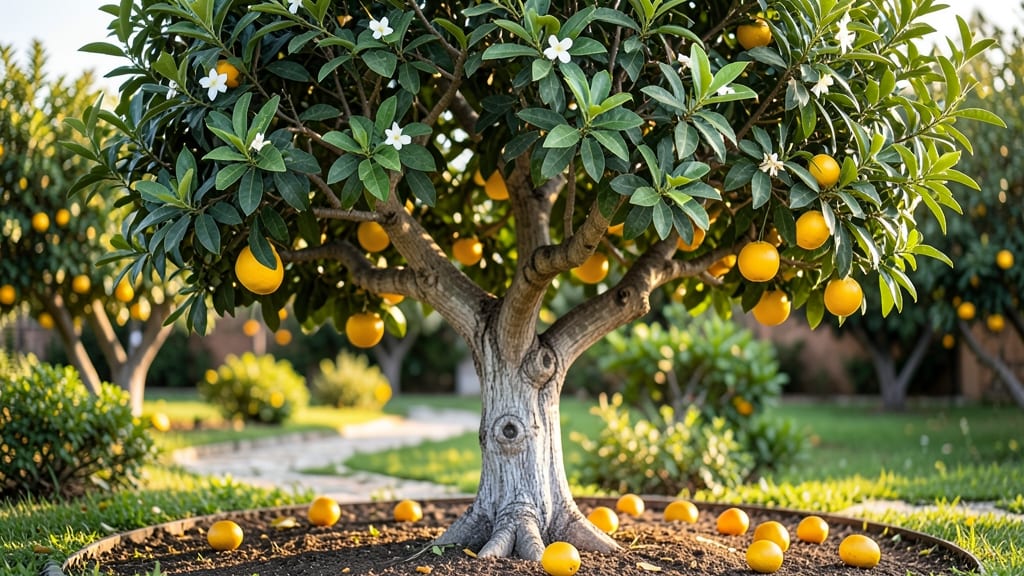
How tall do grapefruit trees grow? At maturity, they typically reach between 10 and 25 feet, but their final height depends entirely on the variety you choose—some stay under 8 feet, while others stretch so tall they dwarf even the tallest basketball hoop.
Picture this: you’ve just planted a 🍊 grapefruit tree in your backyard, dreaming of fresh fruit and shade. But within a few years, that same tree could either fit neatly under your patio awning or stretch so high it blocks your neighbor’s view—unless you plan ahead.
In General (Tropical/Subtropical) zones 9b-11, where these trees thrive, the difference between a dwarf variety and a standard one isn’t just aesthetics—it’s about spacing, sunlight exposure, and even how you prune. A 6-foot Foster grapefruit stays manageable, while a 30-foot Ruby Red needs room to spread its branches.
Below, I’ll break down the exact heights by variety, how growth stages shape your tree’s future size, and the 5 key factors you can control to keep it at your ideal height—whether that’s a compact 8 feet or a sprawling 20 feet.


Grapefruit tree height by variety: dwarf vs standard vs giant types
Choosing the right grapefruit variety isn’t just about flavor—it’s about space planning. Some dwarf types stay under 10 feet, while others reach 30 feet or more.
If your backyard has limited space, compact varieties like 'Foster' or 'Oroblanco' are perfect, while larger varieties like 'Ruby Red' need room to sprawl. Let’s break down the exact heights by category so you can pick the best fit for your garden.
Grapefruit trees fall into three main height categories: dwarf (6-12 ft), standard (15-25 ft), and giant (25+ ft). Dwarf varieties are ideal for containers or small yards, while standard types thrive in large gardens or orchards.
Giant varieties, though rare, can dominate landscapes—so measure twice before planting. Each variety also has unique growth habits, like spreading canopies or tall, narrow trunks, which affect spacing needs.
Here’s a quick comparison of 12 popular grapefruit varieties, including their mature heights, spread, and ideal spacing for home gardens. Use this as your guide to avoid overcrowding or wasted space.
| Variety | Mature Height (ft) | Spread (ft) | Category | Ideal Spacing (ft) | Notes | ||||||||||||||||||||
|---|---|---|---|---|---|---|---|---|---|---|---|---|---|---|---|---|---|---|---|---|---|---|---|---|---|
| Foster | 6-8 | 6-8 | Dwarf | 8-10 | Best for containers; cold-hardy | ||||||||||||||||||||
| Oroblanco | 8-10 | td style="padding:12px;">8-10Dwarf | 10-12 | Sweet-tart hybrid; great for small yards | |||||||||||||||||||||
| Thompson | 10-12 | 10-12 | Semi-Dwarf | 12-15 | Classic pink grapefruit; moderate spread | ||||||||||||||||||||
| Ruby Red | 20-30 | 15-20 | Standard | 20-25 | Tallest variety; needs full sun | ||||||||||||||||||||
| White Marsh | 15-20 | 12-15 | Standard | 18-20 | Popular commercial variety; cold-sensitive | ||||||||||||||||||||
| Duncan | 12-15 | 10-12 | Semi-Dwarf | 12-14 | Red blush; early producer | ||||||||||||||||||||
| Melogold | 18-22 | 15-18 | Standard | 20-22 | Golden grapefruit; needs warm climate | ||||||||||||||||||||
| Star Ruby | 15-20 | 12-15 | Standard | 18-20 | Ruby-red flesh; high yield | ||||||||||||||||||||
| Black Beauty | 18-22 | 15-18 | Standard | 20-22 | Dark purple skin; cold-hardy | ||||||||||||||||||||
| Rio Red | 12-15 | 10-12 | Semi-Dwarf | 12-14 | Sweet-red flesh; compact | ||||||||||||||||||||
| Sugar Belle | 10-12 | 8-10 | Dwarf | 10-12 | Seedless; great for containers |
| Growth Stage | Height Range | Fruit Production | Pruning Impact |
|---|---|---|---|
| Seedling (0-1 year) | 2-4 ft | None | Minimal (focus on root development) |
| Juvenile (1-3 years) | 6-12 ft | Sporadic (small fruit) | Structural shaping (remove weak branches) |
| Mature (3-5 years) | 15-25 ft | Full production | Regular pruning (2-3 times/year) |
| Over-Mature (>10 years) | 20-30+ ft | Declining yield | Rejuvenation pruning |
By year 2, your grapefruit tree will likely reach 6-8 feet, with some vigorous varieties like 'Ruby Red' nearly doubling that height. This is when fruit production begins, though the first harvest may be small.
Pruning at this stage should focus on removing competing branches to direct energy toward trunk and fruit development.
Between years 3-5, grapefruit trees hit their prime, growing 10-15 feet annually if unpruned. This is when their true mature height becomes apparent—standard varieties can easily exceed 20 feet, while dwarf types like 'Foster' top out around 8-10 feet.
Proper pruning during these years can reduce height by 30-50% while maintaining fruit quality.
Once mature (5+ years), grapefruit trees grow more slowly but may still add 1-2 feet per year if conditions are ideal. The trade-off? Fruit production peaks during these years, but unchecked growth can lead to heavy branches that require support structures or regular thinning.
I’ve seen 30-foot grapefruit trees in Florida orchards that produce hundreds of pounds of fruit annually.
Remember: Pruning isn’t just about height control—it directly impacts fruit size and yield. A well-pruned tree stays healthier and more manageable, while neglected trees become top-heavy and prone to disease.
Start pruning in late winter when the tree is dormant, and repeat in summer to shape new growth.