
Blooming
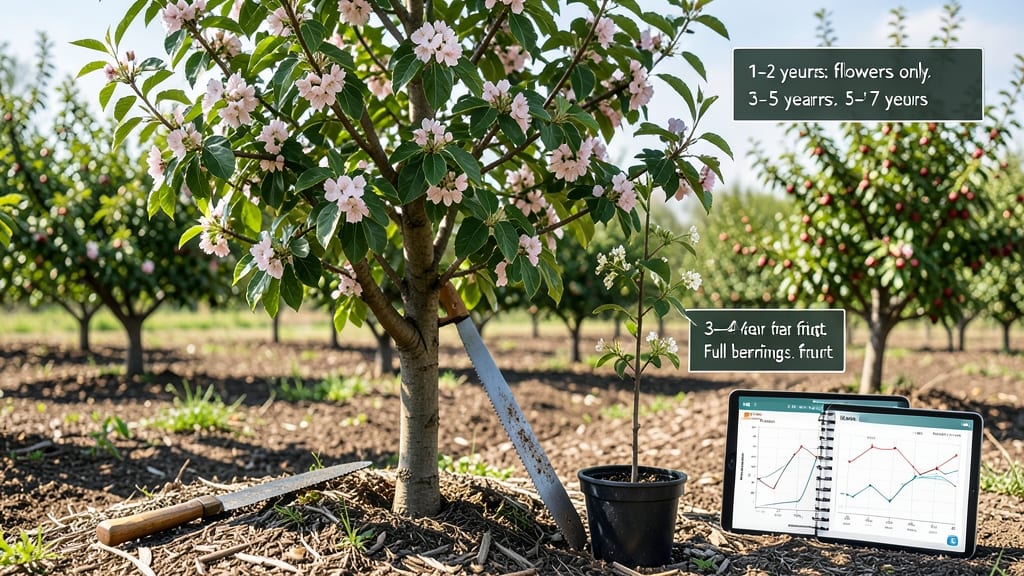
Before cherry trees bear fruit, you’ll typically wait 3 to 7 years after planting, with dwarf varieties fruiting sooner and standard trees taking longer. Sweet cherries need 500–1,000 chill hours, while tart cherries thrive with 300–600, both critical for timing.
Patience pays off when growing cherry trees, but the wait varies dramatically by type. 🌳 Dwarf varieties like Stella or Lapins can surprise you with fruit as early as 2–3 years, while heirloom standards like Bing or Montmorency often play the long game, sometimes 7+ years before their first harvest.
The real game-changer? Chill hours—the number of hours below 45°F your tree experiences each winter. If you live in a warm climate, you might need to choose low-chill varieties or use frost blankets to help them meet their requirements.
Even then, some trees take an extra year or two to fully mature their flowering structures, so don’t rush expectations.
For example, tart cherries like Montmorency are more forgiving with chill hours, making them better suited for regions like the Midwest, while sweet cherries often need the cooler climates of the Pacific Northwest.
If you’re impatient, consider grafting a dwarf variety onto a cold-hardy rootstock—this combo can shave years off the fruiting timeline while keeping the tree manageable in size.
💡 In This Article
- Cherry Tree Varieties and Their Fruit-Bearing Timelines
- Optimizing Chill Hours for Faster Cherry Tree Fruit Production
Cherry tree varieties and their fruit-bearing timelines
The fruiting timeline of cherry trees hinges on two key factors: variety type (sweet vs tart) and tree size (dwarf vs standard). Sweet cherries like Bing or Rainier typically require 5-7 years to bear fruit, while tart cherries such as Montmorency or Balaton often fruit in 4-6 years.
The difference stems from their genetic maturation rates—sweet cherries prioritize larger fruit size over early production, while tart cherries mature faster due to their hardier nature. 🌿
Dwarf varieties take advantage of accelerated growth rates thanks to specialized rootstocks. For instance, the Stella dwarf cherry can produce fruit in as little as 2-3 years when grafted onto a dwarfing rootstock like Gisela 5 or Colt.
These rootstocks restrict root growth, forcing the tree to focus energy on fruit production rather than vertical expansion. Standard trees, however, may take 7-10 years to bear fruit because their larger size demands more resources for structural development before flowering.
Rootstock choice makes a dramatic difference. Gisela rootstocks, for example, can reduce fruiting time by 30-50% compared to seedling rootstocks. This is why commercial growers often use dwarfing rootstocks—they not only speed up fruiting but also make the trees easier to manage in home gardens.
The trade-off? Dwarf trees typically have shorter productive lifespans (15-20 years) compared to standard trees (25-30 years).
Early-bearing varieties exist, but they require careful selection. The Lapins tart cherry, for instance, can produce fruit in 3-4 years when planted in optimal conditions, while the Sweetheart sweet cherry may take 4-5 years.
These varieties are bred specifically for faster maturation, making them ideal for impatient growers. However, even early-bearing trees need proper winter chilling to set fruit—without adequate chill hours, they may produce sparse or poor-quality fruit.
Consider your climate when choosing varieties. In warmer regions (like USDA Zone 7-8), low-chill varieties such as Stella or Black Tartarian perform better, while cooler climates (like Zone 5-6) suit high-chill varieties like Bing or Lambert.
The right match can shave 1-2 years off the fruiting timeline by ensuring the tree's biological needs are met from day one.
For home growers, the best strategy is to start with a dwarf variety grafted onto a cold-hardy rootstock. This combo maximizes early fruiting while minimizing maintenance.
Just remember: even with the fastest varieties, the first harvest may be modest—cherry trees often need 2-3 years of gradual improvement before reaching peak production. 🍒