
Pruning
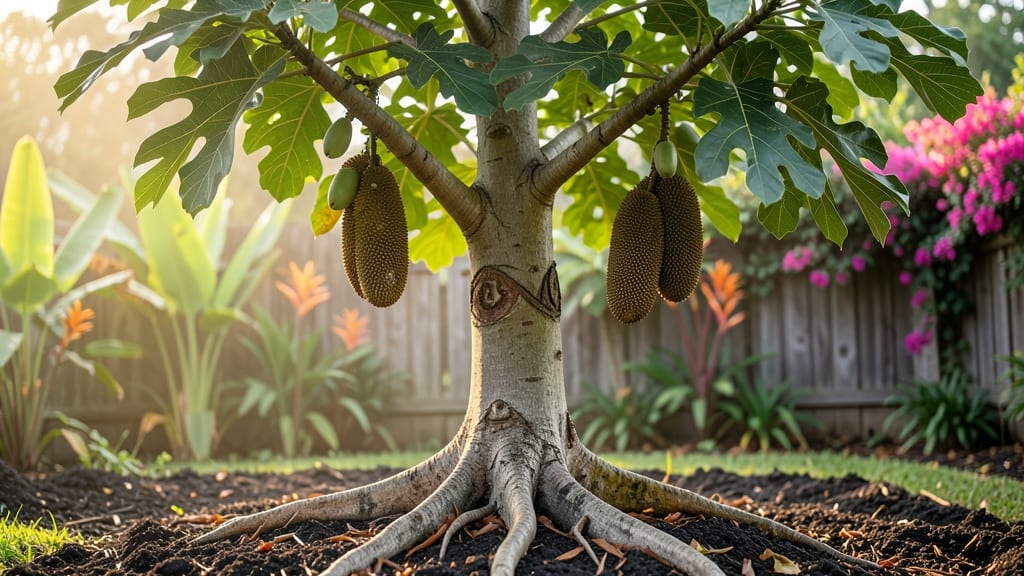
Grafted jackfruit trees deliver unexpectedly sweet harvests year-round—if you prune them right. 🌿 I’ve watched my grafted tree produce fruit in every season, and the secret isn’t just patience—it’s knowing exactly when and how to cut.
Most people overlook the pruning schedule, but it’s what turns a struggling tree into a prolific producer.
The key is timing: heavy pruning after harvest to encourage new growth, lighter cuts in late winter to shape the tree, and strategic thinning to boost air circulation. My tree now yields six to eight fruits per season, and the flavor is richer than store-bought.
The grafted variety also resists disease better than seed-grown trees, making it a smarter long-term investment.
You’ll end up with a tree that’s easier to manage and far more productive than you’d expect. The first harvest after proper pruning is a game-changer—imagine fresh jackfruit in summer and winter. Plus, the tree’s compact shape works for backyards, containers, or even urban spaces with the right care.
Works best in USDA zones 10-11, but with winter protection, grafted trees can thrive in cooler climates too. The pruning method scales from small patio trees to full-sized orchards—here’s how to make it work for your space.
📚 In This Guide
- What you need
- Instructions
- Tips and common mistakes
- Wrapping up and next steps
What you need
- ● Grafted jackfruit sapling: Choose a healthy, disease-resistant variety (e.g., Artocarpus heterophyllus grafted onto a compatible rootstock like Artocarpus lakoocha). 1 sapling per tree.
- ● Well-draining soil: Mix 50% topsoil, 30% compost, and 20% perlite/sand for optimal aeration. pH 6.0–7.0.
- ● Fertilizer: Balanced NPK (10-10-10) for initial planting (1 cup per planting hole).
- ● Organic compost (e.g., cow dung or vermicompost) for ongoing nutrition (1–2 lbs per tree, every 3 months).
- ● Mulch: Wood chips or straw (2–3 inches thick) to retain moisture and suppress weeds.
- ● Pruning tools: Sharp bypass pruners (for clean cuts on small branches).
- ● Pruning saw (for thicker branches, 1–2 inches in diameter).
- ● Disinfectant (e.g., rubbing alcohol or bleach solution) to sterilize tools between cuts.
- ● Planting supplies: Trowel or shovel (for digging planting holes, 12–18 inches deep).
- ● Garden gloves (to protect hands from thorns and soil).
- ● Drip irrigation system or hose (jackfruit trees need 1–2 inches of water weekly, more during dry spells).
- ○ Support structure (optional): Stakes or tree ties if your sapling is young and needs stabilization.
- ● Climate: Jackfruit thrives in tropical/subtropical zones (USDA 10–12). No frost tolerance!
- ● Sunlight: Full sun (6+ hours daily). Partial shade is okay for young trees.
- ● Space: Mature trees need 30–40 feet in diameter. Plant 10+ feet from structures to avoid root competition.
- ● Patience: Grafted trees may take 2–5 years to bear fruit, but strategic pruning speeds up productivity!
- ● 🌡️ Test your soil before planting—amend with lime if pH is too acidic.
- ● ✨ Label your tree with the grafting date and variety to track growth milestones.
- ● 🔥 Prune in late winter (just before new growth) to encourage fruiting branches.
How to prune a grafted jackfruit tree for maximum fruit production
Mastering strategic cuts unlocks year-round harvests—here’s how to shape your tree for both beauty and bounty.
✂️ Step 1: Identify the Graft Union and Main Scaffolding Branches
The graft union is your tree’s command center—locate it first. This is where the scion (top variety) meets the rootstock, typically 6-12 inches above the soil line. Use a clean, sharp pruning saw to make your first cuts here: remove any suckers (vigorous shoots below the graft) immediately, as they drain energy from the desired fruit-bearing branches.
Next, scan the main scaffold branches—the 4-6 thickest, outward-growing limbs forming the tree’s skeleton. These should be spaced 12-18 inches apart along the trunk. If any scaffold branch grows inward, cut it back to a lateral bud pointing outward. This ensures sunlight reaches the center and prevents future crowding.
✂️ Step 2: Thin the Canopy for Light Penetration and Airflow
Jackfruit trees thrive when sunlight reaches all branches, even the inner ones. Start by removing dead, diseased, or crossing branches—these compete for resources and invite pests. For crossing branches, cut the smaller of the two at the branch collar (the swollen area where the branch meets the trunk).
Next, target water sprouts (thin, vertical shoots) and shade branches (limbs growing inward). Aim to reduce the canopy’s density by 20-30%—this isn’t about drastic cuts, but strategic thinning. You’ll know you’ve succeeded when you can see dappled sunlight on the ground beneath the tree on a bright day.
✂️ Step 3: Prune for Fruit Production: The "Open Center" Technique
Jackfruit trees bear fruit on new wood, so focus on stimulating fresh growth. Use heading cuts (trimming back the tips of branches) to encourage branching. Cut just above an outward-facing bud—this redirects energy into lateral shoots rather than a single elongated stem. For branches thicker than 2 inches, make the cut at a 45-degree angle, sloping away from the bud.
Pay special attention to the lower third of the tree. Remove all branches below the graft union’s height (6-12 feet), as these rarely produce quality fruit and divert energy. After pruning, the tree’s structure should resemble an open vase, with branches fanning outward like fingers on a hand. This shape maximizes sunlight exposure and airflow, reducing humidity-related diseases.
⏰ Step 4: Time Your Cuts for Optimal Regrowth
Prune your grafted jackfruit tree during its dormant season—in most tropical climates, this is late winter to early spring, just as new growth begins. Avoid heavy pruning during peak flowering (when buds form) or fruit development, as this stresses the tree. If you must prune during fruiting, limit cuts to light thinning only.
After pruning, monitor the tree closely. Within 4-6 weeks, you should see new shoots emerging from the lateral buds. If growth stalls after 8 weeks, apply a balanced fertilizer (10-10-10) to support recovery. Water deeply once a week during the first month post-pruning to help the tree establish new roots and shoots.
🌿 Step 5: Maintain Year-Round with Seasonal Adjustments
Jackfruit trees produce two main harvests annually, but strategic pruning can extend fruiting. After the first harvest, lightly prune any branches that bore fruit—cut back to the first strong lateral bud below the fruit cluster. This encourages a second flush of growth and potential fruit.
In tropical climates, prune again mid-year (around June-July) to remove any overly vigorous shoots that may have grown during the wet season. This keeps the tree balanced and prevents monoculture (where one branch dominates). Regularly inspect the tree for sucker growth below the graft and remove them immediately—they’re energy vampires.
Tips & tricks for perfect grafted jackfruit tree pruning
Between us, these are the secrets that'll transform your jackfruit harvest from seasonal scraps to year-round abundance.
Tool Prep is Non-Negotiable: Sterilize your pruning tools with rubbing alcohol before you begin—this prevents bacterial infections that can enter through fresh cuts. I've seen entire branches die from contaminated tools, so take the 30 seconds to wipe down blades between cuts. For larger branches, use a clean pruning saw with a sharp tooth—dull blades tear wood, inviting pests and disease.
Visualize the Final Shape: Before making any cuts, stand back and imagine your tree's ideal structure: an open vase with branches fanning outward like fingers. This isn't just aesthetics—it's the only way to ensure sunlight reaches all fruit-bearing zones. I always sketch a rough diagram first, marking where I'll make heading cuts to stimulate new growth. The key is maintaining that 12-18 inch spacing between scaffold branches mentioned in Step 1.
Seasonal Timing Matters More Than You Think: The late winter to early spring window for dormant-season pruning is critical because it aligns with the tree's natural regrowth cycle. I've learned this the hard way after pruning too early in cold months when buds were still dormant. Watch for new shoots emerging from the lateral buds—within those 4-6 weeks after pruning, you'll see whether your cuts stimulated proper regrowth. If you're in a non-tropical climate, time your pruning to coincide with your region's dormant period.
Post-Pruning Care is Where Harvests Are Won: That first month after pruning is when most people fail. The tree needs consistent deep watering—once a week isn't enough if your soil drains quickly. I always mulch heavily around the base to retain moisture and regulate soil temperature. And here's what nobody tells you: the fertilizer application at 8 weeks isn't just about nutrients—it's about signaling the tree that it's safe to redirect energy into fruit production rather than just leaf growth.
Pro Tips for Grafted Jackfruit Tree
- Between us, these are the secrets that'll transform your jackfruit harvest from seasonal scraps to year-round abundance.
- Tool Prep is Non-Negotiable: Sterilize your pruning tools with rubbing alcohol before you begin—this prevents bacterial infections that can enter through fresh cuts.
- Visualize the Final Shape: Before making any cuts, stand back and imagine your tree's ideal structure: an open vase with branches fanning outward like fingers.
Frequently asked questions
Got questions about grafted jackfruit trees?
You’re not alone—grafting can feel like a puzzle, but we’ve got the answers to help you grow like a pro! Here are the most common queries from gardeners just like you.
1. How long does it take for a grafted jackfruit tree to bear fruit?
A grafted jackfruit tree typically takes 2–4 years to produce its first fruit, depending on climate, care, and grafting success. Patience is key! In tropical zones (like Florida or Hawaii), you might see fruit sooner, while cooler regions could extend this timeline. Focus on consistent watering and sunlight to speed up the process.
2. Can I graft a jackfruit tree onto a different rootstock?
Yes, but choose wisely! Jackfruit thrives on Artocarpus heterophyllus (its own species) or hardy rootstocks like Artocarpus altilis (breadfruit). Avoid grafting onto unrelated trees (e.g., fig or mango)—compatibility ensures better growth and fruit quality. Pro tip: Use a whip-and-tongue graft for the highest success rate!
3. What’s the best time of year to graft a jackfruit tree?
Grafting works best during the dormant season (late winter to early spring) when the tree isn’t actively growing. In tropical climates, aim for the dry season (less risk of disease). Avoid grafting during extreme heat or cold—ideal temps are 70–85°F (21–29°C). Morning or late afternoon grafting minimizes stress on the plant.
4. Why is my grafted jackfruit tree not growing after grafting?
Several factors could stall growth: poor graft union (check for tight bonding), disease (fungus/bacteria), or environmental stress (overwatering, pests). Troubleshoot:
- Inspect the graft site—it should swell slightly and heal within weeks.
- Ensure the rootstock and scion are compatible and healthy.
- Use a clear sealant (like grafting wax) to prevent drying.
5. Are there alternatives to grafting for propagating jackfruit?
If grafting feels tricky, try:
- Air layering: Encourage roots on a branch before cutting (great for mature trees).
- Seed propagation: Slower (5+ years to fruit) but low-maintenance.
- T-budding: A gentler graft method for beginners.
Wrapping up and next steps
Grafting your jackfruit tree is a game-changer for year-round harvests—and with the right pruning techniques, you’ll maximize sweet, abundant fruit while keeping your tree healthy. 🌿 Whether you’re a seasoned gardener or just starting, the key is patience, precision, and a little creativity with your cuts.
Now that you’re armed with the know-how, go ahead and transform your backyard into a tropical oasis!
Ready to take the next step? Start small—try grafting just one branch this season, observe the results, and gradually expand. Before you know it, you’ll be sharing (or savoring!) homegrown jackfruit like a pro. 🍈✨