
Shrubs
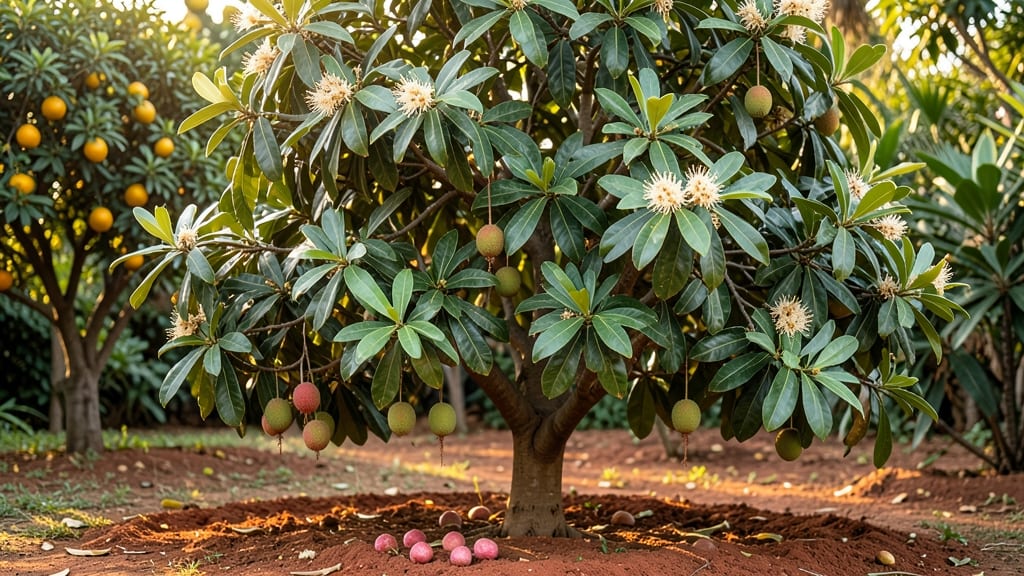
Growing exotic fruits in Florida means your backyard could soon taste like a tropical vacation. 🌴 The humidity and heat here are perfect for mangoes, lychees, and papayas—plants that would freeze in most states but thrive in Florida’s endless growing season.
I’ve grown everything from sweet 62 mangoes to golden guavas, and the key is matching the right variety to your microclimate.
The real magic happens when you pick the right spot: full sun for citrus, partial shade for lychees, and well-draining soil for papayas. Florida’s sandy soil needs amending with compost, and most of these trees love a little extra organic matter to get established.
Watering’s the trickiest part—too much can rot roots, but too little stunts growth. I’ve learned the hard way that consistency beats deep soakings.
By late summer, you’ll be harvesting juicy mangoes and fragrant lychees that taste like nothing from the grocery store. The first time I bit into a tree-ripened mango, I nearly dropped it—it was that sweet.
These fruits aren’t just delicious; they’re conversation starters, and Florida’s nurseries make it easy to get started with young plants.
Whether you’re in the Panhandle or the Keys, the varieties that work best depend on your frost risk and humidity levels. Some trees, like soursop, need tropical heat, while others, like calamondin, handle cooler nights.
Florida’s nurseries specialize in these, so you won’t have to hunt for them. Let’s get your exotic fruit orchard growing!
📚 In This Guide
- What you need
- Instructions
- Tips and common mistakes
- Wrapping up and next steps
What you need
- ● Exotic fruit plants: Choose from Florida-friendly varieties like lychee, mango, longan, sapodilla, or starfruit. Start with 3–5 plants (dwarf or semi-dwarf for small spaces).
- ● Well-draining soil: Mix 50% native Florida soil with 50% compost or coconut coir (add perlite for extra aeration).
- ● Organic fertilizer: A balanced 6-6-6 or 8-3-9 NPK blend (citrus-specific if available).
- ● Mulch: 2–3 inches of pine bark or wood chips to retain moisture and regulate temperature.
- ● Drip irrigation system or soaker hoses: 1–2 lines (adjustable for 1–2 gallons per hour).
- ● Hand trowel & pruning shears (sterilized with rubbing alcohol).
- ● Garden gloves (nitrile-coated for durability).
- ● pH test kit (ideal range: 5.5–7.0 for most tropical fruits).
- ● Shade cloth (30–50%) (for young plants; 10’x10’ sections if needed).
- ● Stakes & ties (for wind-prone areas; 6–8” bamboo or metal stakes).
- ● Sunny location: 6+ hours of direct sunlight daily (south- or west-facing spots ideal).
- ● Frost-free zone: Florida’s USDA Zones 9–11 (no winter kill!).
- ● Local regulations: Check UF/IFAS guidelines for invasive species restrictions (e.g., lychee in some counties).
- ● Patience: Most exotic fruits take 2–5 years to bear fruit!
- ● Fruit fly traps (for pest control; hang 2–3 per orchard).
- ● Slow-release fertilizer spikes (for low-maintenance nutrition).
- ● Trellis or espalier kit (for compact varieties like starfruit).
- ● Grow lights (LED, full-spectrum) (for container gardens in shady spots).
Step-by-Step guide to planting Florida-friendly exotic fruits
Here’s how to turn your sunny Florida yard into a tropical fruit paradise—no winter stress, just year-round harvests.
🌱 Step 1: Select the Right Varieties for Your Climate Zone
Florida’s frost-free winters mean you can grow bold tropicals like mango (Mangifera indica), lychee (Litchi chinensis), and longan (Dimocarpus longan) with ease. Stick to USDA Zones 10-11 varieties—they thrive in 80-95°F heat and tolerate brief humidity spikes. Avoid delicate citrus hybrids; opt for sapodilla (Manilkara zapota) or jackfruit (Artocarpus heterophyllus) for low-maintenance, high-reward crops.
I always check the University of Florida IFAS Extension for region-specific recommendations—some varieties, like avocado (Persea americana), need full sun (6+ hours daily) and well-draining soil to avoid root rot. If your yard has sandy soil (common in Florida), amend with 2-3 inches of compost before planting to retain moisture without suffocating roots.
☀️ Step 2: Plant in Well-Draining, Slightly Acidic Soil
Exotic fruits hate soggy feet—amend native soil with 50% potting mix and 50% coconut coir to improve drainage. Test your soil’s pH; most tropical fruits prefer 5.5-6.5. If your yard’s soil runs alkaline (common in limestone-heavy areas), mix in sulfur granules at planting time to lower pH gradually. I use a soil test kit ($15 at garden centers) to avoid guesswork.
Dig holes twice as wide as the root ball but only as deep—burying too deep suffocates roots. Space trees 15-20 feet apart (longan and lychee need elbow room to avoid competition). For dwarf varieties (like some mango grafts), 8-10 feet is plenty. Water deeply immediately after planting to settle soil around roots—tap the trunk gently to check stability.
💧 Step 3: Water Deeply but Infrequently
Florida’s heat evaporates moisture fast, but overwatering kills exotic fruits faster than drought. Water once a week for the first month, then every 10-14 days once established—until water runs out the drainage holes. Use a soaker hose to deliver moisture 2 inches below the soil surface; surface watering encourages fungal diseases like anthracnose (common in lychee).
Mulch with 3 inches of wood chips to lock in moisture and regulate temperature. Keep mulch 6 inches away from the trunk to prevent rot. You’ll know watering is right when the top 2 inches of soil feel dry to the touch. If leaves yellow between waterings, you’re overdoing it—exotic fruits wilt before they thirst.
✂️ Step 4: Prune for Shape and Airflow Starting Year 2
Prune only in late winter (January-February) when new growth is about to start. Remove dead, crossing, or inward-growing branches first—these block sunlight and invite pests. Thin the canopy to open the center for airflow; exotic fruits like lychee hate humidity trapped in dense foliage. Use sterilized pruners (wipe with rubbing alcohol) to avoid spreading bacterial blight.
Shape trees into open-center forms (like an upside-down bowl) to maximize fruit exposure to sun. For fruit-bearing branches, cut back last year’s growth by ⅓ to encourage new, vigorous shoots. Real talk: Don’t prune in summer—you’ll stress the tree just as it’s setting fruit. Watch for sap bleeding after cuts; this is normal but slows recovery.
🍈 Step 5: Fertilize Seasonally for Maximum Yield
Feed only in spring (March) and fall (October) with a balanced 8-8-8 or 6-6-6 fertilizer—exotic fruits burn easily from over-fertilizing. Scatter ½ cup per inch of trunk diameter around the drip line (not the base), then water deeply to activate nutrients. For citrus-like varieties (e.g., calamansi), switch to a citrus-specific blend high in zinc and iron to prevent leaf yellowing.
Organic options work too: fish emulsion (2-3-1) or compost tea every 6 weeks during growing season. Avoid synthetic fertilizers with high nitrogen—they promote leafy growth at the expense of fruit. You’ll know you’re on track when new leaves emerge bright green within 2-3 weeks of feeding.
Tips & tricks for growing exotic fruits in Florida
Here's what nobody tells you about making these tropical trees thrive in your Florida climate.
Sunlight Strategy: While all these varieties love Florida's heat, mango and sapodilla actually need full sun exposure (6+ hours daily) to produce fruit. I've seen trees in partial shade produce leaves but no fruit—position them where they'll get the most direct sunlight possible. For lychee and longan, which tolerate slightly more shade, still aim for at least 5 hours of direct sun to maximize fruit set.
Soil Amendments: The 50% potting mix and 50% coconut coir blend mentioned in Step 2 is non-negotiable for sandy Florida soil. I've learned this the hard way—skipping the coir leads to rapid moisture loss and nutrient depletion. For alkaline soil areas, add sulfur granules at planting time (about 1 pound per 100 square feet) to gradually lower pH. Test again in 6 months to avoid over-acidification, which can harm roots just as much as alkaline conditions.
Watering Wisdom: Florida's humidity makes it easy to overwater—check the top 2 inches of soil daily during the first month, and only water when it feels dry. The soaker hose technique is crucial for delivering moisture 2 inches below the surface where roots need it most. I've seen lychee trees develop anthracnose from surface watering that kept leaves constantly wet. Always water in the early morning to allow foliage to dry before evening humidity sets in.
Pruning Precision: When shaping your trees in open-center forms (Step 4), focus on creating a 30-degree angle on cuts to encourage faster healing. The 1/3 reduction of last year's growth on fruit-bearing branches is perfect for stimulating new shoots—just make sure to do this only in late winter when trees are dormant. Sterilizing pruners with rubbing alcohol between cuts prevents bacterial blight from spreading through the tree's vascular system.
Pro Tips for Exotic Fruits In Florida
- Here's what nobody tells you about making these tropical trees thrive in your Florida climate.
- Sunlight Strategy: While all these varieties love Florida's heat, mango and sapodilla actually need full sun exposure (6+ hours daily) to produce fruit.
- Soil Amendments: The 50% potting mix and 50% coconut coir blend mentioned in Step 2 is non-negotiable for sandy Florida soil.
Frequently asked questions
about growing exotic fruits in Florida’s sunny climate—because even the tropics have a few surprises!What’s the best time of year to plant exotic fruit trees in Florida?
Plant most tropical fruits—like mangoes, lychees, or sapodillas—during Florida’s dry season (November–February). This gives roots time to establish before summer’s heat. Avoid planting in peak summer (June–August) unless you’re using shade cloth for young saplings. Pro tip: Check local frost dates (rare but possible in North Florida) to time early varieties!
Where can I buy exotic fruit trees or saplings in Florida?
Local nurseries like Bonnet House Museum & Gardens (Palm Beach), Fairchild Tropical Botanic Garden (Miami), or UF/IFAS Extension offices sell certified disease-free varieties. Online options? Fast-Growing-Trees.com or Tropical Fruit Trees ship to Florida. Warning: Avoid untested sources—some exotic fruits (like jackfruit) can spread invasively if not contained!
Can I grow exotic fruits in containers, or do they need in-ground planting?
Dwarf varieties like meyer lemons, pomegranates, or carambolas (star fruit) thrive in 15–25 gallon pots with drainage holes. Use well-draining soil (like a mix of potting soil + perlite) and move containers indoors if temps dip below 40°F. Pro tip: Fertilize container plants monthly with citrus or tropical blends for bigger harvests!
What pests should I watch for with exotic fruit trees?
Florida’s humidity loves pests! Citrus leaf miners, fruit flies, and scale insects are common. Preventative care: Spray neem oil monthly, prune for airflow, and use yellow sticky traps for fruit flies. For heavy infestations, contact your UF/IFAS Extension office—they offer free pest diagnostics!
Which exotic fruits are easiest for beginners to grow in Florida?
Start with these low-maintenance picks:
- Mango (variety: ‘Julie’ or ‘Carrie’) – Fast-growing, drought-tolerant.
- Pomegranate – Cold-hardy (to 15°F!) and thrives in well-drained soil.
- Guava – Produces year-round with minimal care.
- Soursop – Loves shade and Florida’s heat (but needs space!).
Wrapping up and next steps
Florida’s sunny climate is a dream for exotic fruit lovers—no winter worries, just year-round growing potential! From mangoes to lychees, these tropical gems thrive with minimal fuss, offering both bold flavors and stunning foliage.
Whether you’re a seasoned gardener or a curious beginner, experimenting with these fruits is a rewarding adventure.
Ready to dive in? Start small—pick one fruit to test, gather your supplies, and let Florida’s warmth do the rest. Your taste buds (and backyard!) will thank you. 🌴✨