
Light Requirements
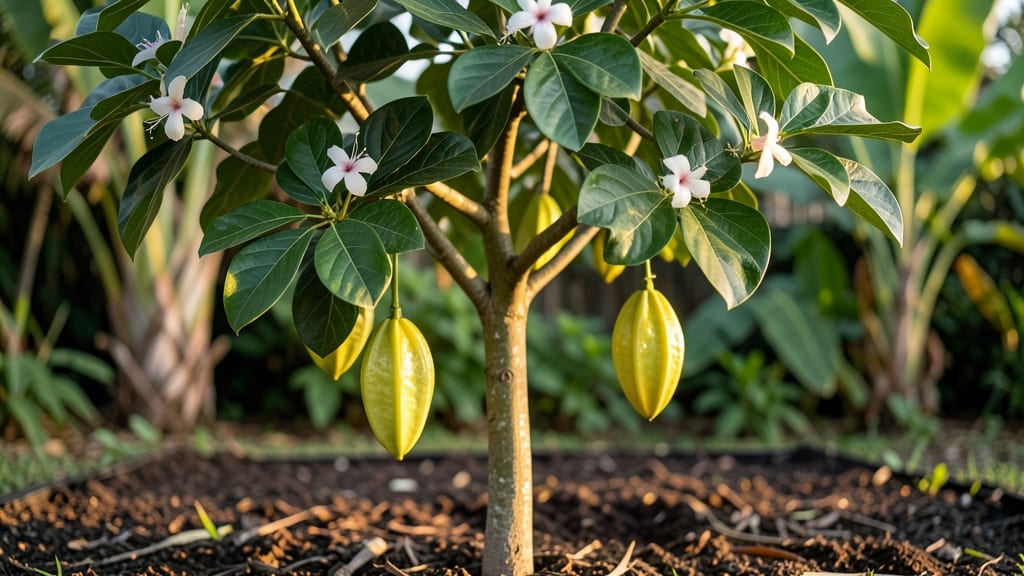
Starfruit grows best in tropical and subtropical regions, including Southeast Asia, the Caribbean, Florida, and parts of Central America, where consistent warmth and high humidity support its growth and fruit quality.
Starfruit's ideal growing conditions explain why these regions dominate production. 🌴 The fruit demands year-round temperatures between 70°F and 90°F, with humidity levels above 60% to prevent fruit cracking—a common issue in drier climates.
Florida's subtropical zones and Thailand's tropical lowlands are perfect examples, where starfruit trees produce fruit continuously, unlike in temperate regions where they'd struggle to survive winters. What's fascinating is how these climates also influence the fruit's sweetness and size, with some varieties developing thicker flesh in higher humidity areas.
Beyond climate, soil quality plays a crucial role. Starfruit prefers well-draining, slightly acidic soil with a pH between 5.5 and 6.5. In regions like Vietnam and Mexico, farmers often use organic matter to enrich the soil, which directly impacts the fruit's flavor profile.
The combination of these environmental factors creates the perfect storm for starfruit cultivation, explaining why these specific areas remain the global leaders in production.
💡 In This Article
- Climate Requirements for Starfruit Cultivation
- Top Starfruit-Producing Regions Worldwide
Climate requirements for starfruit cultivation
Starfruit, or Averrhoa carambola, is a tropical fruit with precise climate needs that explain its limited growing regions. The plant thrives in areas with consistent temperatures between 70°F and 90°F, where frost is nonexistent.
Even brief exposure to temperatures below 50°F can damage leaves and fruit, making regions with cold winters completely unsuitable. This explains why starfruit doesn't grow naturally in Europe or most of North America outside Florida.
The humidity requirement is equally critical—starfruit needs levels above 60% to prevent fruit cracking, a common issue in drier climates. In regions like Thailand, the monsoon season provides natural humidity spikes that actually benefit the fruit's development, while areas with erratic rainfall (like parts of Mexico) require irrigation management.
The fruit's star-shaped cross-section forms best when humidity is stable, creating the signature aesthetic that makes it so marketable.
Rainfall patterns matter too. Starfruit trees prefer 40-60 inches of annual rainfall, but too much can cause fungal diseases. In Vietnam, farmers use raised beds to improve drainage, while Florida growers implement drip irrigation systems to maintain precise moisture levels.
The soil must also be well-draining with a pH between 5.5 and 6.5—starfruit roots are sensitive to waterlogging, which can lead to root rot and stunted growth.
What's fascinating is how these climate factors directly influence the fruit's quality. In high-humidity areas like the Caribbean, starfruit develops a sweeter, more aromatic profile with thicker flesh, while drier regions produce fruit that's more tart and crunchy.
The combination of warm temperatures and humidity also extends the growing season, allowing for multiple harvests per year in ideal conditions.
Light requirements are less critical but still important—starfruit needs full sun exposure (at least 6-8 hours daily) to develop properly. In shaded conditions, the fruit becomes smaller and less flavorful.
This is why commercial growers in Southeast Asia often plant trees in open fields rather than under canopies, maximizing sunlight exposure throughout the year.
Understanding these climate requirements helps explain why starfruit production is concentrated in specific regions. The fruit's delicate balance of temperature, humidity, and rainfall needs creates a narrow window where it can thrive commercially, making these growing conditions a critical factor in its global distribution.