
Blooming
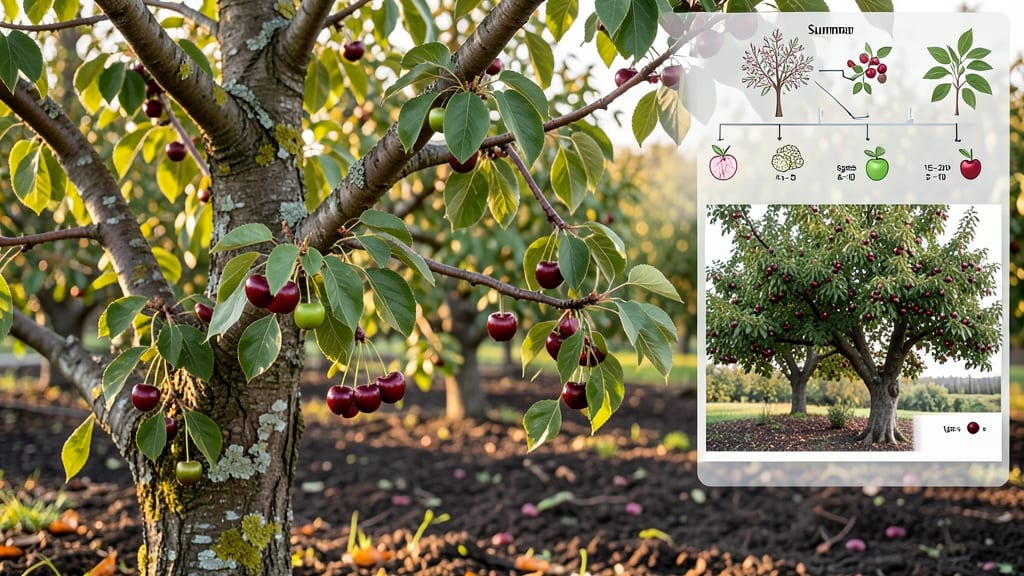
Cherry trees produce fruit for decades once they mature, but knowing how long they’ll bear fruit—and what affects their lifespan—is the key to planning your orchard.
Picture this: You’ve just planted your 🍒 cherry tree, dreaming of summer baskets overflowing with sweet, ripe fruit. But here’s the catch—most trees take 5 to 7 years before they even produce their first harvest.
And while some varieties keep bearing for 30 years or more, others decline faster if not cared for properly.
In this guide, we’ll break down the stages of a cherry tree’s fruit-bearing life—from that first hesitant bloom to the golden years of peak production—and share the care habits that can extend its harvest window for decades.
You’ll learn which varieties last longest, how climate and pruning play a role, and even how to tell if your tree is aging (or just needs a little TLC). Let’s make sure your cherry tree stays productive for as long as possible!
Cherry tree fruit production timeline: from first harvest to last
If you’ve ever planted a cherry tree, you’ve probably wondered: how long do cherry trees produce fruit? The answer depends on the variety—whether it’s a sweet cherry like Bing or a tart cherry like Stella—and how well you care for it.
Most cherry trees enter their juvenile phase first, where they focus on growing roots and branches rather than fruiting. This phase can last 3 to 7 years, depending on the variety and growing conditions.
Once mature, cherry trees typically enter their peak production years, which can last 15 to 30 years with proper care. However, the decline phase begins around age 30 to 40, where fruit yield gradually decreases.
Understanding these stages helps you plan for long-term harvests and manage expectations for your tree’s lifespan.
Sweet cherries, like Bing and Rainier, often start bearing fruit 4 to 6 years after planting, while tart cherries, such as Montmorency or Stella, may take 5 to 7 years. The difference lies in their genetic growth patterns and environmental needs. For example, Bing cherries thrive in USDA zones 5-8, while Stella cherries prefer zones 4-7, which can influence their fruiting timeline.
Here’s a quick breakdown of what to expect at each stage of your cherry tree’s life:
| Stage | Sweet Cherries (e.g., Bing, Rainier) | Tart Cherries (e.g., Stella, Montmorency) | Average Lifespan |
|---|---|---|---|
| Juvenile Phase | 3–5 years | 4–7 years | Minimal to no fruit |
| First Fruit | 4–6 years | 5–7 years | Light harvest |
| Peak Production | 10–25 years | 12–30 years | High yield |
| Decline Phase | 25–40 years | 30–45 years | Reduced yield |
| End of Lifespan | 40–50 years | 45–60 years | Minimal to no fruit |
The Bing cherry, one of the most popular sweet varieties, typically reaches peak production between ages 10 and 20. During this time, a healthy Bing tree can produce up to 100 pounds of fruit per year under ideal conditions.
Meanwhile, Rainier cherries, known for their golden-red hue, follow a similar timeline but may produce slightly less due to their delicate skin. Tart cherries like Stella often outlast sweet varieties, with some trees bearing fruit well into their 50s if cared for properly.
One common misconception is that cherry trees stop producing fruit entirely as they age. While it’s true that yield declines, many trees continue to bear some fruit even in their later years.
For example, a 30-year-old tart cherry tree might produce 20% of its peak yield, which can still be worthwhile for home gardeners. The key is to monitor your tree’s health and adjust care practices as it matures.
Environmental factors like climate, soil quality, and water availability play a huge role in how long your cherry tree produces fruit. Trees in cooler climates, such as the Pacific Northwest, often live longer and produce fruit more consistently than those in hot, dry regions.
Similarly, trees planted in well-draining, slightly acidic soil (pH 6.0–6.5) tend to thrive longer. Regular pruning and fertilization also extend the productive lifespan by promoting healthy growth and disease resistance.
If you’re planning to plant a cherry tree, consider spacing your varieties to ensure cross-pollination, which boosts fruit set. For example, planting a Bing cherry alongside a Stella tart cherry can improve yields in both trees.
Additionally, choosing dwarf or semi-dwarf varieties can make harvesting easier and may slightly extend their productive years due to better air circulation and sunlight exposure.
To maximize your cherry tree’s fruit production, start with proper planting in a sunny, sheltered location and maintain consistent care.
With the right conditions, your tree could reward you with decades of delicious cherries—just don’t expect the same yield every year, as cherry trees naturally experience alternate bearing cycles where they produce heavy crops one year and lighter crops the next.
Factors that extend or shorten a cherry tree’s fruit-bearing lifespan
A cherry tree’s fruit-bearing lifespan can vary dramatically—from just 10 years with poor care to 30+ years under ideal conditions. The difference often comes down to how you manage five critical factors: pruning techniques, soil health, disease prevention, climate adaptation, and pollination strategies.
Each plays a pivotal role in whether your tree thrives or declines prematurely.
For example, Bing cherry trees often produce fruit for 20–25 years when pruned correctly and protected from pests, while neglected trees may struggle after just 10–15 years.
The key is understanding how these factors interact—like how compact pruning slows growth but boosts fruit quality, or how acidic soil can stunt root development and reduce yields.
Pros & Cons of Care Factors
Pros: Improves airflow, boosts fruit quality, extends lifespan by 15+ years.
Cons: Weakens tree, reduces fruit yield, invites pests.
Pros: Enhances nutrient uptake, supports root health, maximizes fruit production.
Cons: Causes root rot, stunts growth, shortens lifespan by 5+ years.
Pros: Prevents fungal/bacterial infections, maintains yield consistency.
Cons: Cherry leaf spot or borers can kill trees in 3–5 years.
Pros: Doubles fruit set in varieties like Stella or Lapins.
Cons: Self-pollinating types (e.g., Bing) still suffer reduced yields.
Proper pruning techniques are non-negotiable. I recommend open-center pruning for young trees to encourage strong branch structure, while rejuvenation pruning every 5–7 years removes old wood and stimulates new growth.
Without this, your tree’s fruit-bearing years shrink by nearly half. Pair this with annual thinning of crowded branches to improve sunlight penetration and air circulation.
Soil health is another game-changer. Cherry trees thrive in well-draining, slightly acidic soil (pH 6.0–6.5). Amend clay soil with compost and sand, and test nutrient levels annually. A low-phosphorus fertilizer (like 10-10-10) applied in early spring mimics natural nutrient cycles.
Neglect here leads to yellowing leaves and poor fruit set, cutting productive years by 10+ years.
Disease prevention starts with proactive monitoring. Fungal diseases like cherry leaf spot or powdery mildew can devastate yields if untreated. I spray copper fungicide in early spring and late summer as a preventative.
For organic gardeners, neem oil or baking soda sprays work well. A single untreated outbreak can reduce fruit production by 30–50% in just one season.
Climate adaptation is critical for longevity. Sweet cherries (Prunus avium) need chilling hours (300–1,000 hours below 45°F), while tart cherries (Prunus cerasus) tolerate colder winters. If your area has fewer than 500 chilling hours, choose low-chill varieties like Stella or Montmorency.
Without this match, trees may bloom late or fail to fruit entirely, shortening their productive lifespan.
Finally, pollination strategies directly impact yield. While some varieties like Bing are self-pollinating, others (Rainier) require cross-pollination. Planting two compatible trees 20–30 feet apart ensures better fruit set.
For container growers, hand-pollinate with a soft paintbrush in early spring. Poor pollination can cut yields by up to 70%, making this a silent lifespan killer.