
Trees
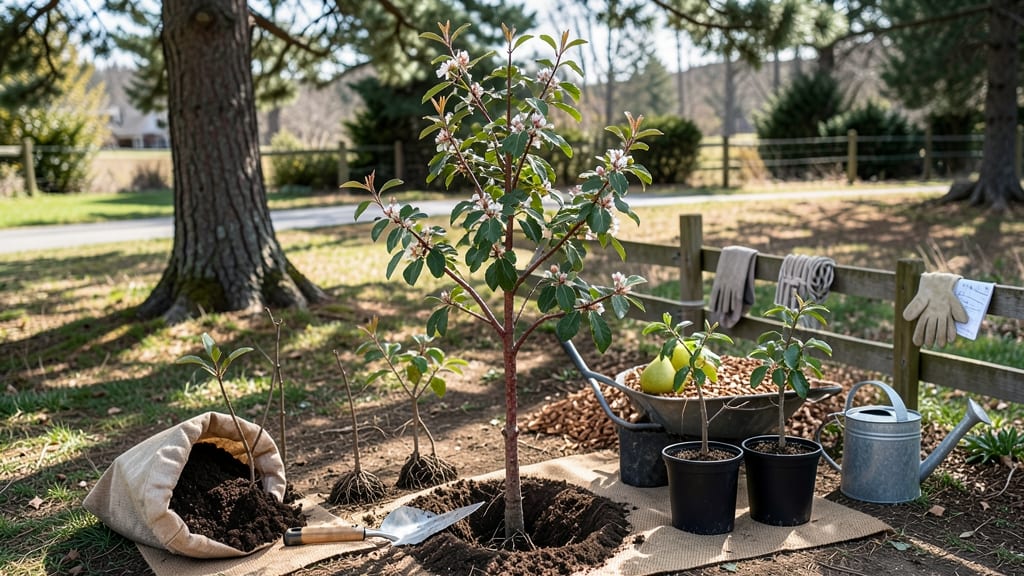
Planting fruit trees in Oregon at the right time ensures strong root growth and better fruit production, especially with the state’s varied chill-hour needs and microclimates.
Timing your fruit tree planting in Oregon can mean the difference between a thriving orchard and years of frustration—especially with the state’s diverse microclimates and chill-hour requirements.
Whether you’re in the Willamette Valley, High Desert, or coastal regions, the best window is typically fall (November–March), when soil is cool but still workable and trees can establish roots before summer heat.
In this guide, I’ll break down the ideal months by fruit type, soil prep tips for Oregon’s heavy clay or sandy loam, and even container planting hacks for urban gardeners.
Best planting months for fruit trees in Oregon by chill-hour zones
Oregon’s diverse climate zones—from the coastal rain belt to the High Desert—create unique challenges for fruit tree growers. The key to success lies in understanding chill-hour requirements and aligning planting with Oregon’s USDA zones 6–9.
High-chill varieties like apples and pears need 500–1,000 chill hours, while low-chill peaches and plums thrive with 300–500 hours. Planting at the wrong time can stunt growth or prevent fruiting entirely.
For most of Oregon, the optimal planting window spans from November through March, when soil temperatures are cool but workable. This period allows roots to establish before the spring flush of growth.
However, coastal regions (zones 8–9) with milder winters may extend planting into early spring, while inland zones (6–7) benefit from late fall planting to avoid summer drought stress.
Here’s how Oregon’s microclimates break down for fruit tree planting:
High-chill varieties like apples and cherries must be planted in late fall or early winter to ensure they meet their chill-hour needs before bud break. In USDA zone 6 (e.g., Eastern Oregon), November is ideal, while zone 7 (Willamette Valley) can extend planting into January. Coastal gardeners in zones 8–9 have more flexibility, but avoid planting after March 1st to prevent heat stress.
For low-chill varieties, such as peaches and nectarines, timing shifts later. In inland zones (6–7), February–March planting works best, while coastal zones (8–9) can delay until March–April. These trees benefit from warmer soil temperatures, which encourage root growth.
If planting in containers, use a fast-draining mix and place pots in full sun to mimic ideal conditions.
One common mistake is planting bare-root trees too early in zone 9 (e.g., Southern Oregon). The soil may still be too cold, slowing root establishment.
To test readiness, push a trowel into the soil—if it resists, wait another week. Container-grown trees can be planted slightly later than bare-root, as their roots are already established.
After planting, prioritize consistent moisture for the first 6–8 weeks. In drought-prone zones (7–8), use drip irrigation to keep roots hydrated without wetting foliage. Mulch with wood chips (3–4 inches deep) to retain moisture and regulate soil temperature.
Avoid mulching too close to the trunk, as this can invite rot or pests.
Oregon’s variable frost dates add another layer of complexity. Coastal areas (e.g., Astoria) rarely see hard frosts, while Bend or La Grande can drop below 20°F. If planting in late winter, choose a sheltered location away from cold air pockets.
Young trees are vulnerable to winter damage, so protect them with burlap wraps if frost is forecasted.
Pro tip: Label your trees immediately after planting with the variety name and date. This helps track growth and fruiting patterns, especially if you’re experimenting with multiple chill-hour varieties. Over time, you’ll learn which microclimates in your yard perform best—whether it’s a sunny south slope or a
Soil preparation checklist: how to optimize Oregon’s clay and sandy loams
Oregon’s diverse soils—from heavy clay in the Willamette Valley to sandy loams in the High Desert—pose unique challenges for fruit tree growers. The key to success lies in amending texture and balancing pH before planting.
Heavy clay soils can waterlog roots, while sandy soils drain too quickly, both stressing young trees. Let’s break down my step-by-step soil prep checklist to create the ideal growing medium for your orchard.
Start by testing your soil’s pH using a home kit (available at garden centers). Oregon fruit trees thrive in a pH range of 6.0–7.0. Clay soils often test too alkaline, while sandy soils may be acidic.
Adjust with elemental sulfur (for high pH) or lime (for low pH), following package instructions. This adjustment should happen 2–3 months before planting to allow time for changes to take effect.
Here’s my key takeaway for Oregon’s tricky soils:
🌱 Oregon Soil Prep Essentials
- Add 3–4 inches of compost or aged manure
- Mix in coarse sand to improve drainage
- Use gypsum to break up compaction
- Incorporate peat moss or coconut coir
- Work in well-rotted compost for moisture retention
- Avoid tilling when wet to prevent erosion
Next, focus on improving soil structure. For clay-heavy areas, mix in 3–4 inches of compost and coarse sand (like builder’s sand) to create pockets for root expansion. In sandy soils, blend in peat moss or coconut coir to boost water retention.
I recommend double-digging a planting hole—dig a hole twice as wide and deep as the root ball, then layer the bottom with 1–2 inches of compost before setting the tree.
Don’t overlook organic matter—it’s the glue holding your soil together. Spread a 2–3 inch layer of mulch (wood chips or straw) around the tree’s base, keeping it 3–4 inches away from the trunk to prevent rot.
This mulch layer retains moisture, regulates temperature, and slowly breaks down to feed the soil. Replenish it annually to maintain benefits.
Finally, avoid these common pitfalls: Over-tilling can destroy soil structure, while planting in frozen or waterlogged soil stunts root growth. Schedule your prep work for early spring or fall, when temperatures are mild and rain helps settle amendments.
With these steps, your Oregon soil will be ready to support healthy, productive fruit trees for decades.