
Trees
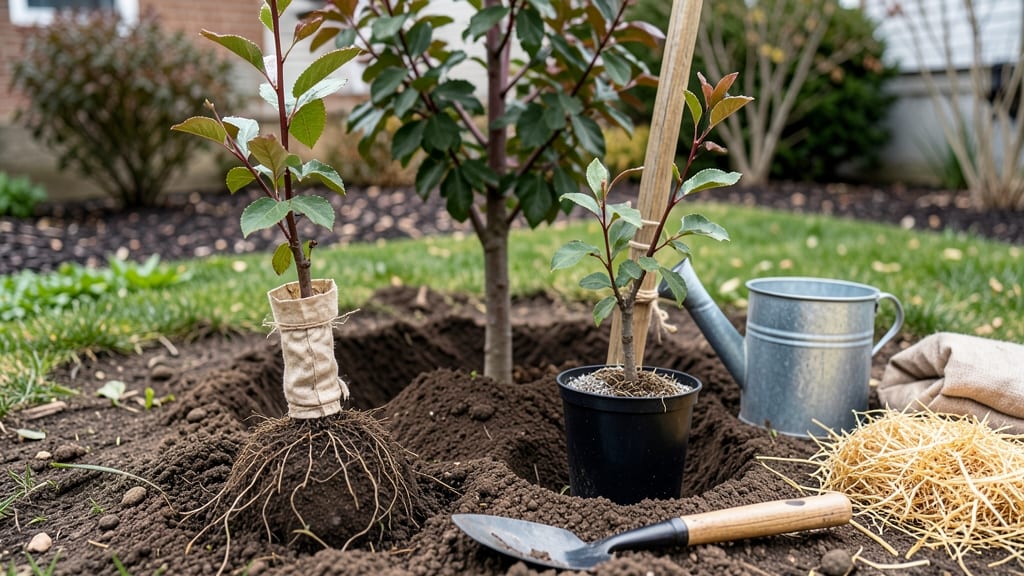
Planting fruit trees 🍎 in Ohio’s USDA Zones 5-6 hinges on a narrow window where soil warms but frost still lurks—miss it, and your young tree’s roots struggle to establish before winter strikes again.
Ohio’s chilly winters and unpredictable springs can make planting fruit trees a high-stakes decision—but timing it right ensures stronger roots, faster establishment, and a bountiful harvest for years.
Most gardeners in Ohio swear by early spring (March to April) for bare-root trees, when soil temperatures creep above 40°F and the risk of late frosts drops. But fall planting (October) also works for container-grown trees, giving roots a head start before dormancy.
Here’s how to pick the perfect window for your fruit tree, avoid Ohio’s frost traps, and set your tree up for decades of fruit—without the guesswork.
Best planting months for fruit trees in Ohio’s Zone 5-6 climate
Ohio’s Zone 5-6 climate demands precise timing for fruit tree planting to avoid frost damage and ensure strong root growth. The best windows are during dormant seasons—late fall or early spring—when trees aren’t actively growing but soil is workable.
For bare-root trees, this means planting between November and March, while container-grown trees can go in slightly later, up to April or May.
Local nurseries in Ohio typically stock bare-root trees from late winter through early spring, making March and early April the peak months for most gardeners. However, fall planting (October-November) is ideal for regions with milder winters, like southern Ohio, where soil stays workable longer.
Northern areas should wait until late April to avoid frost heaving.
Soil temperatures play a critical role—40-50°F is the sweet spot for root establishment. In Ohio, this usually aligns with late March to early April, but microclimates vary. Urban areas may warm faster than rural spots, so monitor local frost dates.
The Ohio State University Extension recommends waiting until the last frost date (around April 15 in most of Zone 5-6) before planting container-grown trees.
Different fruit trees thrive in slightly different windows. Apples and pears prefer early spring planting (March-April) for robust root growth before summer heat. Peaches and cherries, however, benefit from fall planting (October-November) to establish roots before spring’s rapid growth phase.
Stone fruits like plums and apricots can handle either season but avoid late spring when late frosts threaten blossoms.
Ohio’s Zone 5-6 climate also means accounting for late spring frosts, which can damage new growth. Planting in fall lets roots harden off over winter, while spring planting gives trees a head start in warmer months. For container-grown trees, April is safest—just be ready to protect young trees with frost cloth if nights dip below 28°F.
For bare-root trees, the dormant season (November-March) is critical because roots are less prone to transplant shock. These trees are typically dug when dormant and shipped with minimal soil, so planting them as soon as possible after purchase—ideally within 2-3 weeks—maximizes survival rates.
Store them in a cool, moist place (like a garage) until planting day.
If you’re in southern Ohio (closer to Zone 6), you can push the envelope slightly—planting in late February for early varieties like Honeycrisp apples or Redhaven peaches.
In northern Ohio (Zone 5), wait until mid-April to avoid frost heaving, where freezing and thawing cycles lift roots out of the soil. Always check the Ohio Agricultural Research and Development Center’s frost maps for your county.
One common mistake Ohio gardeners make is planting too early, only to see young trees suffer from late spring frosts. For example, peach blossoms can be killed by temperatures below 28°F, even in May.
To mitigate this, choose late-blooming varieties like Reliance peaches or Montmorency cherries, which are bred for Zone 5-6 resilience.
Finally, container-grown trees offer more flexibility but still benefit from spring planting. These trees can be planted
How to prepare Ohio soil and site for fruit tree success
Ohio’s clay-heavy soils and variable frost dates demand careful prep before planting fruit trees. Start by testing your soil pH—most fruit trees thrive in 6.0 to 7.0 range. If your soil is too dense, amend it with compost or aged manure to improve drainage and nutrient retention.
This step is critical for preventing root rot, especially in low-lying areas where water pools after rain.
Next, evaluate your site’s sun exposure. Fruit trees need at least 6 to 8 hours of direct sunlight daily. In Ohio, this often means choosing a south-facing location to maximize warmth. Avoid spots where late spring frosts linger, as these can damage blossoms.
If your yard has wind exposure, consider planting near a natural windbreak like a fence or hedge to protect young, delicate branches.
🌱 Step-by-Step Soil & Site Prep for Ohio Fruit Trees
- ✅ Test soil pH (use a home test kit or send to a lab). Aim for 6.0–7.0—adjust with lime (to raise) or sulfur (to lower).
- ✅ Improve drainage by mixing compost or sand into heavy clay soils. Avoid compacted areas where roots suffocate.
- ✅ Choose full-sun spots (south or west-facing). Apples and peaches need the most light, while plums tolerate slight shade.
- ✅ Space trees properly: Dwarf varieties (8–12 ft) need 8–10 ft apart; standard trees (20+ ft) require 20–25 ft.
- ✅ Install frost protection like a windbreak or row covers for early bloomers. Peach trees are especially frost-sensitive.
- ✅ Mulch heavily (3–4 inches) with wood chips or straw, keeping mulch 6 inches from the trunk to prevent rot.
Once your soil is prepped, focus on drainage solutions. If your yard has poor drainage, create a raised bed or mound for the tree. This lifts roots above waterlogged soil, which is common in Ohio’s low-lying areas.
For sandy soils, add organic matter like leaf mold to retain moisture. Always dig a planting hole twice as wide as the root ball to encourage outward root growth.
Frost protection is non-negotiable in Ohio. Plant late-blooming varieties like Honeycrisp apples or Reliance peaches, which resist frost damage better than early bloomers. For extra safety, install a frost cloth or row cover over blossoms during late spring frosts (common in April).
A windbreak made of bamboo stakes or evergreen shrubs can also shield young trees from winter winds.
Finally, mulch your newly planted tree with 3–4 inches of organic mulch, like wood chips or straw. This retains moisture, regulates soil temperature, and suppresses weeds. Keep mulch 6 inches away from the trunk to prevent rot and pest infestations.
Water deeply once a week during the first growing season, ensuring the soil stays moist but not soggy. This sets the stage for strong root establishment before Ohio’s harsh winters arrive.
With these steps, your fruit trees will thrive in Ohio’s challenging climate, yielding abundant harvests for years to come. Happy planting! 🌳