
Trees
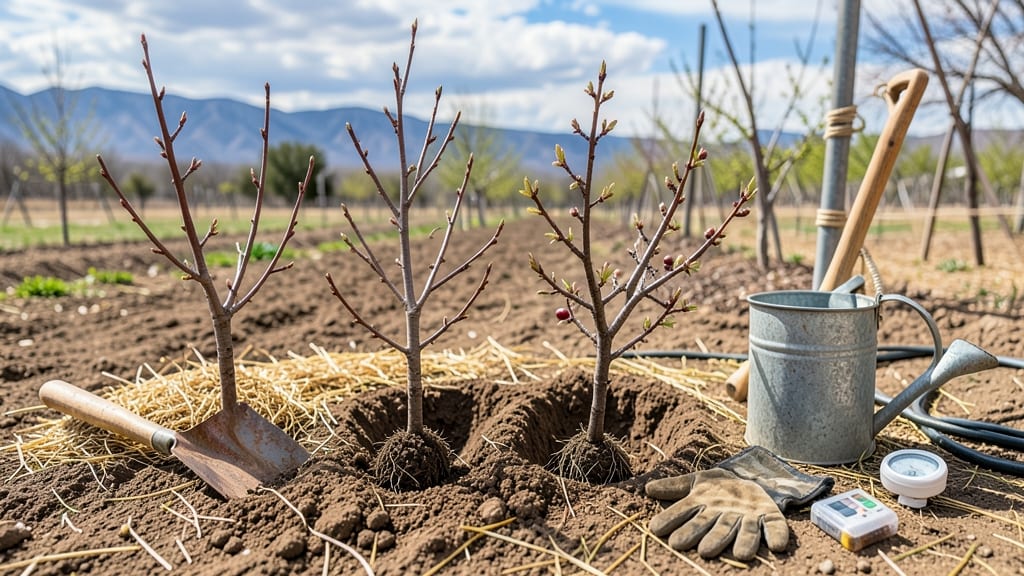
Planting fruit trees 🍎 in Colorado at the wrong time can mean the difference between a thriving orchard and wasted effort—especially with the state's unique chill-hour requirements and unpredictable weather.
If you’ve ever watched a young sapling shrivel after a late frost or struggled with slow growth in alkaline soil, you know timing matters more than most gardeners realize.
Colorado’s USDA Zones 4-7 demand precision, and missing the window by even a few weeks can set your trees back for years.
The best time to plant fruit trees in Colorado is late winter to early spring—February through April—when the soil is workable but the last frost hasn’t yet arrived. This timing ensures roots establish before summer heat, while avoiding the stress of winter dormancy.
In this guide, I’ll break down the exact months for your region, how chill-hour zones affect variety choices, and the critical mistakes to avoid—so you can finally get those trees growing strong and productive.
Colorado’s chill-hour zones: how they determine best planting months for fruit trees
Colorado’s chill-hour zones (4-10) are the secret to growing healthy fruit trees. These zones measure how many hours of temperatures between 32°F and 45°F your area gets in winter—a critical factor for fruit trees like apples, peaches, and cherries.
Planting at the wrong time can mean frost damage or poor fruit production, so understanding your zone is key.
Most Colorado fruit trees thrive in zones 5-7, but varieties like apples need 500-1,000 chill hours, while peaches often require 300-600 chill hours. The Western Slope (zones 6-7) has milder winters, while the Front Range (zones 4-6) faces harsher conditions.
Matching your zone to the right tree ensures successful dormancy and fruit set.
Chill-hour zones directly influence planting windows. In zones 4-5, aim for March-April planting to avoid late frosts, while zones 6-7 can handle September-October plantings for root establishment before winter. Let’s break down the best fruit tree varieties for each zone and when to plant them.
🌱
| Chill-Hour Zone | Best Fruit Tree Varieties | Ideal Planting Month | Chill Hours Needed |
|---|---|---|---|
| Zone 4 (e.g., Grand Junction, high elevations) | Honeycrisp Apple, Montmorency Cherry, Hardy Peach | March-April | 800-1,000 hours |
| Zone 5 (e.g., Denver, Colorado Springs) | Fuji Apple, Stella Cherry, Reliance Peach | Late March-Early April | 500-800 hours |
| Zone 6 (e.g., Fort Collins, Western Slope) | Gala Apple, Bing Cherry, Redhaven Peach | September-October | 300-600 hours |
| Zone 7 (e.g., Pueblo, lower elevations) | Golden Delicious Apple, Lapins Cherry, Elberta Peach | September-October | 200-400 hours |
For Zone 4, where winters are harsh, stick to late March or early April planting. Varieties like Honeycrisp apples and Montmorency cherries thrive here because they need 800-1,000 chill hours.
Planting too early risks frost damage to young roots, while waiting too long delays root establishment before summer heat arrives.
In Zone 5, like Denver or Colorado Springs, Fuji apples and Stella cherries are excellent choices. These trees need 500-800 chill hours, so planting in late March ensures they’re established before the growing season kicks off. Avoid planting in May, as summer drought stress can stunt growth.
Gardeners in Zone 6 (e.g., Fort Collins or the Western Slope) have a unique advantage: they can plant in September-October. This timing allows roots to establish before winter dormancy, reducing transplant shock.
Varieties like Redhaven peaches (300-600 chill hours) and Bing cherries flourish here with minimal frost risk during root growth.
If you’re in Zone 7, such as Pueblo, focus on low-chill varieties like Elberta peaches (200-400 chill hours). Planting in September-October gives roots time to harden off before winter. These zones often have warmer winters, so late planting is less risky than in colder areas.
One critical tip: Always check your last frost date (typically March 15-April 15 on the Front Range). Planting 4-6 weeks before this date gives young trees time to root before warmth triggers growth. For fall planting, aim for 6-8 weeks before first frost (usually October 15-November 1).
Proper soil preparation is just as important as timing. Colorado’s alkaline soil (pH 7.5-8.5) can stress fruit trees, so amend with compost or sulfur to
Exact months to plant fruit trees in Colorado by region (Front Range vs. Western Slope)
Colorado's diverse climate means the best months to plant fruit trees vary dramatically between the Front Range and Western Slope. In Denver/Boulder (Zone 5-6), you'll want to plant 4-6 weeks before your last frost, typically in mid-March to early April.
Meanwhile, the Western Slope (Zone 6-7) enjoys a slightly longer growing season, allowing for late March to mid-April planting. These timing differences prevent transplant shock and ensure trees establish roots before summer heat arrives.
Soil preparation is just as critical as timing. For all regions, amend your soil 4-6 weeks before planting with compost or organic matter to improve drainage—Colorado's native soil is often alkaline and compacted. Test your soil's pH (ideal range: 6.0-7.0 for most fruit trees) and adjust with sulfur if needed.
In the Front Range, expect colder soil temperatures in early spring, so consider using black plastic mulch to warm the root zone.
| Region | USDA Zone | Ideal Planting Window | Soil Prep Time | Air Temp Range | Frost Risk |
|---|---|---|---|---|---|
| Denver/Boulder | 5-6 | Mid-March to Early April | Late January-February | 40°F-55°F | High (last frost: April 1) |
| Colorado Springs | 5 | Late March to Early April | Late January-February | 38°F-52°F | Very High (last frost: April 15) |
| Western Slope (Grand Junction) | 6-7 | Late March to Mid-April | February-March | 45°F-60°F | Moderate (last frost: March 25) |
| All Regions (Fall Option) | 5-7 | September-October | August-September | 50°F-65°F | Low (first frost: Oct 15-Nov 1) |
For apples and pears, which require 500-1,000 chill hours, the Front Range's Zone 5-6 is ideal. Plant these varieties in March to give roots time to establish before the summer drought hits.
In contrast, peaches and cherries (300-500 chill hours) thrive better in the Western Slope's warmer microclimates, where you can extend planting into mid-April without risking frost damage.
One often-overlooked factor is air temperature during transplanting. Fruit trees experience transplant shock when soil temps are below 45°F or above 80°F. In Colorado Springs (Zone 5), wait until daytime temps consistently reach 50°F before planting—typically late March.
Use tree guards or windbreaks in exposed areas to protect young trees from high-altitude winds, which can dry out roots faster than you'd expect.
Fall planting (September-October) is also viable across all regions, but timing is tighter. Aim to plant 6-8 weeks before your first frost—this gives roots time to establish before dormancy sets in.
The Western Slope's Zone 6-7 has the most flexibility, with a longer frost-free period allowing for October planting in some microclimates. Always check your local CoCoRaHS weather station for precise frost dates, as Colorado's topography creates dramatic temperature variations even within short distances.
After planting, prioritize deep watering (15-20 gallons per tree) to encourage root growth. In the Front Range, where water is scarce, consider installing drip irrigation to maintain consistent moisture.
Mulch with wood chips to retain soil moisture and regulate temperature—this is especially critical in Zone 5 areas where soil temps fluctu