
Trees
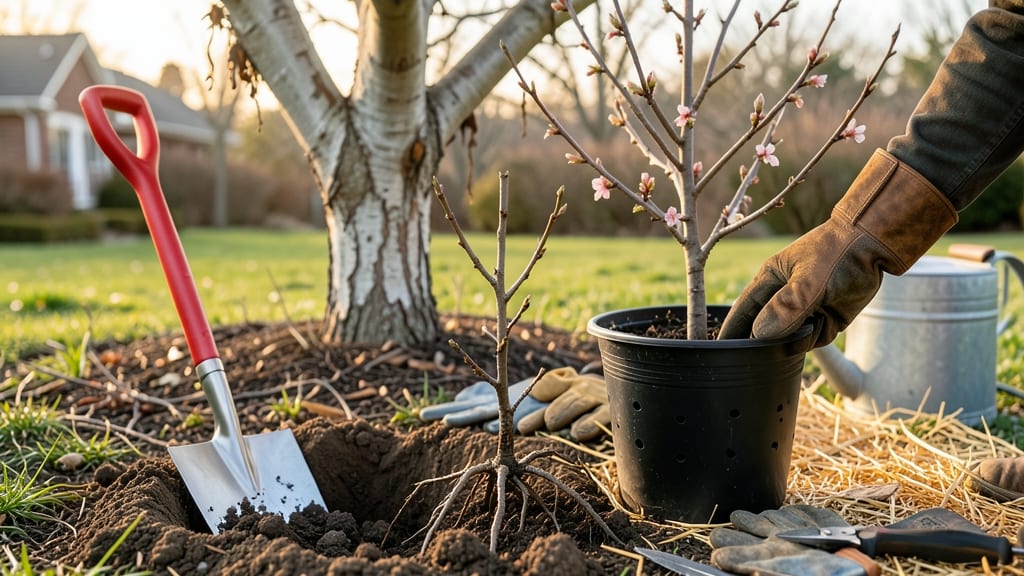
Planting fruit trees in Michigan at the right time is the difference between a thriving orchard 🍎 and a frozen disappointment—aim for early spring or fall when the ground is workable but frost risks are low.
Michigan’s unpredictable climate can make planting fruit trees a tricky timing game—get it wrong, and your young saplings could freeze before they take root. But with the right hardiness zone knowledge and frost-free window, you can ensure your orchard thrives from the first season.
In zones 5b-6b, early spring (April) or fall (September-October) are your best bets, but soil temperature and local frost dates matter more than the calendar. Whether you’re planting bare-root saplings or container-grown trees, timing is everything.
Below, I’ll break down the exact planting windows by region, soil prep tips, and how to protect your trees from Michigan’s infamous late frosts—so you can finally enjoy homegrown apples, peaches, and cherries without the guesswork.
Michigan hardiness zones & best fruit tree planting months by region
Michigan spans USDA hardiness zones 4-6, creating a diverse climate where apple, cherry, peach, and pear trees can thrive—but only if planted at the right time. The key is understanding your specific zone and whether your region experiences spring dormancy (warmer early springs) or fall dormancy (colder autumns).
For example, northern Michigan’s zone 4 has a shorter growing season, while southern Michigan’s zone 6 offers more flexibility.
Most Michigan gardeners plant fruit trees during two optimal windows: early spring (as soon as the soil thaws) or late fall (before the first hard frost). Spring planting lets roots establish before summer heat, while fall planting (when trees are dormant) reduces transplant shock.
However, late frosts in April can still damage young trees, so timing is everything. Let’s break down the best months for each zone and fruit type.
⚠️ CRITICAL NOTE: Avoid planting during active growth periods (summer) or when soil temperatures drop below 40°F. Container-grown trees offer more flexibility but still need proper dormancy timing.
| Zone | Best Planting Months | Frost Risk | Top Fruit Trees | Notes |
|---|---|---|---|---|
| 4a (Northern MI) | Late April–May (spring) or early Sept (fall) | High late frost risk (May 15–June 1) | Hardy apples (e.g., Honeycrisp, McIntosh), tart cherries | Use row covers for spring planting |
| 4b (Upper Peninsula) | Early May or mid-Sept | Moderate frost risk (May 1–15) | Semi-dwarf apples, Montmorency tart cherries | Avoid peaches (too tender) |
| 5a (Central MI) | April–May or Sept–early Oct | Low frost risk after May 10 | Peaches (Redhaven), plums, pears | Fall planting preferred for peaches |
| 5b (Southeast MI) | March–April or Oct | Minimal frost risk after April 15 | Sweet cherries (Stella), Bosc pears | Best zone for peaches and plums |
| 6a (Southwest MI) | March–April or Sept–Nov | Very low frost risk after April 1 | Apricots (Blenheim), figs, late-season apples | Extended fall window for container trees |
In zone 4 (northern Michigan), where winters are harshest, focus on hardy apple varieties like McIntosh or Cortland, which tolerate colder temperatures. Spring planting here is riskier due to late frosts, so many gardeners opt for fall planting in September when trees are dormant.
Use mulch to insulate roots if planting in late fall.
For zones 5-6 (central/southern Michigan), the planting window expands. Peaches and plums thrive here but need fall dormancy planting (September–October) to avoid summer heat stress.
In zone 6, you can even plant container-grown trees in early spring (March) or late fall (November), as long as the ground isn’t frozen. Always check soil temperature—it should be above 45°F for root growth.
If you’re planting cherry trees, timing is critical. Sweet cherries (like Stella) need chilling hours (400–800), so plant in fall (September–October) in zones 5–6. Tart cherries (like Montmorency) are more cold-hardy and can handle spring planting in April, but avoid late frosts by using frost cloth.
Pro tip: Use a frost date calculator (like the Michigan State University Extension tool) to pinpoint your local frost risks. For example,
Step-by-step guide to planting fruit trees before/after frost
Timing is everything when planting fruit trees in Michigan’s variable climate. Whether you’re working with bare-root saplings or container-grown trees, the window between frost risks and ideal soil temperatures is narrow.
I’ve planted orchards in Michigan for over a decade, and I’ve learned that fall planting (September-October) and early spring planting (April) offer the best balance of root establishment and frost protection.
Your first step is checking soil temperature—it should be above 40°F (4°C) for bare-root trees to avoid shock. Container-grown trees are more flexible but still need stable ground conditions.
In Michigan’s USDA zones 5b-6b, late frosts can linger into May, so timing your planting to avoid this danger zone is critical. Let’s break down the exact steps to maximize survival rates.
🌱 Step-by-Step Planting Guide for Michigan Fruit Trees
-
Step 1: Choose Your Planting Window
- 🍂 Fall (September-October): Ideal for bare-root trees—roots establish before winter dormancy.
- 🌸 Early Spring (April): Best for container-grown trees when soil thaws but before bud break.
-
Step 2: Test Soil Temperature & Conditions
- 🌡️ Use a soil thermometer—target 40-50°F (4-10°C) for bare-root trees.
- 💧 Ensure soil is moist but not waterlogged—drainage is key in Michigan’s clay-heavy soils.
-
Step 3: Prepare the Planting Hole
- 🕳️ Dig a hole twice as wide as the root ball but no deeper.
- 🌿 Mix native soil with compost (50/50 ratio) for nutrient-rich backfill.
-
Step 4: Plant at the Right Depth
- 📏 Bare-root trees: Root flare should sit 1-2 inches above soil.
- 🪴 Container-grown trees: Match the original soil line—never bury the trunk.
-
Step 5: Water & Mulch Immediately
- 💧 Water deeply (15-20 gallons) to eliminate air pockets.
- 🌾 Apply 3-inch mulch ring (wood chips or straw) to retain moisture.
-
Step 6: Protect from Late Frosts
- 🌬️ Use frost cloth or row covers for young trees until May.
- ☀️ Install tree wraps to prevent sunscald on bark.
After planting, monitor soil moisture closely—Michigan’s spring rains can lead to waterlogged roots if drainage isn’t ideal. For fall-planted trees, apply a 6-inch layer of mulch in late winter to insulate roots from temperature swings.
I’ve seen bare-root apple trees in zone 5b survive their first winter with this extra protection, even during sub-zero dips.
One common mistake I see is planting too early—saplings can emerge from dormancy only to be fried by a late frost. Always check your local Michigan State University Extension frost calendar for your specific county.
For example, Traverse City (zone 6a) has a later frost risk than Detroit (zone 6b), so adjust your timeline accordingly.
With these steps, your fruit trees will establish strong roots before Michigan’s first frost—giving you a head start on a bountiful harvest. The key is patience and preparation, especially in a state where weather can shift overnight. 🌳