
Pests and Diseases
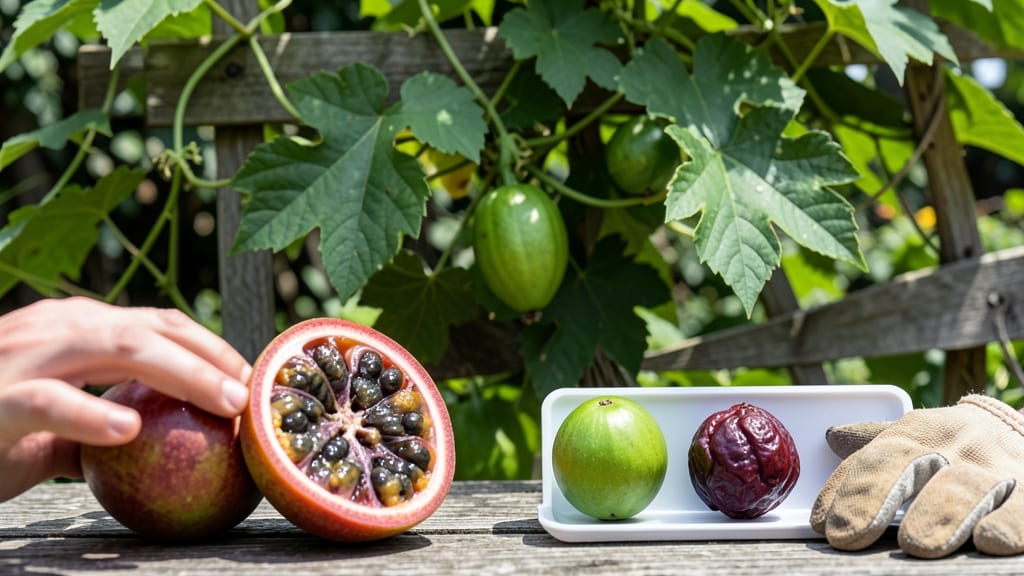
When is passionfruit ripe? It reaches its peak when it turns deep purple, yellow, or red and yields slightly to gentle pressure—signs that sweet, juicy perfection is ready to pick.
Ever bitten into a passionfruit only to find it mealy and underwhelming? That’s the cost of picking too early. The good news? With five simple tests, you’ll never miss the window again.
I’ll show you how to spot ripe fruit by color, scent, and even the way it separates from the vine.
In tropical climates like USDA Zones 9-11, passionfruit 🍈 typically ripens in late summer or fall, but timing varies by variety. Purple passionfruit (Maracujá) and yellow (Granadilla) have different cues, so I’ll break down the key differences to avoid common mistakes.
Once you master these tricks, you’ll harvest fruit at its peak—no more wasted effort. Below, I’ll also cover what to do if your passionfruit is still hard, plus storage tips to keep them fresh for days.


5 Visual & touch tests to check passionfruit ripeness
Passionfruit vines produce fruit that can be tricky to judge—one day it’s rock-hard, the next it’s overripe and mushy. The key is using a combination of visual cues and physical tests to avoid that disappointing mealy texture.
I’ve harvested hundreds of passionfruit, and these five methods never fail me. Let’s break them down so you can pick fruit at its sweetest peak.
First, understand that passionfruit ripen off the vine, but they’ll never reach full flavor if you wait too long. Overripe fruit loses its vibrant color, develops soft spots, and attracts pests like fruit flies.
Mastering these tests ensures you harvest at the perfect moment—when the fruit is firm but yielding, packed with flavor, and ready to eat or store.
-
1
Color Test: Ripe passionfruit turn a deep, uniform purple (purple varieties) or golden yellow (yellow varieties). Avoid fruit with green patches or uneven coloring.
-
2
Shape Test: Look for a slightly oblong or oval shape with a rounded bottom. Overripe fruit may look shriveled or flattened.
-
3
Scent Test: Give the fruit a sniff—ripe passionfruit emit a sweet, tropical aroma. If it smells fermented or sour, it’s overripe.
-
4
Touch Test: Gently press the fruit—it should feel slightly soft but not mushy. If it’s rock-hard, it’s unripe; if it’s too soft, it’s overripe.
-
5
Twist Test: Gently twist the fruit—it should detach easily from the vine. If it resists, it’s not ripe; if it falls apart, it’s past its prime.
Let’s start with the color test, which is the easiest way to spot ripe passionfruit from a distance. Purple passionfruit should deepen to a rich, eggplant-purple hue, while yellow varieties turn a bright, buttery gold.
I always check for uniformity—fruits with green streaks or patchy coloring are still firm inside. Pro tip: Morning sunlight enhances color vibrancy, so harvest in the cool hours to avoid heat stress.
Next, the shape test reveals a lot about ripeness. A ripe passionfruit has a smooth, slightly elongated shape with a rounded base. Overripe fruit often looks wrinkled or collapsed at the blossom end.
I once picked a batch that looked perfect but had shriveled bottoms—turns out, they’d been on the vine too long and lost moisture. Always inspect the stem end for drying or browning, which signals readiness.
The scent test is my favorite because it’s foolproof. A ripe passionfruit releases a fruity, floral aroma when you bring it close to your nose. If it smells like nothing—or worse, like rotten fruit—it’s time to toss it.
I keep a small bowl nearby while harvesting to catch any fallen fruit that might be overripe. This test works best in warm, dry conditions, as humidity can mask the scent.
Now for the touch test, where you’ll feel the difference between ripe and unripe. Press your thumb gently against the fruit—it should give just slightly, like a ripe avocado. If it feels unyielding, it’s not ready; if it feels mushy, it’s overripe.
I use this test last because it’s the most accurate way to confirm what my eyes and nose already told me. Remember, passionfruit should never feel squishy—that’s a red flag for spoilage.
The final test is the twist test, which tells you whether the fruit is ready to harvest. Grasp the fruit near the stem and give it a gentle twist. If it separates cleanly from the vine, it’s ripe.
If it resists, leave it for another day. I’ve learned the hard way that forcing an unripe fruit off the vine can damage the plant and reduce future yields. Always twist slowly and carefully to avoid tearing the vine.
Common mistakes include relying on size alone—big doesn’t always mean ripe—or ignoring the stem end. A dried, brown stem is a clear sign of ripeness, while a green or moist stem means the fruit needs more time.
I also avoid harvesting in direct sunlight, as the heat can trick you into thinking fruit is riper than it is. Always harvest in the morning or late afternoon for the most accurate results.
Once you’ve mastered these tests, you’ll never waste
How to ripen passionfruit at home (if picked too early)
Even the most experienced gardeners sometimes pick passionfruit too early—leaving you with hard, underripe fruit that lacks flavor. The good news? You can still salvage them with the right ripening techniques at home.
Unlike many fruits, passionfruit don’t ripen well in the fridge, so room-temperature methods are key to unlocking that sweet, tangy pulp.
If your passionfruit feels firm to the touch or hasn’t reached its full color, don’t toss it! With patience and the right conditions, you can coax it to ripeness.
The trick lies in ethylene exposure—a natural plant hormone that triggers ripening—and creating the ideal environment. Let’s dive into the best methods to ripen passionfruit at home.
⚠️ When Is Passionfruit Actually Ripe?
Overripe passionfruit becomes mushy and loses sweetness, while underripe fruit stays hard and flavorless. Here’s the perfect ripeness checklist:
- Color: Deep purple (purple varieties) or golden yellow (yellow varieties)
- Texture: Skin gives slightly when pressed (like a ripe avocado)
- Scent: Sweet, floral aroma near the stem end
- Detachment: Fruit separates easily with a gentle twist
If your fruit checks 2-3 of these boxes, it’s ready to eat! If not, use the ripening methods below.
For room-temperature ripening, place your passionfruit in a paper bag with a banana or apple—these fruits release ethylene gas, speeding up the process. Store the bag in a warm, shaded spot (like a kitchen counter) and check daily.
Purple passionfruit typically ripens in 3-5 days, while yellow varieties may take 5-7 days.
Never refrigerate passionfruit until fully ripe—cold temperatures halt ripening and turn the flesh mealy. Once ripe, you can store them in the fridge for 3-5 days, but eat them as soon as possible to enjoy peak flavor.
If you notice mold or a fermented smell, discard the fruit immediately—these are signs of spoilage.
Pro tip: If your passionfruit is still hard after a week, it may be overripe or damaged. Cut it open to check—if the pulp is brown or fermented, compost it.
For future harvests, aim to pick when the fruit is 80% colored and slightly soft to avoid this issue entirely.
With these techniques, you’ll transform tough passionfruit into juicy, flavorful treats—no waste, just delicious results! Next time, time your harvests to catch them at the perfect stage, but for now, enjoy your ripened bounty.