
How To
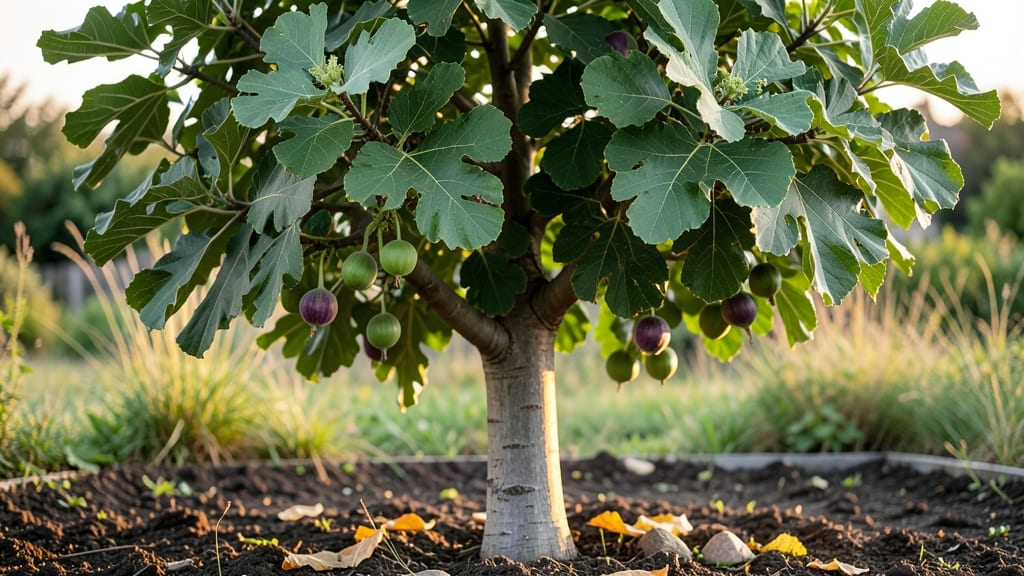
Fig trees can take how long does it produce fruit in as little as 1 year with the right variety and care—but most home gardeners wait 2-3 years before their first harvest.
If you're dreaming of plucking fresh figs straight from your backyard tree, patience is key—but some varieties can surprise you with faster harvests than you’d expect.
Fast-growing types like 'Celeste' or 'Brown Turkey' often bear fruit within a year, while others, like 'Black Mission,' take longer. Climate plays a huge role: USDA Zone 6a gardeners need winter protection, while warmer regions see quicker results.
Below, I’ll break down the fastest varieties, climate triggers, and care tips to help you get fruit sooner—without waiting decades.
Fig tree fruit production timeline: fastest varieties and their growth stages
Choosing the right fig tree variety can shave years off your wait for that first sweet harvest. Some varieties surprise gardeners by producing fruit as early as 1 year after planting, while others take 3 years or more to mature.
The key lies in understanding whether you're growing a tropical type (like 'Celeste') or a cold-hardy variety (like 'Chicago Hardy'), as well as whether you're working with a dwarf tree or a standard-sized specimen.
Your climate zone also plays a critical role. In USDA zones 8-11, fig trees thrive year-round and often fruit within 12-18 months, while colder regions (zones 4-7) may require 2-3 years of winter protection before seeing significant fruit production.
Even within the same zone, microclimates—like a sunny south-facing wall—can accelerate fruiting by 6-12 months.
📊 Here’s the breakdown of how quickly different fig varieties produce fruit, from fastest to slowest:
| Variety | Type | Time to First Fruit | Mature Height | Cold Hardiness |
|---|---|---|---|---|
| 'Celeste' | Dwarf | 1 year | 8-12 ft | Zones 7-11 |
| 'Brown Turkey' | Standard | 1-2 years | 20-30 ft | Zones 7-11 |
| 'Chicago Hardy' | Cold-Hardy | 2 years | 15-20 ft | Zones 4-7 |
| 'Desert King' | Standard | 2-3 years | 20-30 ft | Zones 8-11 |
| 'Black Mission' | Standard | 2-3 years | 20-30 ft | Zones 7-11 |
If you're eager for fast figs, prioritize dwarf varieties like 'Celeste' or 'Little Miss Figgy,' which can produce harvestable fruit within 12 months when given ideal conditions.
These compact trees (typically 8-12 feet tall) are perfect for containers or small gardens and often fruit more reliably in their first year than larger varieties.
For cold climates, 'Chicago Hardy' and 'Osborn Prolific' are standout choices. While they may take 2 years to bear fruit, their ability to survive USDA zone 4 winters makes them worth the wait. These varieties often produce two crops per year in warmer regions, doubling your harvest potential.
Standard-sized fig trees like 'Brown Turkey' and 'Desert King' strike a balance between speed and productivity. They typically fruit within 1-2 years and can yield hundreds of figs per season once mature.
Their larger size also means they can support heavier fruit loads without stress, making them ideal for home orchards or large backyard spaces.
One common misconception is that bigger trees always mean faster fruit production. In reality, dwarf varieties often outperform standard trees in their first few years because they allocate more energy to fruiting rather than vertical growth.
For example, a 'Celeste' fig tree might produce 50-100 figs in its first season, while a 'Black Mission' tree of the same age may only yield a handful—or none at all.
To maximize your chances of early fruiting, focus on soil health and sun exposure. Figs thrive in well-draining soil with a pH between 6.0 and 7.0.
Amend heavy clay with compost or sand to improve drainage, and ensure your tree gets at least 6-8 hours of direct sunlight daily.
In container growing, use a fast-draining potting mix and upgrade to a 15-gallon pot or larger by the second year to support root growth and fruit production.
Pruning also plays a crucial role in timing. Light pruning in late winter or early spring to remove dead or crossing branches encourages
Climate and care triggers that speed up fig tree fruit production
Fig trees thrive when given the right growing conditions, and understanding how sunlight, temperature, and soil conditions interact can dramatically speed up fruit production. In warmer climates like USDA zones 7-11, trees often bear fruit within 1-2 years with minimal stress.
However, in cooler zones (4-6), winter protection and careful pruning become essential to avoid delays.
One of the biggest factors is sun exposure. Figs need 6+ hours of direct sunlight daily to produce fruit. If your tree is in partial shade, it may take 6 months to a year longer to bear fruit.
Even a microclimate—like a sunny south-facing wall—can provide the extra warmth needed for faster growth.
Temperature also plays a critical role. Most fig varieties require warmth to trigger fruiting, with ideal daytime temps between 75°F and 90°F. In cooler zones, using row covers or greenhouses during early spring can create a warmer microclimate, encouraging earlier bud formation.
Climate & Care Triggers for Faster Fig Fruit Production
- Full sun (6+ hrs) – Essential for photosynthesis and fruit set
- Warm microclimate – Use row covers or south-facing walls
- Deep watering – 1-2 gallons per tree, 2-3x/week in summer
- Prune in late winter – Encourages new growth and fruit buds
- Balanced fertilizer – 5-10-10 NPK in spring/summer
- Partial shade – Delays fruit production by 6+ months
- Cold winters (zones 4-6) – Without protection, fruit buds may die
- Overwatering – Causes root rot and stress
- Poor soil drainage – Leads to nutrient deficiencies
- Late pruning – Removes potential fruit buds
Watering habits also impact fruiting speed. While figs are drought-tolerant once established, consistent deep watering (1-2 gallons per tree, 2-3 times per week in summer) ensures strong root growth and faster fruit development. Avoid shallow watering, which can stress the tree and delay harvests.
In colder climates, winter protection is key. Varieties like 'Chicago Hardy' or 'Desert King' can survive down to USDA zone 4 with proper care, including mulching and wrapping the trunk in burlap. Without protection, fruit buds may fail to form, pushing back harvests by 1-2 years.
Pruning at the right time can also accelerate fruiting. In late winter, remove dead or crossing branches to improve airflow and sunlight penetration. This encourages the tree to focus energy on producing fruit rather than maintaining weak growth.
For faster results, avoid heavy pruning in summer, as it can stress the tree.
By optimizing these conditions—sunlight, temperature, watering, and pruning—you can turn a 2-3 year wait into a harvest as early as 1 year for fast-growing varieties like 'Celeste' or 'Brown Turkey'. 🌱☀️✂️