
Trees
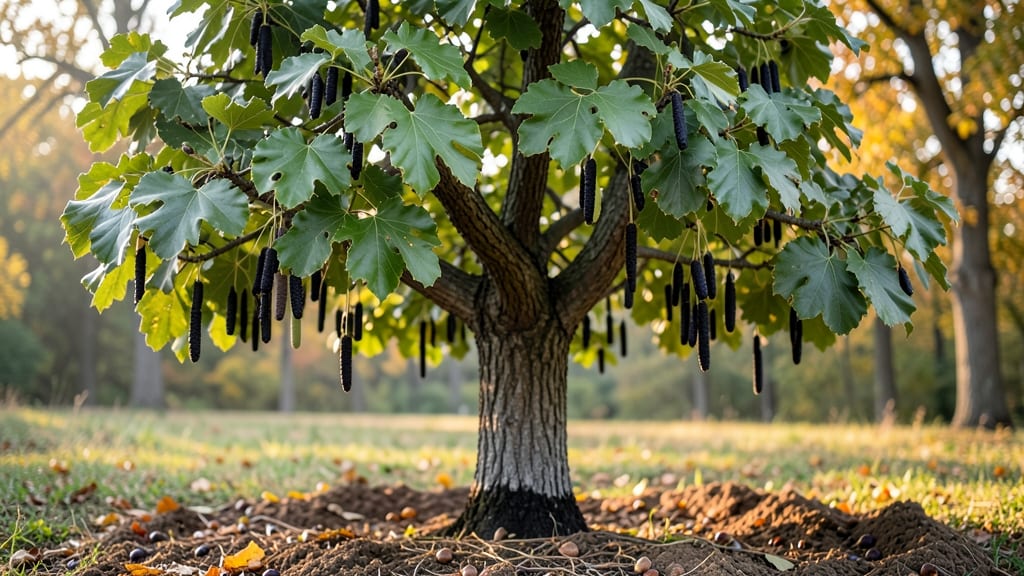
Mulberry trees produce fruit in late spring to early summer, typically between May and July, though exact timing depends on the variety and local climate—warmer zones may bear fruit earlier, while colder regions see delayed harvests.
Timing varies dramatically based on your location and the specific mulberry type you're growing. Southern climates like Florida or Texas often see fruit ripen as early as April, while northern zones in Maine or Minnesota might not produce until late July or even August. Black mulberries tend to ripen first, followed by red and white varieties, which can trail by 2-3 weeks. 🌱 The key factor is consistent temperatures above 55°F—once your tree reaches this threshold for at least 2 weeks, the fruit production clock starts ticking.
What's fascinating is how mulberries respond to environmental cues. Many varieties bloom in early spring, but fruit development accelerates dramatically when daytime temperatures hit 70°F+. This explains why urban trees in heat-island areas often fruit earlier than rural counterparts.
For consistent harvests, I recommend planting at least two varieties—this staggered approach ensures you get fruit from May through August, depending on your zone.
💡 In This Article
- Factors Influencing Mulberry Fruit Ripening Timeline
- Best Mulberry Varieties for Early vs. Late Harvests
Factors influencing mulberry fruit ripening timeline
The ripening process in mulberry trees begins with a delicate balance of temperature and daylight hours. Mulberries require consistent daytime temperatures above 55°F to trigger flowering, but fruit development truly accelerates when nighttime temperatures stay above 60°F.
This explains why southern climates like Florida's Zone 9 produce fruit as early as April, while northern Zone 5 regions might not see harvests until July. The tree's internal clock also responds to photoperiod—longer daylight hours in spring signal the tree to shift from vegetative growth to reproductive mode.
USDA hardiness zones play a critical role, but microclimates matter even more. A mulberry tree planted in a sunny urban area with heat-reflective pavement can ripen fruit 2-3 weeks earlier than one in a shaded rural setting.
For example, the 'Illinois Everbearing' variety in Chicago (Zone 5) typically fruits in late June, while the same variety in Atlanta (Zone 7) may produce in early May.
The tree's age also affects timing—younger trees (under 5 years) often bear fruit later as they prioritize root and canopy development over fruit production.
Sunlight exposure creates another critical variable. Mulberries need 6-8 hours of direct sunlight daily for optimal fruit set, but excessive afternoon heat can stress the tree.
In hot climates like Arizona, trees often produce fruit in two waves: an early spring crop when temperatures are moderate, followed by a smaller summer harvest after monsoon rains provide relief.
The tree's ability to photosynthesize efficiently during these periods directly impacts fruit size and sweetness—larger, sweeter berries develop when the tree has stored adequate energy reserves.
One fascinating mechanism is how mulberries respond to temperature fluctuations. When daytime highs reach 85°F+, the tree may temporarily pause fruit development to conserve water, only resuming when temperatures drop.
This explains why some years produce abundant crops while others yield sparsely—it's not just about the variety, but how well the tree can handle seasonal temperature swings. For gardeners in transitional zones (like Zone 6), this means planning for potential delays if spring brings unseasonably cool weather.
Soil moisture also plays a hidden role in ripening timing. While mulberries are drought-tolerant once established, consistent moisture during flowering (1-1.5 inches per week) helps ensure proper fruit set. In dry climates, trees may produce smaller crops that ripen later as they prioritize survival over fruit development.
The key takeaway is that while the general window is May-July, these environmental factors can shift that timeline by up to 6 weeks in either direction.
For those tracking ripening progress, look for these visual cues: flowers appear in early spring, followed by small green berries that turn pinkish-red before ripening to their mature color. Black mulberries darken to deep purple, while red varieties develop a vibrant crimson hue.
The fruit typically drops when fully ripe, so placing sheets under the tree can help collect the harvest. 🌿