
Diseases
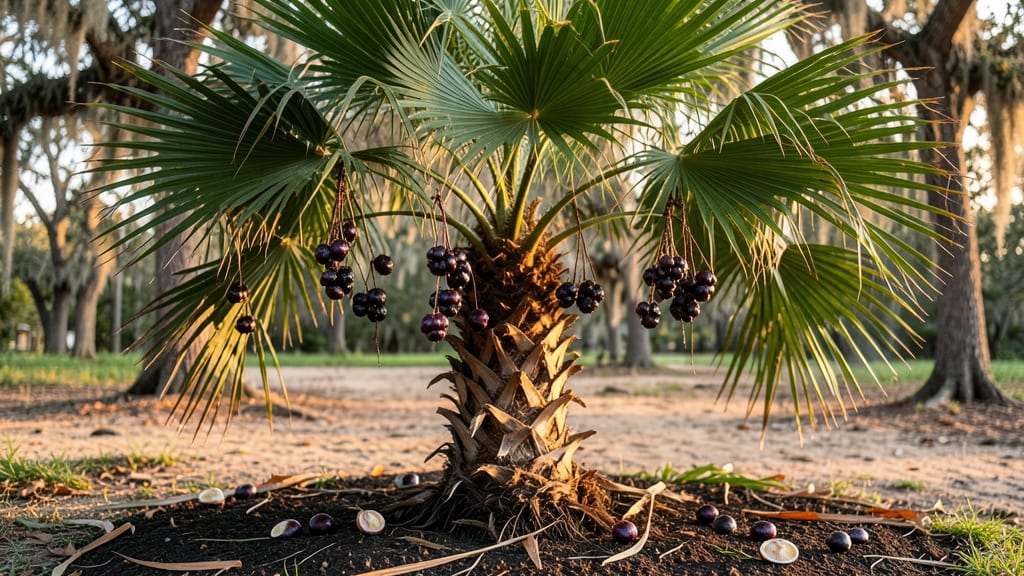
Palmetto fruit is the edible berry produced by the sabal palmetto palm tree, featuring a deep purple-black skin and a single large seed inside. Found naturally across the southeastern United States, this versatile fruit has been used for centuries in both traditional cuisine and natural remedies.
This small, drupe-like fruit grows on the sabal palmetto palm, a hardy species that thrives in coastal regions from Florida to Texas. 🌿 The fruit's rich antioxidant content makes it a prized ingredient in everything from syrups to teas, while its historical uses in medicine highlight its potential health benefits.
What's fascinating is how its resilience mirrors the plant itself—capable of surviving harsh conditions while still producing edible fruit.
When foraging, always verify identification to avoid toxic lookalikes like yew berries, as palmetto fruit should have a slightly sweet, nutty flavor when ripe. Many traditional recipes use the fruit to make jams, jellies, or fermented drinks, though modern applications are expanding into gourmet desserts and even skincare products.
💡 In This Article
- Sabal Palmetto Plant: Growth Habits and Ecological Role
- Harvesting and Culinary Uses of Palmetto Fruit
Sabal palmetto plant: growth habits and ecological role
The sabal palmetto palm thrives as a slow-growing, multi-trunked shrub reaching 15-25 feet tall, with fan-shaped fronds that spread 3-5 feet wide. Its fronds are uniquely adapted to withstand hurricane-force winds by bending rather than breaking, a feature that earned it the nickname "cabbage palm" due to its edible heart.
The plant's cold-hardiness extends down to 10°F, making it one of the most resilient palms in North America.
Ecologically, sabal palmetto plays a vital role in coastal ecosystems, providing food and shelter for wildlife like raccoons, possums, and birds that feed on its fruit. The palm's deep root system stabilizes sandy soils and reduces erosion along shorelines.
What's remarkable is how its berries remain on the tree through winter, offering a crucial food source when other plants have gone dormant. 🌿 The plant's ability to thrive in salty, nutrient-poor soils makes it a keystone species in coastal dune communities.
Botanically, the fruit develops from the palm's female flowers, which are pollinated by wind and insects. Each fruit contains a single large seed surrounded by a dark purple-black skin that's rich in anthocyanins—powerful antioxidants that give the fruit its deep color.
These compounds also help protect the fruit from UV damage while ripening. The palm's reproductive strategy ensures fruit production even in harsh conditions, with trees often bearing fruit annually once mature.
Historically, Native American tribes like the Seminole and Creek used every part of the palm—from fronds for thatching to fruit for food and medicine. The plant's resilience mirrors its ecological importance, as it can regenerate from its stump even after being cut down.
This adaptability has made sabal palmetto a symbol of coastal Florida's ability to recover from natural disasters.
In modern landscaping, the palm's drought tolerance and salt resistance make it ideal for coastal properties, where it requires minimal care once established. Unlike many ornamental palms, sabal palmetto doesn't need regular fertilizing or watering beyond what nature provides.
Its slow growth also means it can live for 75 years or more, making it a long-term investment for both ecosystems and homeowners.
What makes this palm truly unique is its dual role as both a wild food source and a landscape staple. The same plant that provides berries for wildlife and humans also offers shade, erosion control, and aesthetic value.
This dual functionality explains why sabal palmetto has become such an integral part of southeastern ecosystems—and why its fruit remains so valuable today. 💫