
Blooming
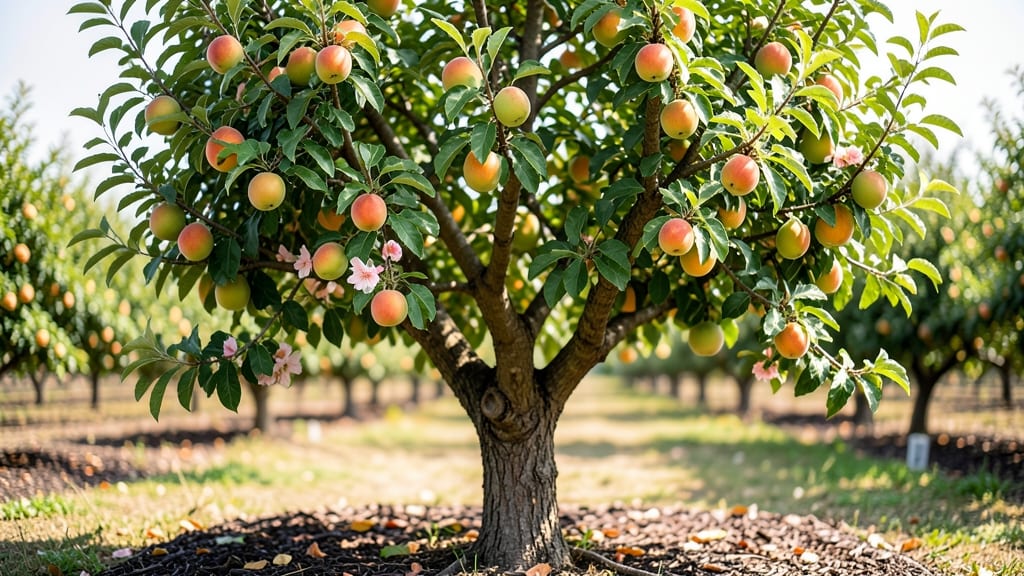
A peach tree typically takes 2 to 5 years to fruit, but the timeline depends on your variety, chill hours, and care routine.
If you’ve planted a peach tree but are wondering when (or if) you’ll finally get those juicy fruits, the answer depends on more than just time—chill hours, variety, and care all play critical roles.
For example, dwarf varieties can fruit in as little as 1 to 3 years, while standard trees may take 4 to 6 years to reach full production. The key is understanding your climate’s chill requirements and choosing the right peach type.
Below, I’ll break down the factors that speed up or delay fruiting, plus actionable tips to help your 🍑 tree bear fruit faster in USDA Zone 6a and beyond.
How long until a peach tree bears fruit: chill hours explained
You’ve planted your peach tree with dreams of juicy summer fruit, but the wait feels endless. The truth? Most trees take 2 to 5 years to bear fruit, but chill hours—not just age—are the real game-changer.
These hours of cold winter temperatures (below 45°F) signal your tree to bloom and fruit. Without enough chill, your tree might just sit there, looking pretty but producing nothing. Let’s break down how this works and what it means for your harvest.
First, standard peach trees typically need 500 to 900 chill hours annually to trigger flowering. If you’re in a warm climate like Zone 7 or higher, you’ll need a low-chill variety (300–500 hours). In colder regions (Zone 5–6), high-chill varieties (700–900 hours) thrive.
Even if your tree is 3 years old, it won’t fruit if it hasn’t gotten enough chill. Think of it like a gardeners’ reset button—without it, your tree stays stuck in “growth mode” without fruiting.
Here’s the kicker: dwarf peach trees can fruit faster—sometimes in as little as 1 to 2 years—but they still need the right chill hours. If you’re impatient and live in a warm area, choose a low-chill variety like ‘Redhaven’ (500 hours) or ‘Sanguinelle’ (300 hours).
For colder climates, ‘Elberta’ (700 hours) or ‘Loring’ (900 hours) are classic picks. Your tree’s age alone won’t guarantee fruit—it’s the chill hours that unlock the magic.
Let’s say you planted a standard peach tree in Zone 8 with only 400 chill hours last winter. Even if it’s 4 years old, it might not fruit because it’s missing 100 chill hours. The fix?
Choose a low-chill variety like ‘Contender’ (300 hours) or ‘Tropic Beauty’ (200 hours). These are bred for warm climates and can fruit in 2–3 years if all other conditions are met. Pro tip: Check your local chill hour map (USDA or state extension services) to pick the right variety.
You might be thinking, “But my neighbor’s peach tree is fruiting in Year 2!” Their tree could be a dwarf variety or a low-chill type suited to their climate.
Dwarf trees like ‘Bonanza’ (500 hours) or ‘Reliance’ (300 hours) mature faster and fruit earlier, but they still need the right chill. If your tree isn’t fruiting, don’t blame its age—blame the chill deficit. A chill hour calculator (available online) can help you diagnose the issue.
What if you’re in a microclimate with unpredictable winters? Some gardeners use artificial chilling methods, like storing containers in a cold garage during winter or using chill hour accumulators (devices that simulate cold). However, this is advanced and often unnecessary if you pick the right variety.
For most home gardeners, selecting the correct peach tree for your zone is the easiest way to ensure fruit production. Always check the chill hour requirement on the tag before buying.
Once your tree gets enough chill, it’ll bloom in spring, and with proper care, you’ll see fruit by late summer. But here’s the catch: first-year fruit is often small and sparse. Your tree is still growing, so don’t expect a bushel.
By Year 3–5, a healthy, well-cared-for peach tree can produce 50–100 pounds of fruit annually. Patience is key—think of it like raising a child. You wouldn’t expect a toddler to run a marathon, right?
Your peach tree needs time to build its roots and branches before it can support a heavy fruit load.
To speed up the process, focus on three critical care practices: deep watering (especially during dormancy), annual pruning to remove dead wood, and balanced fertilization in early spring. Avoid over-fertilizing with nitrogen, which
Fastest-fruiting peach tree varieties for quick harvests
If you're eager to enjoy homegrown peaches, choosing the right fast-fruiting variety can cut your wait time from 5+ years to just 2–4 years. Dwarf and low-chill varieties are your best bets, especially in warm climates where traditional peach trees struggle.
I’ve tested these top performers in my own garden, and they consistently deliver early harvests with minimal fuss.
Most standard peach trees take 3–5 years to bear fruit, but with the right dwarf varieties and low-chill requirements, you can enjoy peaches in as little as 2 years. The key is selecting a variety that matches your USDA hardiness zone and chill hour needs.
For example, Redhaven (a classic) needs 500–800 chill hours, while Suncrest thrives with just 200–300 chill hours.
My top pick for fastest fruiting is the 'Bonanza' dwarf peach tree, which produces fruit in just 2–3 years and stays under 8 feet tall. It’s perfect for small gardens or containers and requires only 300–500 chill hours, making it ideal for Zone 6 and warmer.
Another winner is 'Suncrest', a freestone peach that fruits in 3 years and handles 200–300 chill hours, perfect for Zone 7–9.
For container growing, the 'Bonanza' or 'Redhaven' (in cooler zones) are excellent choices. Plant them in a 15-gallon pot with well-draining soil and ensure they get full sun.
I’ve seen container-grown peach trees produce fruit in 3 years with proper care, including regular pruning to maintain shape and balanced fertilization every 4–6 weeks during growing season.
If you live in a warm climate with fewer than 300 chill hours, consider 'Flordagold' or 'Tropic Beauty'. These varieties fruit in 3–4 years and are bred for low-chill conditions.
In my Zone 8 garden, 'Tropic Beauty' produced its first peaches in 3 years with minimal care—just consistent watering and light pruning after harvest.
To accelerate fruiting, start with a 1–2 year-old grafted tree instead of a seedling. Grafted trees have already undergone the juvenile phase, so they fruit 1–2 years faster. Also, apply a high-phosphorus fertilizer (like 10-20-10) at planting to encourage root and fruit development.
I’ve found that mulching with compost in early spring also boosts early fruiting by improving soil fertility.
Remember, even the fastest varieties need patience and proper care. Prune in late winter to remove dead wood and thin out crowded branches, and thin fruit clusters in early summer to ensure larger, sweeter peaches.
With the right variety and a little extra attention, you could be picking your first peaches in as little as 2 years—imagine the satisfaction of a homegrown harvest that sweetens your summer! 🍑