
Pruning
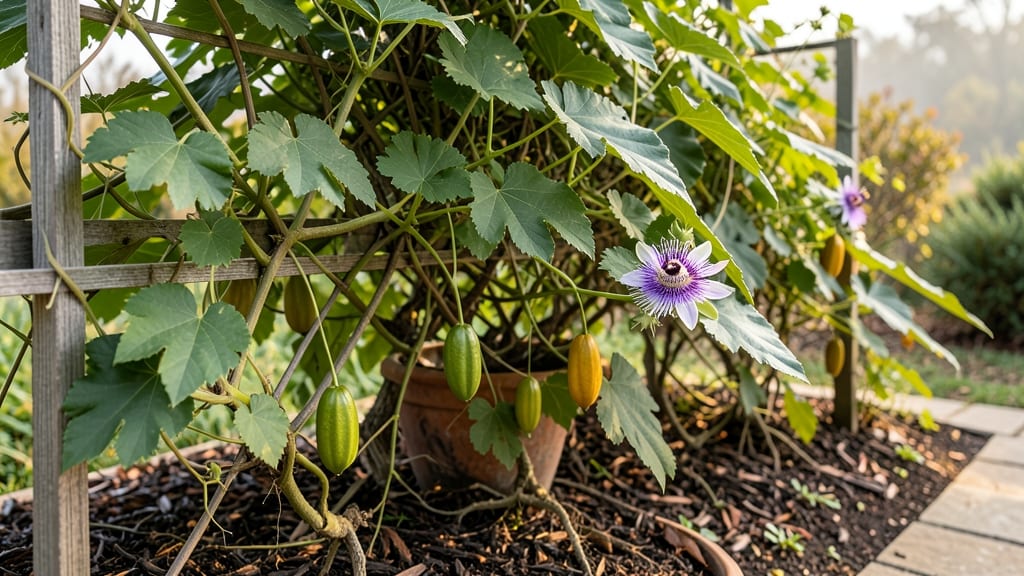
Cultivating passion fruit tree care that produces heavy harvests starts with understanding its unique growth habits. 🌱 I learned the hard way—my first tree produced just a handful of fruits because I ignored its pruning needs.
Passion fruit vines thrive when you guide their growth seasonally, not just once a year.
The key is balancing sunlight exposure with airflow to prevent disease while encouraging fruit production. You’ll need well-draining soil, 6+ hours of sun daily, and a strong trellis or fence for support. Water consistently but avoid soggy roots, which lead to rot.
By pruning strategically—twice a year—you’ll trigger more flowering and fruiting nodes. The first harvest arrives in 6-8 months, but with proper care, your tree can produce year-round in warm climates. The sweet-tart fruit rewards patience.
For beginners, start small with a single vine and focus on one pruning cycle before expanding. Even in cooler zones, container growing extends the season. Let’s get those vines productive!
📚 In This Guide
- What you need
- Instructions
- Tips and common mistakes
- Wrapping up and next steps
What you need
- ● Passion fruit plant: Choose between Passiflora edulis (purple) or Passiflora ligularis (yellow) varieties, depending on your climate and taste preferences.
- ● Well-draining soil: A mix of 60% garden soil, 30% compost, and 10% perlite or sand (pH 6.0–7.5). Test your soil’s drainage—passion vines hate soggy roots!
- ● Sunlight: 6–8 hours of full sun daily (partial shade in scorching climates). South-facing walls or trellises work great!
- ● Watering can or hose: With a gentle spray nozzle to avoid damaging tender vines.
- ● Fertilizer: Balanced fertilizer (10-10-10) at planting (2 tbsp per plant).
- ● High-potassium fertilizer (5-10-10) during fruiting season (every 4–6 weeks).
- ● Organic options: Compost tea, banana peels (for potassium), or worm castings.
- ● Trellis or sturdy support: A 10–15 ft tall metal or wooden trellis (or strong fence/pergol). Vines can grow 20+ ft if unchecked!
- ● Pruning shears: Bypass pruners (for clean cuts) or felco pruners (for thicker branches). Disinfect with rubbing alcohol between cuts to prevent disease.
- ● Loppers: For branches ½–1.5 inches thick (extendable loppers for tall vines).
- ● Saw: Pruning saw for stubborn, thick wood (2–4 inches in diameter).
- ● Gloves: Heavy-duty gardening gloves (thorns are sharp!).
- ● Safety glasses: Protect your eyes from flying debris during heavy pruning.
- ● Hardiness zone: USDA Zones 7–11 (or container-grown in cooler zones). Pro tip: Use a black plastic mulch in winter to insulate roots!
- ● Windbreaks: Passion vines are top-heavy. Install wind screens or plant near a sturdy structure if in exposed areas.
- ● Container option: 15–20 gallon pot with drainage holes (for zones below 7). Use a lightweight potting mix.
- ● Mulch: 2–3 inches of wood chips or straw to retain moisture and suppress weeds.
- ● Drip irrigation system: Automates watering and reduces stress on vines.
- ● Pest control: Neem oil (for aphids/mealybugs) or yellow sticky traps (for whiteflies).
- ● Harvest aids: Pruning knife (for delicate fruit stems) and small basket (to avoid bruising fruit).
Step-by-Step pruning guide for year-round passion fruit harvests
Here’s how I keep my passion fruit vines productive all year—pruning isn’t just about shaping, it’s about controlling growth for bigger, sweeter fruit.
✂️ Step 1: Identify and Remove Dead or Diseased Wood
Start by examining the entire vine for branches that are brown, mushy, or hollow—these are dead or infected. Passion fruit vines are vigorous, but dead wood spreads disease like powdery mildew faster than you can say “sour fruit.” Use clean, sharp pruners to cut these back to healthy green tissue, making cuts at a 45-degree angle just above a leaf node.
I always prune in the morning when the vine is dry—wet wood splinters and invites pathogens. Burn or discard the cuttings immediately, never compost them. The goal here is to remove anything that’s not contributing to fruit production or new growth.
🌱 Step 2: Prune for Airflow and Light Penetration
Passion fruit vines need full sun (6-8 hours daily) to set fruit, so thick, tangled growth blocks light. Cut back any crossing branches or those growing inward to create an open, umbrella-like shape. Aim to leave 12-18 inches of space between branches—this prevents humidity buildup, which leads to fungal issues.
Here’s the thing—passion fruit vines grow fast, but they fruit best on new wood. I focus on removing older, woody stems that aren’t producing while keeping younger, flexible growth. You’ll know you’re doing it right when sunlight reaches the center of the vine and you can see new shoots emerging within 2-3 weeks.
⏰ Step 3: Time Your Seasonal Pruning for Maximum Fruit
Prune lightly in spring (just enough to shape) when buds form, then heavily in late summer after the first harvest. This forces the vine to redirect energy into new fruit-bearing branches. In warm climates, you can prune again in early fall to encourage a late-season flush of growth before winter slows things down.
Never prune during flowering or fruiting—you’ll sacrifice your harvest. Wait until after the fruit has been picked or dropped naturally. I mark my calendar: June and September are my pruning months in Zone 9, but adjust for your frost dates.
🌿 Step 4: Encourage Fruit Production with Strategic Cuts
Passion fruit vines fruit on current season’s growth, so prune to leave 4-6 strong, healthy branches per main stem. Cut back each branch to 3-4 leaves above a leaf node—this stimulates branching and more fruit clusters. Avoid “heading back” (cutting just above a bud) unless you’re training a young vine.
Real talk: Over-pruning reduces fruit next season. If your vine is young (under 2 years), keep at least 60% of the foliage to build energy reserves. Mature vines can handle harder cuts, but even then, never remove more than 30% of the plant in one session.
☀️ Step 5: Post-Pruning Care for Recovery and Growth
After pruning, water deeply to 12 inches down to help the vine recover. Passion fruit trees have shallow roots, so consistent moisture prevents stress. Apply a balanced fertilizer (10-10-10) at half strength to encourage new growth, but avoid high-nitrogen formulas—they promote leafy growth over fruit.
Watch for new shoots emerging from the base or along the main stems within 10-14 days. These are your future fruit producers. If you see leggy, pale growth, your vine needs more light—move it closer to a sunny window or supplement with a grow light for 14 hours daily.
Tips & tricks for year-round passion fruit pruning
These game-changing insights will help you transform your passion fruit vine from a tangled mess into a fruit-bearing powerhouse—without sacrificing next year's harvest.
Tool Preparation: Sterilize your pruners with rubbing alcohol between cuts in Step 1 to prevent cross-contamination of diseases like powdery mildew. I keep a small spray bottle of 70% isopropyl alcohol handy—it's faster than flame sterilization and just as effective. The 45-degree angle cuts mentioned in Step 1 should be made just above a leaf node to encourage new growth from that exact spot.
Seasonal Timing Secret: The late summer pruning in Step 3 is your golden opportunity to shape the vine for maximum fruit production next season. In Zone 9, I schedule this for early September—just after the first harvest wave. If you're in a cooler climate, wait until after your last frost date. The key is to prune when the vine has already set fruit for the season, so it redirects energy into new growth rather than maintaining existing fruit.
Visual Growth Check: After pruning in Step 2, monitor for new shoots emerging within 2-3 weeks as your success indicator. These shoots should be vibrant green and appear at the leaf nodes where you made your cuts. If you don't see new growth within 3 weeks, your cuts may have been too severe or made in the wrong place—aim for the junction where branches meet the main stem. For young vines (under 2 years), I mark these new shoots with colored twine to track their development.
Fertilizer Strategy: When applying that balanced 10-10-10 fertilizer in Step 5, I split the dose into two applications: half immediately after pruning, and half again 6 weeks later. This two-step approach prevents fertilizer burn while giving the vine consistent nutrients during its recovery phase. The half-strength application is crucial—passion fruit vines are sensitive to salt buildup from concentrated fertilizers.
Pro Tips for Passion Fruit Tree Care
- These game-changing insights will help you transform your passion fruit vine from a tangled mess into a fruit-bearing...
- Tool Preparation: Sterilize your pruners with rubbing alcohol between cuts in Step 1 to prevent cross-contamination o...
- Seasonal Timing Secret: The late summer pruning in Step 3 is your golden opportunity to shape the vine for maximum fr...
Frequently asked questions
Got questions about keeping your passion fruit tree thriving? Here are some of the most common ones—plus straightforward answers to help you grow like a pro!
How often should I prune my passion fruit tree for the best harvest?
Prune your passion fruit tree twice a year: once in late winter (before new growth) and again after harvest to shape the plant. Light trimming between harvests can also encourage more fruit production. Pro tip: Never prune more than 1/3 of the tree at once to avoid stressing it!
Can passion fruit trees survive winter frost? What should I do?
Passion fruit trees are tropical and can’t handle frost—temperatures below 32°F (0°C) will damage or kill them. If frost is forecast, cover young plants with frost cloth or move potted trees indoors. Mature trees in warm climates may survive light frosts but will drop fruit. Pro tip: Mulch heavily to protect roots!
Why aren’t my passion fruit trees producing fruit? How can I fix it?
Lack of fruit often stems from poor pollination, insufficient sunlight, or over-pruning. Hand-pollinate flowers with a small brush, ensure 6+ hours of sun daily, and avoid aggressive pruning. Pro tip: Fertilize with a balanced, citrus-friendly mix (10-10-10) during blooming season for better yields!
Can I grow passion fruit trees in containers? What’s the best setup?
Yes! Use a large container (15+ gallons) with drainage holes and well-draining soil. Choose dwarf varieties like ‘Panama Red’ for smaller spaces. Place in full sun, water regularly, and fertilize monthly during growing season. Pro tip: Rotate pots occasionally for even growth!
What pests or diseases should I watch for in passion fruit trees?
Common issues include aphids, spider mites, and fruit borers. Treat aphids with soapy water, mites with neem oil, and borers by removing infested fruit. Fungal diseases like powdery mildew thrive in humidity—prune for airflow and avoid overhead watering. Pro tip: Inspect leaves weekly for early signs!
Wrapping up and next steps
Growing a thriving passion fruit tree is all about consistent care, strategic pruning, and a little patience—but the sweet rewards are worth it! 🌱 With the right tools, seasonal trimming techniques, and a watchful eye for pests, you’ll soon enjoy bountiful, juicy harvests that turn your backyard into a tropical paradise.
Whether you’re a beginner or a seasoned gardener, every snip brings you closer to that first taste of homegrown passion fruit.
Ready to take the next step? Start small—pick one tree to prune this season, and track your progress. Before you know it, you’ll be sharing jars of homemade passion fruit jam with friends or sipping fresh, chilled juice straight from your garden. Happy pruning—and here’s to your harvest! 🍈✨