
Diseases
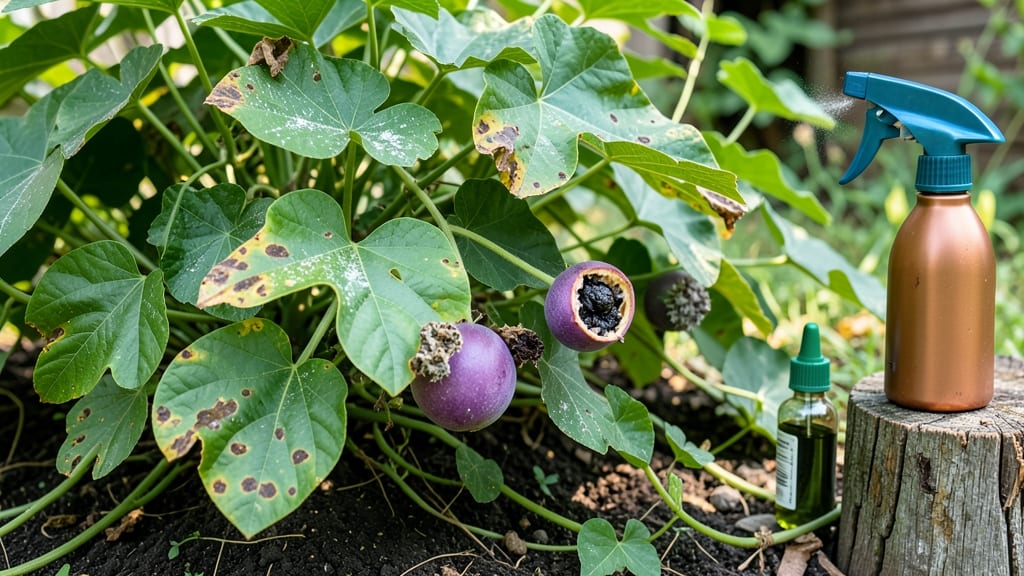
Your passion fruit plant diseases—yellowing leaves and blackened vines—don’t have to mean game over. 🌿 I’ve battled bacterial blight and woodiness virus myself, and the key to saving your plant starts with recognizing the early signs—before they spread.
The right mix of pruning, organic sprays, and cultural tweaks can turn things around faster than you’d expect.
Most diseases strike when humidity climbs and airflow stalls, but some—like woodiness virus—come from infected cuttings. Start with clean tools, remove affected leaves immediately, and space vines for better airflow.
A copper fungicide spray (applied every 7-10 days) stops fungal spread in its tracks, while neem oil tackles bacterial infections when used as a preventive.
By the time you see dark lesions or wilting vines, the plant’s already fighting hard. But with pruning out infected growth and boosting soil health (compost + balanced fertilizer), you’ll see new shoots in 2-4 weeks.
The goal isn’t perfection—it’s resilience. Healthy vines bounce back, and next season’s harvest stays safe.
Works for both backyard vines and greenhouse setups, though tropical climates need extra vigilance. The same principles apply whether you’re dealing with fungal spots or viral stunting. Let’s get your passion fruit back on track—before the fruit even ripens.
Root Causes of Passion Fruit Ailments
Passion fruit plants are resilient, but when diseases strike, they often do so due to a mix of environmental stress, microbial invaders, and poor growing conditions.
Understanding these triggers is the first step to prevention and treatment. Here’s why your passion fruit plants might be falling victim to fungal and bacterial threats:
Fungal and bacterial pathogens are the primary culprits behind passion fruit diseases. These microorganisms thrive in warm, humid conditions—perfect for tropical climates where passion fruit grows best.
- Fungal Spores Spread Easily: Fungi like Fusarium and Phytophthora produce lightweight spores that travel via wind, water, or contaminated tools.
Once they land on a plant’s surface, they germinate in moist conditions, penetrating through natural openings like wounds or stomata. - Bacteria Hitchhike on Insects: Pathogens like Xanthomonas and Erwinia often spread through sap-sucking insects (e.g., leafhoppers) or contaminated pruning tools.
They exploit weak spots, such as damaged leaves or fruit, to establish infections. - Soil-Borne Threats Persist: Some diseases, like Colletotrichum (anthracnose), lurk in the soil for years, waiting for the right conditions to infect roots or foliage.
Pro Tip: 💡 Rotate crops and avoid planting passion fruit in the same spot yearly to break the disease cycle. Solarize soil in the off-season to kill dormant pathogens.
Passion fruit plants are sensitive to extreme weather, which weakens their defenses and creates ideal conditions for pathogens.
- Excessive Moisture: Overhead irrigation or poor drainage keeps leaves and fruit damp for long periods, giving fungi (e.g., Phytophthora root rot) the moisture they need to thrive. Wet foliage also slows evaporation, trapping spores against the plant. - High Humidity: Tropical humidity (above 80%) encourages fungal growth.
Spores germinate faster in these conditions, leading to rapid outbreaks of diseases like powdery mildew. - Temperature Swings: Sudden drops below 60°F (15°C) or spikes above 90°F (32°C) stress plants, making them more susceptible to infections.
Cold stress, for example, can weaken cell walls, making them easier targets for bacteria.
Pro Tip: ✨ Use drip irrigation instead of overhead watering to keep foliage dry. Prune for airflow and avoid planting in low-lying areas where water pools.
A healthy passion fruit plant can fend off many diseases, but wounds, nutrient deficiencies, or pest damage create entry points for pathogens.
- Physical Damage: Pruning cuts, hail, or animal bites create open wounds where bacteria and fungi can enter. Even minor abrasions from rough handling can lead to infections like bacterial blight. - Nutrient Deficiencies: Lack of nitrogen, potassium, or micronutrients weakens the plant’s immune response.
For example, magnesium deficiency (visible as yellowing between leaf veins) reduces chlorophyll production, making leaves more vulnerable to sunburn and fungal attacks. - Pest Infestations: Insects like thrips or mites feed on plant sap, leaving behind damaged tissue.
This damage attracts secondary infections, such as sooty mold (a fungal growth on honeydew secretions).
Pro Tip: 🔥 Sterilize pruning tools with rubbing alcohol between cuts to prevent cross-contamination. Apply balanced fertilizer (e.g., 10-10-10) to boost plant vigor.
Farmers and gardeners often unknowingly spread diseases through shared or improperly cleaned tools.
- Pruners and Knives: Tools used on infected plants can transfer spores or bacteria to healthy ones.
Even a single cut with a contaminated blade can introduce Xanthomonas into the plant’s vascular system. - Grafting Materials: If you’re grafting passion fruit varieties, using infected scions or rootstock can introduce systemic diseases like Fusarium wilt. - Harvesting Containers: Baskets or bins used to collect fruit from diseased plants may harbor pathogens, which can then infect healthy fruit during transport.
Pro Tip: 🧼 Clean tools with 10% bleach solution (1 part bleach to 9 parts water) between uses. Disinfect harvesting containers with soapy water or a mild fungicide spray.
The growing medium itself can be a hidden reservoir for pathogens, especially if it’s not properly managed.
- Poor Drainage: Waterlogged soil suffocates roots, creating anaerobic conditions where Phytophthora and other root-rotting fungi flourish. Stagnant water also spreads spores across the garden. - Contaminated Water: Irrigation water from ponds, rivers, or reused containers may carry fungal zoospores or bacterial cells.
Even tap water left standing in hoses can become a breeding ground for pathogens. - Organic Matter Decomposition: Over time, decomposing plant debris in the soil releases nutrients but also harbors fungal spores. While compost is beneficial, it must be hot-composted to kill pathogens before use.
Pro Tip: 🌡️ Test soil pH (ideal range: 6.0–7.0 for passion fruit). Amend with sulfur or lime as needed, and avoid over-fertilizing with fresh manure, which can introduce pathogens.
Fixing Passion Fruit Plant Ailments
Now that you’ve identified the issue, it’s time to take action! Treating passion fruit plant diseases early can save your crop—and your sanity. Below are practical, step-by-step solutions tailored to each common problem, plus prevention tips to keep your plants thriving long-term.
🍄 Powdery Mildew: Scrub and Spray
Cause: White, powdery patches on leaves (often from humidity + poor airflow). Fix: 1. Prune infected leaves 🔪—remove and dispose of them in a sealed bag (not compost).
- Clean foliage with a neem oil solution (1 tbsp neem oil + 1 tsp mild soap per quart of water). Spray early morning or evening (avoid direct sunlight).
- Improve airflow—space plants 3–4 feet apart and trim dense vines.
- Apply sulfur spray (1–2 tbsp per gallon of water) once a week until symptoms fade.
💡 Prevention Tip: Avoid overhead watering—use drip irrigation and water at soil level.
🍅 Woodiness Virus: Remove and Disinfect
Cause: Crinkled, thickened leaves (spread by aphids or infected cuttings). Fix:
- Destroy infected plants immediately—burn or bury them deeply (do not compost).
- Inspect nearby plants for symptoms and quarantine suspicious ones.
- Control aphids with insecticidal soap or release ladybugs (natural predators).
- Disinfect tools with 70% rubbing alcohol before and after pruning.
✨ Prevention Tip: Buy certified disease-free cuttings and rotate planting locations every 3–4 years.
🌡️ Bacterial Blight: Copper Spray Rescue
Cause: Water-soaked spots on leaves/fruit (from rain or overhead watering). Fix: 1. Remove all infected parts (leaves, stems, fruit) and sterilize pruners with bleach (1 part bleach to 9 parts water).
- Apply copper fungicide (follow label rates) every 7–10 days for 4–6 weeks.
- Avoid wetting foliage—use soaker hoses or drip systems.
- Improve drainage—amend soil with compost to prevent waterlogging.
🔥 Prevention Tip: Space plants widely (4–5 feet apart) to reduce humidity buildup.
🍈 Fruit Rot: Sanitize and Support
Cause: Soft, mushy fruit (from fungal/bacterial infection). Fix:
- Pick infected fruit immediately and compost separately (not near healthy plants).
- Spray with a baking soda solution (1 tbsp baking soda + 1 tsp soap per gallon of water) weekly.
- Thin vines to allow sunlight penetration (fungi love shade).
- Use mulch (straw or wood chips) to prevent soil splashing onto fruit.
🎯 Prevention Tip: Harvest fruit promptly—don’t let it overripe on the vine!
🐜 Aphids & Mealybugs: Soap or Oil Blast
Cause: Sticky residue (honeydew) leading to sooty mold. Fix:
- Blast pests off with a strong water spray (early morning).
- Apply horticultural oil or insecticidal soap (reapply every 5–7 days).
- Introduce beneficial insects—ladybugs, lacewings, or parasitic wasps.
- Wipe down leaves with a soapy cloth (1 tsp mild soap per gallon of water).
🌡️ Prevention Tip: Yellow sticky traps can catch aphids before they multiply.
Even after treating diseases, prevent recurrence with these easy habits:
- Rotate crops—don’t plant passion fruit in the same spot yearly.
- Test soil pH (ideal: 6.0–7.0)—use lime to raise or sulfur to lower.
- Fertilize lightly—too much nitrogen = weak, disease-prone plants.
- Monitor daily—catch problems early before they spread!
Final Thought: 🌟 Healthy passion fruit plants start with clean tools, good airflow, and smart watering. Follow these steps, and your vines will bounce back—stronger than ever!
Frequently asked questions
How do I tell if my passion fruit plant has a fungal or bacterial infection?
Check the symptoms: fungal infections often show as powdery white patches (like powdery mildew) or dark, circular spots with fuzzy edges (e.g., anthracnose). Bacterial issues usually appear as water-soaked lesions that ooze or turn yellow/brown, often with a foul odor. Examine both leaf undersides and stems—fungi thrive in hidden, damp areas.
Can I save a passion fruit vine infected with woodiness virus?
No, woodiness virus has no cure—once infected, the plant must be removed and destroyed (burn or bury deeply). The virus spreads through aphids and infected cuttings, so sterilize tools and inspect new plants before adding them to your garden. Start fresh with certified disease-free cuttings.
What’s the fastest way to stop powdery mildew from spreading?
Prune infected leaves immediately and dispose of them in a sealed bag (not compost). Then apply a baking soda spray (1 tbsp baking soda + 1 tsp soap per gallon of water) every 5-7 days while improving airflow. Sulfur spray (1-2 tbsp per gallon) works too but avoid using it when temps exceed 85°F.
Why does my passion fruit plant keep getting fruit rot even after treatment?
Fruit rot often returns due to poor drainage or overhead watering that keeps fruit damp. Switch to drip irrigation and ensure vines have 3-4 feet of spacing for airflow. Also check for aphids or mealybugs—their honeydew attracts fungal spores. Harvest fruit promptly when it reaches 70% color change.
How often should I sterilize my pruning tools to prevent disease spread?
Sterilize tools before and after each use, especially when moving between plants. Use 70% rubbing alcohol or a 10% bleach solution (1 part bleach to 9 parts water), then rinse and dry. For heavy infections, flame sterilization (passing blades through a propane torch) works best. Never skip this step—contaminated tools are a top disease spreader!