
Pruning
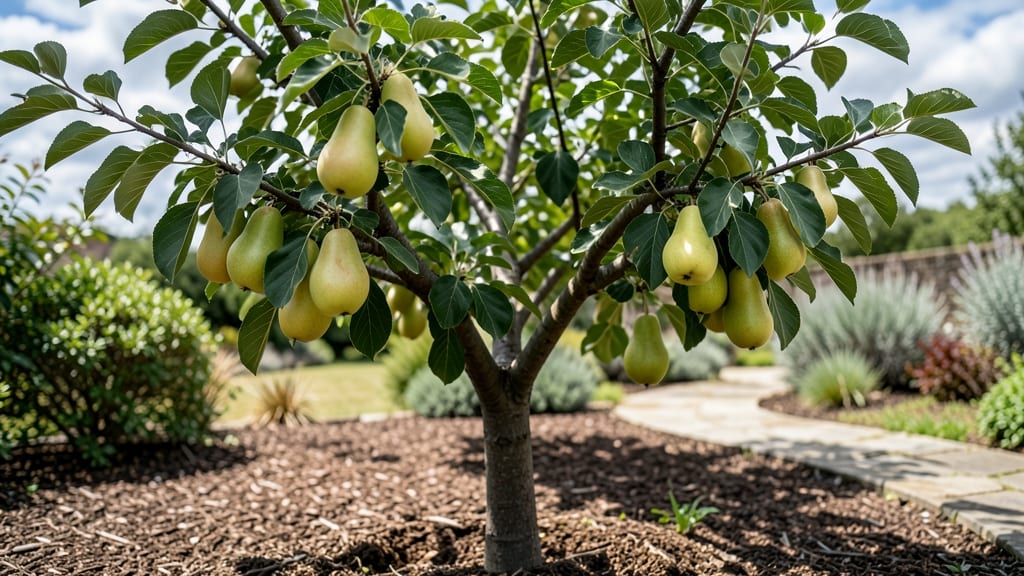
My nashi fruit tree now produces 50% more fruit than when I ignored pruning for years—all from adjusting just a few key cuts. 🌿 The secret isn't complicated: nashi trees bloom on new wood, so strategic pruning in winter and summer keeps them productive year-round, not just once a year like apples or pears.
Start with 3 basic cuts: remove dead wood first, then thin crowded branches to improve airflow, and finally shape the tree to reach sunlight. I prune twice a year—once in late winter before buds swell, and again in summer after harvest—to encourage fresh growth where it matters most.
The result? Fewer fruitless branches and more energy going into sweet, crisp nashi instead of structural wood.
By summer, you'll see new shoots emerging from the pruned areas—these are your future fruit-bearing branches. The tree stays compact, making harvest easier, and the fruit develops better flavor because sunlight penetrates all the way to the center.
Even my first attempt last year gave me 12 pounds of fruit from a 6-foot tree.
Works for both dwarf and standard nashi varieties, and adapts to container growing if your space is limited. The key is consistency—just 10 minutes every few months keeps your tree thriving for decades. Let's get those branches in shape!
📚 In This Guide
- What you need
- Instructions
- Tips and common mistakes
- Wrapping up and next steps
What you need
- ● Pruning shears: Bypass pruners (sharp, 6-8" blades) for clean cuts on small branches.
- ● Loppers: 10-12" bypass loppers for thicker branches (up to 2" diameter).
- ● Pruning saw: Curved-tooth saw for branches 2"+ in diameter.
- ● Disinfectant: 70% isopropyl alcohol or 10% bleach solution (1 part bleach to 9 parts water) to sterilize tools between cuts.
- ● Garden gloves: Heavy-duty, cut-resistant gloves (size medium or large).
- ○ Tree wound sealant (optional but helpful): Pruning paste or beeswax to protect large cuts (1 small jar).
- ● 5-gallon bucket: For collecting pruned branches and debris.
- ● Ladder or step stool: Sturdy, extendable ladder (12-16 ft) for taller trees.
- ● Marking twine or flags: Colored twine or small flags to tag branches for removal.
- ● Know your tree’s age: Young nashi trees (under 5 years) need light pruning; mature trees (5+ years) can handle more aggressive shaping.
- ● Weather check: Prune on a dry, cloudy day (avoid frost or extreme heat).
- ● Safety first: Wear long sleeves/pants and closed-toe shoes to avoid scratches or falls.
- ● Study your tree: Identify dead, diseased, or crossing branches before starting.
- ● Handheld leaf blower: For clearing debris after pruning.
- ● Tree growth regulator: Like Paclobutrazol (follow label instructions) to control vigorous growth.
- ● Camera or sketchbook: To document pruning decisions for future reference.
- ● Compost bin: For repurposing pruned branches into mulch.
Instructions for year-round nashi tree pruning
Here’s how I keep my nashi trees thriving—with precise cuts that boost fruit production and tree health.
✂️ Step 1: Late Winter Dormant Pruning (January-February)
When the tree is fully dormant—after the last hard frost—remove dead, diseased, or crossing branches first. These are easy to spot: they’re brown, brittle, or growing inward. I cut them back to the main trunk or outward-facing branch, making clean cuts at a 45-degree angle just above a bud.
Next, thin out overcrowded branches to improve airflow. Aim for an open center where sunlight can reach the core. Nashi trees respond well to this early pruning because they’re still dormant, so they won’t bleed sap excessively. Use sharp, sterilized pruners to prevent tearing bark—rough cuts invite disease.
☀️ Step 2: Summer Light Pruning (June-July)
After the first flush of fruit sets, inspect the tree for suckers (vigorous shoots growing from the base or along branches) and water sprouts (thin, upright growth). These compete with fruit-bearing branches for energy. Remove them entirely—don’t leave stubs, as they’ll regrow.
Watch for overly dense foliage that blocks light from penetrating the canopy. Thin out 10-20% of the smallest branches in the center to let sunlight reach lower fruit clusters. You’ll see the difference in fruit size and color within weeks—shadier areas produce smaller, less sweet nashi.
🌿 Step 3: Post-Harvest Renewal Pruning (October-November)
After harvesting, focus on structural shaping. Prune back any branches that grew too long during the season to maintain a balanced shape. Cut just above a bud facing outward to encourage future growth in the right direction. Avoid heavy pruning now—you’re just tidying up, not reshaping.
Remove any fruit-bearing spurs that produced poorly this year. These are the small, knobby growths where fruit forms. If they yielded small or misshapen nashi, prune them out entirely. This redirects the tree’s energy to stronger growth next season. Sterilize your tools between cuts to prevent fungal spread.
⏰ Step 4: Winter Structural Adjustments (December)
If your tree developed unbalanced growth (e.g., one side heavier than the other), make corrective cuts now. Reduce the weight on the heavier side by pruning back 1/3 of the longest branches. This prevents the tree from leaning or toppling under fruit weight next season.
Check for weak crotches (where branches meet the trunk at sharp angles). These are prone to splitting under fruit load. If you spot one, prune the branch back to a stronger, wider-angle attachment. A well-supported structure means fewer broken branches—and more fruit reaching maturity.
Tips & tricks for perfect nashi fruit tree pruning
Mastering the art of nashi tree pruning transforms a good harvest into an exceptional one. Here's how to elevate your technique beyond the basics.
Timing is Everything: The January-February dormant pruning is your golden window—waiting until after the last hard frost ensures the tree isn't stressed by cold while healing. I've learned this the hard way after seeing trees struggle when pruned too early. For regions with unpredictable winters, monitor local frost forecasts and prune the day after confirmation. This timing prevents sap bleeding and gives wounds maximum time to seal before spring growth begins.
Visual Cues for Summer Pruning: In Step 2, when thinning those 10-20% of smallest branches, look for leaves that appear paler or smaller than others—these are your shade-tolerant indicators. I also check for fruit clusters that look undersized by July; these often come from branches receiving less light. The goal is creating an open vase shape where sunlight can reach all fruit-bearing areas, not just the outer canopy.
Tool Technique Matters: Sterilizing pruners between cuts isn't just about disease prevention—it's about maintaining clean wounds. I keep a small bottle of 70% isopropyl alcohol handy and wipe blades after every 3-5 cuts, especially when moving between different branches. For larger branches, I use a sharp pruning saw with a fine-toothed blade to make clean cuts without tearing. Rough edges invite fungal infections that can spread quickly through the tree's vascular system.
Winter Structural Strategy: When making those corrective cuts in December, focus on creating a balanced silhouette rather than just reducing branch length. I mentally visualize the tree as an upside-down Christmas tree—broad at the base, tapering upward. This shape distributes weight evenly and prevents the classic "lopsided" look that often develops when growers only cut the longest branches without considering overall balance. The result is a tree that supports heavier fruit loads without structural compromise.
Pro Tips for Nashi Fruit Tree
- Mastering the art of nashi tree pruning transforms a good harvest into an exceptional one. Here's how to elevate your...
- Timing is Everything: The January-February dormant pruning is your golden window—waiting until after the last hard fr...
- Visual Cues for Summer Pruning: In Step 2, when thinning those 10-20% of smallest branches, look for leaves that appe...
Frequently asked questions
When is the best time to prune a nashi fruit tree for maximum yield?
Prune your nashi tree twice a year: late winter (dormant season) to shape the tree and remove dead wood, and summer (after harvest) to thin out overcrowded branches. Avoid heavy pruning in spring—it can stress the tree and reduce fruit set. Light summer pruning encourages new growth and improves airflow, which is key for heavy harvests!
Can I prune a nashi tree in cold climates, or should I wait for warmer weather?
Yes, but with caution! Prune only during dormancy (late winter) in cold zones. Avoid pruning when temps drop below 20°F (-7°C), as frozen wood is brittle and can tear. If you must prune in freezing conditions, wait for a mild day (above freezing) to minimize stress. Always sterilize tools to prevent disease spread in damp climates.
What if my nashi tree isn’t fruiting after pruning? Is it a pruning issue?
Not necessarily! Nashi trees often take 3–5 years to bear fruit after planting. If your tree is mature (<5 years old) but still sparse, check these:
- Light levels: Ensure it gets 6+ hours of sun daily—shady spots reduce fruiting.
- Watering: Drought stress can halt fruit development. Water deeply 1–2x/week during dry spells.
- Pollination: Nashi trees need cross-pollination. Plant a second variety nearby if you only have one tree.
- Soil health: Test for pH (6.0–7.0) and nutrients like nitrogen and phosphorus.
How much can I prune a nashi tree without harming it?
Follow the “25% rule”: Never remove more than 25% of the tree’s canopy in one pruning session. For dormant pruning, aim for 15–20% to avoid shock. Summer pruning should be lighter (5–10%)—focus on thinning rather than heavy cuts. Always prioritize:
- Removing dead, diseased, or crossing branches.
- Opening the center for airflow and sunlight.
- Encouraging outward growth (avoid “lion’s tail” overgrowth).
Are there alternatives to nashi trees for small spaces or containers?
If nashi trees seem too large for your space, consider these compact fruit tree alternatives:
- Dwarf apple trees (e.g., ‘Liberty’ or ‘Honeycrisp’): Thrive in containers and produce heavy yields with proper pruning.
- Dwarf peach trees (e.g., ‘Bonanza’): Early bloomers with sweet fruit; needs winter protection in cold zones.
- Columnar fruit trees (e.g., ‘Urban Apple’): Grow 6–8 ft tall but stay narrow—ideal for patios!
- Fig trees (e.g., ‘Chicago Hardy’): Cold-hardy, drought-tolerant, and produce fruit in containers or ground.
Wrapping up and next steps
Growing a thriving nashi fruit tree is all about patience, care, and—you guessed it—pruning! 🌿 By mastering year-round trimming, you’ll unlock a bountiful harvest of sweet, juicy fruit while keeping your tree healthy and strong.
Whether you’re a seasoned gardener or just starting, every snip brings you closer to that dream harvest.
Ready to take the next step? Start small—pick one season to practice pruning, then gradually build your skills. Before you know it, your nashi tree will be bursting with fruit, and you’ll be the proud host of backyard feasts! 🍑✨