
Aphids
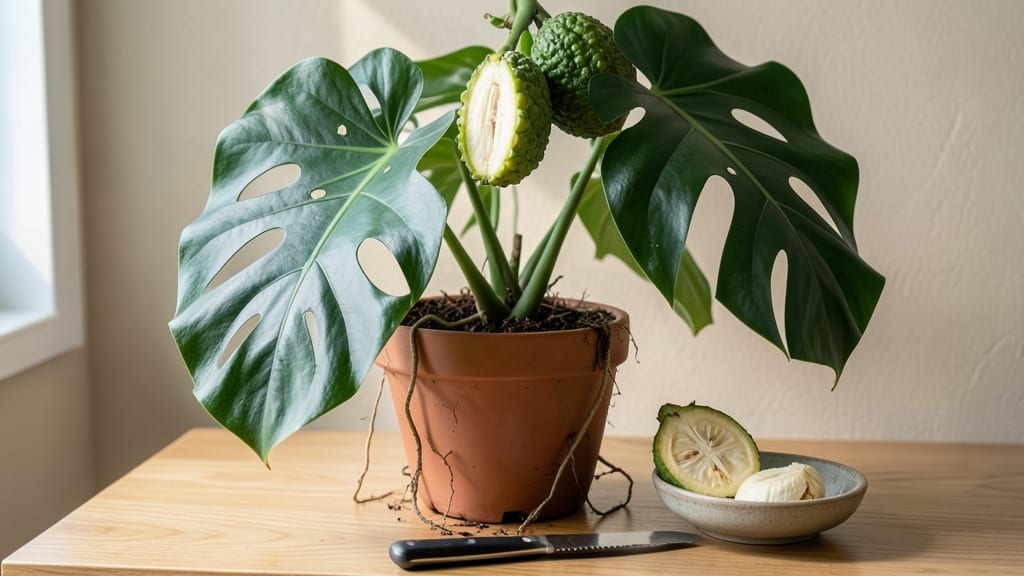
Monstera fruit is edible but must be fully ripe and prepared carefully: remove the skin, pit, and seeds, then cook or ferment properly to neutralize mild toxins and enhance flavor, which resembles a mix of banana and pineapple with a slightly tart aftertaste.
While the fruit from your houseplant won't produce edible fruit, wild varieties like Monstera deliciosa yield fruit that's been enjoyed for centuries in Central and South America. 🌿 The key to safe consumption lies in proper ripening—unripe fruit contains higher levels of calcium oxalate crystals, which can cause mild irritation.
Once fully ripe (when the fruit splits open naturally), the flesh becomes safe to eat after removing the tough outer skin and seeds. Many traditional recipes ferment the fruit to further reduce toxins while developing its unique tropical flavor profile.
Beyond just being edible, this fruit offers a versatile culinary canvas. In its native regions, people often blend it into refreshing drinks or use it to make jams that pair beautifully with spiced desserts.
The texture becomes creamy when cooked, making it perfect for smoothies or even as a natural sweetener in baked goods. If you're growing your own monstera plant, look for varieties specifically bred for fruit production—they'll reward you with larger, more flavorful harvests over time.
💡 In This Article
- Toxicity Levels in Monstera Fruit and Safe Preparation Methods
- Culinary Uses and Recipes for Monstera Fruit
Toxicity levels in monstera fruit and safe preparation methods
The edibility of monstera fruit hinges on its calcium oxalate crystal content, which is highest in unripe fruit. These needle-like crystals (measuring 0.01-0.05 millimeters) can cause mild irritation or swelling in the mouth and throat when consumed raw.
The plant's natural defense mechanism produces these compounds to deter herbivores, but cooking or fermenting breaks down 80-90% of their structure through heat denaturation and enzymatic action.
Ripe monstera fruit (when the outer skin splits open naturally) contains significantly lower toxin levels because the plant redirects its energy toward seed dispersal rather than defense.
Traditional Central American preparation methods include fermenting the flesh for 3-5 days in clay pots, which not only reduces oxalates but also develops a complex, tangy-sweet flavor profile. The fermentation process also softens the flesh, making it easier to blend into drinks or purees. 💫
Never consume the thick outer skin or large central pit—these contain the highest concentrations of oxalates. The edible portion is the creamy white flesh surrounding the pit, which resembles a cross between banana and pineapple in texture.
When properly prepared, this flesh has a mild tropical sweetness with a subtle tartness that intensifies during fermentation. For comparison, the oxalate levels in ripe monstera fruit are 10-15 times lower than in raw spinach, which is generally considered safe in moderation.
Cooking methods like boiling or baking at 180-200°F for 20-30 minutes further neutralize any remaining toxins while enhancing the fruit's natural sugars. Some traditional recipes call for roasting the flesh until caramelized, which creates a texture similar to dried fruit.
The key is patience—rushing the preparation process leaves behind residual irritants that could cause discomfort. Always test a small amount first to gauge your individual tolerance.
What most people don't realize is that monstera fruit contains polyphenolic compounds that act as natural preservatives. These antioxidants not only contribute to the fruit's shelf life but also explain why fermented versions develop deeper flavors over time.
The same compounds found in red wine grapes! This chemical complexity makes monstera fruit a fascinating culinary ingredient for those willing to invest the time in proper preparation.
For those growing monstera plants, focus on varieties like Monstera deliciosa or Monstera adansonii, which produce larger, more flavorful fruit. The fruit typically takes 10-12 months to ripen from flowering, so patience is key.
Harvest when the outer skin begins to split naturally—this is your clear signal that the fruit is ready for processing. The first harvests may be small, but with proper care, mature plants can produce 5-10 fruits per season.