
Container Gardens
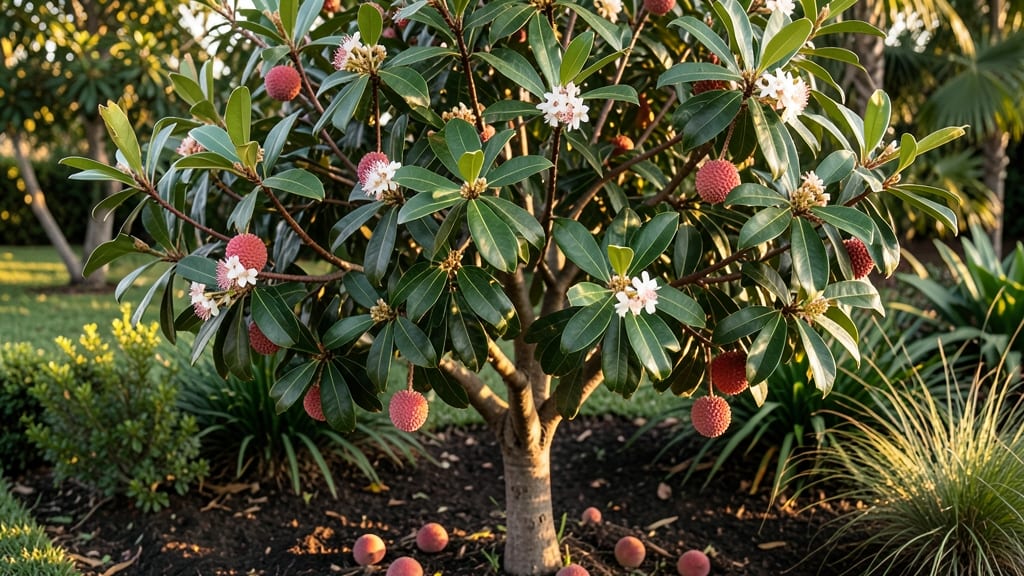
Lychee fruit grows best in USDA Hardiness Zones 10-12, where tropical warmth and humidity create ideal conditions for fruiting and flowering.
These zones provide the consistent 65°F to 90°F temperatures lychees need year-round, along with high humidity levels that prevent stress. 🌿 Without these conditions, trees struggle to produce fruit, even if they survive.
The key challenge is the tree's sensitivity to cold—temperatures below 32°F can kill the plant, while even brief chills below 45°F damage flowers and fruit. Many growers in cooler climates use containers to move trees indoors during winter or invest in protective structures like greenhouses to extend the growing season.
What makes lychees so finicky is their double-flowering cycle—they bloom twice a year, but only in perfect conditions. The first flush typically appears in spring, while the second comes in summer, and both require specific temperature cues.
In zones outside 10-12, even a single cold snap can wipe out an entire harvest, which is why so many gardeners focus on container cultivation or choose cold-hardy lychee varieties like 'Brewer' when experimenting with these tropical fruits.
💡 In This Article
- USDA Zones and Microclimate Factors for Lychee Cultivation
- Creating Ideal Tropical Conditions for Lychees in Non-Native Areas
USDA zones and microclimate factors for lychee cultivation
Lychees are tropical evergreens that evolved in regions where winter temperatures never dip below 50°F, making them highly sensitive to cold. The USDA Zones 10-12 designation isn't arbitrary—it reflects the tree's biological need for consistent warmth.
During flowering, which occurs twice yearly, temperatures must stay above 68°F for pollination to succeed. Below 55°F, flower buds abort, and fruit set fails entirely. This explains why even brief cold snaps in marginal zones (like Zone 9b) can devastate harvests, despite the tree's survival.
The tree's heat tolerance is equally critical. While it thrives in 90°F daytime highs, nighttime temperatures shouldn't drop below 60°F—this range prevents heat stress while maintaining metabolic activity.
Microclimates play a huge role here: Coastal areas with maritime influence (like Southern California) often see 10°F warmer nighttime lows than inland zones due to ocean currents. Urban heat islands can also push microclimates into lychee-friendly ranges, allowing successful cultivation in Zone 9a with proper site selection and winter protection.
What most growers overlook is the tree's chilling requirement—or lack thereof. Unlike temperate fruits, lychees don't need winter chill hours to break dormancy. Instead, they respond to consistent warmth and photoperiod cues.
This makes them adaptable to container growing in warmer climates, but also explains why they fail in regions with unpredictable temperature swings. The critical threshold is 32°F: Any frost will kill the tree, while temperatures between 32°F and 45°F cause flower drop and poor fruit development.
Here's how microclimates extend growing ranges:
- Coastal zones: Ocean breezes moderate temperatures, creating 5-10°F warmer nighttime lows than inland areas
- Urban areas: Concrete and buildings trap heat, sometimes pushing nighttime temps 15°F higher than rural zones
- South-facing slopes: Receive 30% more sunlight, raising soil temperatures by 5-8°F compared to flat ground
The flowering process itself is temperature-sensitive. Lychees bloom in response to specific day lengths (typically 12-13 hours of daylight) combined with warm nights. In cooler zones, growers must use artificial lighting to extend daylight during winter months, while maintaining 70°F+ nighttime temps through greenhouse heating.
This explains why container-grown lychees in Zone 8 can still produce fruit—when protected from cold snaps and given precise temperature control.
One fascinating adaptation is the tree's ability to delay flowering when conditions aren't ideal. Young trees (under 5 years old) may skip flowering entirely if temperatures fluctuate.
This survival mechanism means growers in marginal zones must be patient—it can take 7-10 years for a tree to establish enough energy reserves to fruit reliably, even in perfect conditions. 🌱