
Fertilization
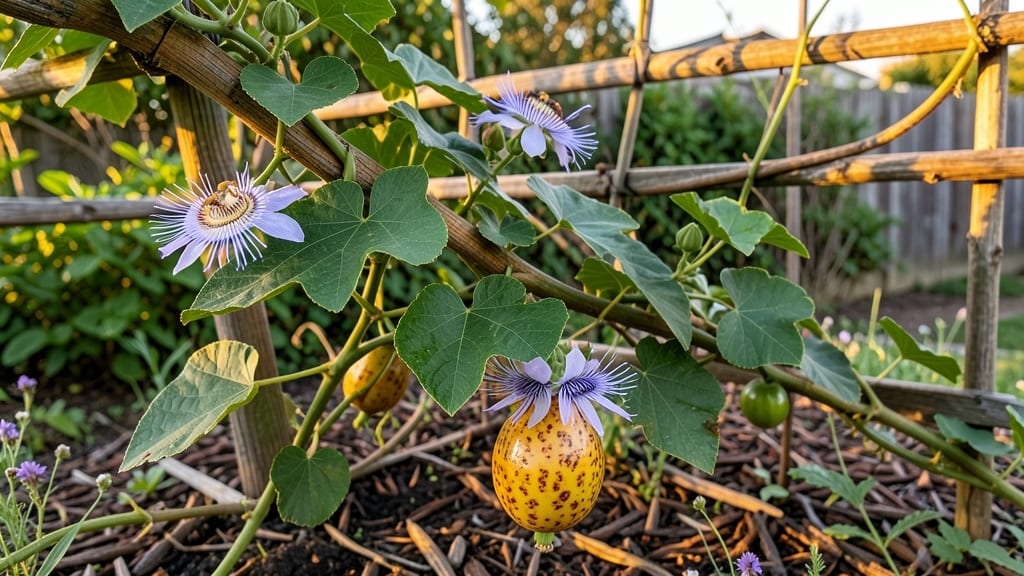
Passionfruit is a fruit because it develops from a flower’s ovary and contains seeds, even though its texture and taste often make it resemble a berry in culinary contexts. The plant itself is a hardy tropical vine producing both edible fruit and striking decorative blooms.
Botanically speaking, passionfruit earns its classification as a true fruit because it forms from the ovary of a flowering plant and contains multiple seeds embedded in a fleshy pulp. 🌱 What makes this particularly interesting is how its structure differs from common berries—while passionfruit has a hard outer shell (the rind), its inner pulp behaves more like a berry's, which is why chefs often treat it that way in recipes.
The confusion arises because culinary classifications don't always align with botanical ones, and passionfruit perfectly illustrates this disconnect.
The plant itself is a tropical vine that thrives in warm climates, producing vibrant flowers that eventually develop into those iconic oblong fruits. This dual nature—both ornamental and edible—makes it a favorite among gardeners looking to add both beauty and utility to their spaces.
What's fascinating is how the fruit's complex flavor profile, combining sweet and tart notes, comes from its unique seed arrangement within the pulp.
💡 In This Article
- Botanical Classification: Why Passionfruit Is a Fruit
- Growing Passionfruit Vines: Tips for Home Gardeners
Botanical classification: why passionfruit is a fruit
The key distinction between passionfruit and other produce lies in its reproductive biology. Botanically, a fruit is defined as a mature ovary that develops from a flowering plant and contains seeds.
Passionfruit fits this definition perfectly—its hard outer rind forms from the ovary wall, while the inner pulp surrounds numerous small, hard seeds. This seed-bearing structure is what classifies it as a true fruit, not a vegetable or berry, despite its juicy texture.
What often confuses people is the term "berry," which is a culinary classification rather than a botanical one. True botanical berries (like tomatoes or grapes) have seeds embedded in fleshy tissue with no hard outer shell.
Passionfruit's hard pericarp (outer shell) and gelatinous pulp distinguish it from berries, though its soft interior makes it behave like one in cooking. The plant's scientific name, Passiflora edulis, reflects its botanical family (Passifloraceae), which includes other seed-bearing fruits like granadilla.
The confusion extends to other botanical terms. For example, cucumbers are botanically fruits (they develop from flowers), yet we treat them as vegetables in cooking. Similarly, passionfruit's tropical vine structure and ornamental flowers (which inspired its common name) add another layer of complexity.
The plant's flowers are intricate, with parts that resemble a crown of thorns—hence "passionflower"—but the fruit itself is what we eat, making it a perfect example of how botanical and culinary classifications can diverge.
Here's what makes passionfruit unique among fruits: its three distinct layers. The outermost exocarp (rind) is tough and leathery, the mesocarp (middle layer) is the edible pulp, and the endocarp contains the seeds.
This layered structure is rare in fruits we commonly eat, which is why it feels so different from apples or oranges. The pulp's gelatinous texture comes from pectin and natural enzymes that break down cell walls during ripening, creating that signature smooth consistency.
Understanding this structure explains why passionfruit behaves differently in recipes. When you juice it, the seeds remain intact, unlike true berries where seeds disperse. This is why chefs often strain passionfruit pulp to remove seeds—it's not a berry's natural behavior, but a result of its unique anatomy.
The acidic pH (around 3.5) of the pulp also makes it a natural preservative, which is why it's often used in jams and sauces without added preservatives.
To put it simply: passionfruit is a fruit because it grows from a flower, contains seeds, and develops from an ovary. The culinary world's tendency to call it a berry is a testament to how texture and taste often override botanical definitions.
This dual classification isn't unique—think of tomatoes or avocados—but passionfruit's dramatic contrast between its hard shell and soft interior makes the distinction particularly striking.