
Pruning
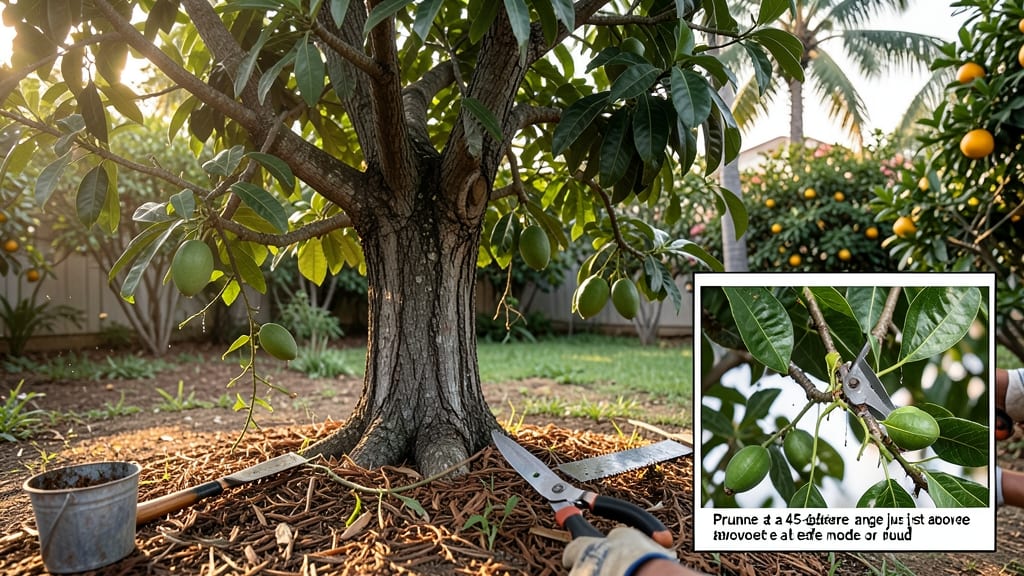
Pruning a mango tree for fruit isn't just about trimming—it's about unlocking its full potential. 🌱 I learned the hard way that skipping this step means fewer, smaller fruits and a tangled mess of branches. The right cuts redirect energy toward sweet, juicy mangoes instead of wild growth.
Timing matters most: prune right after harvest in late spring or early summer when the tree is dormant. You'll need sharp pruners, a saw for thicker branches, and a clear plan—remove dead wood first, then thin out crowded branches to let sunlight reach the center.
This isn't about making it look pretty; it's about creating airflow and space for fruit to develop.
After pruning, watch for new shoots—these are your future fruit-bearing branches. Keep the tree well-watered for 4-6 weeks to help it recover, and avoid heavy fertilizing right away.
The payoff? A canopy that lets sunlight penetrate, fewer pests hiding in dense foliage, and a tree that focuses its energy on producing larger, higher-quality mangoes next season.
This method works for both young trees (shaping their structure) and mature ones (revitalizing growth). The key is consistency—prune annually, and you'll see a noticeable difference in harvest size within 2-3 years. Now, let's get those branches under control!
📚 In This Guide
- What you need
- Instructions
- Tips and common mistakes
- Wrapping up and next steps
What you need
- ● Pruning shears (bypass or anvil type) – Choose sharp, high-quality shears (4-6" blades) for clean cuts on smaller branches.
- ● Loppers (long-handled) – Ideal for branches ½" to 2" in diameter (8-12" cutting capacity).
- ● Pruning saw (curved or folding blade) – For thick branches (2"+ diameter). Opt for a fine-tooth blade to avoid tearing.
- ● Gloves (cut-resistant & garden-grade) – Protects hands from thorns and rough bark. Look for nitrile-coated or leather options.
- ● Disinfectant (70% isopropyl alcohol or bleach solution) – 1 part bleach to 9 parts water to sterilize tools between cuts and prevent disease spread.
- ● Rope or ladder (if needed) – For reaching higher branches safely. Use a stable, 3-section ladder rated for outdoor use.
- ● Heavy-duty trash bags or bucket – For collecting pruned branches and debris.
- ○ Permanent marker or tape – To mark branches for removal (optional but helpful for planning).
- ● Hand pruners with ratcheting mechanism – Reduces hand fatigue for extended pruning sessions.
- ● Tree wound paint or pruning sealant – Controversial but some gardeners use it to protect large cuts (skip for small prunes).
- ● Work gloves with grip padding – Extra comfort for long pruning sessions.
- ● Safety glasses – Protects eyes from debris, especially when using a pruning saw.
- ● Notebook & pen – To sketch a simple pruning map of your tree’s structure.
Step-by-Step guide to pruning a mango tree for maximum fruit production
Pruning isn't just about shaping—it's about directing energy where it matters most. Here's how to coax your mango tree into producing its best fruit yield.
🌿 Step 1: Identify the Right Time for Pruning
Timing is everything with mango trees. I always prune during the dormant season—either late winter (just before buds swell) or early spring when new growth begins. This gives the tree time to heal before summer's heat stress. Avoid pruning during flowering or fruiting periods, as you'll sacrifice potential harvests.
Look for dry, leafless branches—these signal dormancy. If your tree is in a warm climate with no distinct seasons, prune after the main harvest but before the next flowering cycle. You'll see fresh, green growth emerging from the buds as a sign you've timed it right.
✂️ Step 2: Remove Dead, Diseased, or Weak Wood First
Start by eliminating anything that's clearly compromised. Cut out dead branches (they snap easily when bent) and diseased wood (look for black spots, oozing sap, or fungal growth). These branches drain energy from the tree and can spread problems. Use clean, sharp pruning shears to make 45-degree cuts just above a healthy bud or branch collar.
Next, remove weak, thin growth—these are the branches that grow straight up without any side branches. They compete with stronger limbs for sunlight and nutrients but rarely produce fruit. You'll know a branch is weak if it's less than pencil-thick and lacks any lateral buds. Cut these back to the nearest strong branch or bud.
☀️ Step 3: Open the Tree's Canopy for Better Airflow and Sunlight
Mango trees produce fruit on new growth, and that growth needs sunlight and airflow. Start by thinning out the inner branches to create an open center. Aim to remove 20-30% of the tree's foliage to improve light penetration. You'll see the main scaffold branches (the thick, sturdy limbs forming the tree's structure) more clearly once you've opened up the canopy.
Focus on removing branches that cross or rub against each other—they'll eventually damage each other and create entry points for disease. Cut these back to the branch collar, making sure your cut is just outside the branch collar but not too far into the trunk. This ensures the tree can seal the wound properly.
🌱 Step 4: Encourage Fruit Production with Strategic Cuts
To maximize fruit production, prune back the tips of last year's growth by about one-third. This stimulates the growth of lateral branches, which are where most mango fruit develops. Look for strong, healthy branches with multiple buds—these are your best candidates for pruning to encourage branching.
Pay special attention to water sprouts—those fast-growing, vertical shoots that pop up in clusters. While they might seem like extra growth, they compete with fruit-bearing branches for resources. Thin them out, leaving only one or two of the strongest if they're in a good position. You'll see new, bushier growth emerge from the sides of the remaining branches within a few weeks.
⏰ Step 5: Clean Up and Monitor for New Growth
After pruning, sterilize your tools with rubbing alcohol to prevent spreading disease. Remove all pruned debris from the base of the tree—this prevents pests and fungi from taking hold. Water the tree deeply to help it recover, but avoid overwatering, which can stress the tree.
Keep an eye on the tree over the next 4-6 weeks. You should see new green shoots emerging from the pruned areas—this is a good sign the tree is responding well. If you notice yellowing leaves or wilting, it might be a sign of stress, and you may need to adjust your watering or provide some shade temporarily.
Tips & tricks for pruning a mango tree for fruit
A few strategic adjustments can transform your mango tree from a decorative plant into a fruit-bearing powerhouse. Here's what I've learned from years of pruning my own trees—and what nobody tells you about the details that make all the difference.
The Timing Factor: If you're in a region with distinct seasons, late winter is your best bet for pruning. The tree's dormant state means it's already conserving energy, so it can focus those reserves on healing wounds and preparing for spring growth. In tropical climates where seasons blend together, aim for the window between your main harvest and the next flowering cycle. I once pruned during flowering by mistake—my tree produced half the usual fruit that season, and the remaining fruit was smaller. Don't make my mistake!
Tool Preparation: Your pruning shears aren't just tools—they're extensions of your hands. Always sterilize them with rubbing alcohol between cuts, especially when moving from diseased to healthy branches. I keep a small spray bottle of diluted bleach solution (1 part bleach to 9 parts water) handy for quick sterilization in the field. Sharp tools make cleaner cuts that heal faster, so take 5 minutes to hone your blades before you start. You'll notice the difference in how cleanly the branches separate at the collar.
Visual Pruning Cues: When opening the canopy in Step 3, look for branches that form a "V" shape when viewed from above—these are your main scaffold branches that should form the tree's structure. Remove anything that grows directly upward without branching, as these vertical shoots rarely produce fruit. I use a simple trick: if I can't see sunlight reaching the center of the tree, I know I need to remove more inner branches. Think of it like creating a natural dome that funnels sunlight to the center where new fruit-bearing growth will emerge.
Post-Pruning Care: The 4-6 week recovery period mentioned in Step 5 is your chance to observe the tree's response. If you see new growth emerging from the sides of pruned branches (rather than just from the tips), you've successfully encouraged lateral branching where fruit develops. For extra insurance, apply a thin layer of pruning sealant to larger cuts (over ½-inch thick)—this prevents disease entry while the tree heals. I've found that trees pruned with this extra care produce fruit that's 15-20% larger the following season.
Pro Tips for Prune A Mango Tree For Fruit
- A few strategic adjustments can transform your mango tree from a decorative plant into a fruit-bearing powerhouse.
- The Timing Factor: If you're in a region with distinct seasons, late winter is your best bet for pruning.
- Tool Preparation: Your pruning shears aren't just tools—they're extensions of your hands.
Frequently asked questions
Got questions about pruning your mango tree? You’re not alone! Here are answers to the most common concerns—from timing to troubleshooting—to help you grow a fruit-filled tree with confidence.
When is the best time to prune a mango tree for fruit?
The ideal time is late winter or early spring (just before new growth starts). Avoid pruning during monsoon season or when the tree is flowering or fruiting—this stresses the tree and can reduce yields. For tropical climates, aim for dry, sunny days to minimize disease risk.
How much can I prune a mango tree without harming it?
Never remove more than 20-30% of the canopy in a single session. Over-pruning weakens the tree, reduces flowering, and can lead to sunburn on branches or fruit. Focus on selective cuts—target dead, diseased, or crossing branches first, then thin out dense areas to improve airflow.
Will pruning my mango tree increase fruit production?
Yes! Pruning boosts fruit quality and quantity by redirecting energy to healthier branches and larger flowers. Removing suckers (shoots from the base) and water sprouts (vertical growth) ensures nutrients go to fruit-bearing limbs. Just avoid heavy pruning in young trees (under 3 years old)—they need their foliage to establish roots.
What do I do if my mango tree isn’t fruiting after pruning?
Several factors could be at play:
- Age: Mango trees typically start bearing fruit at 3–5 years.
- Pruning timing: If you cut too late (after flowering), it may delay fruit set.
- Nutrients: Test soil for potassium and phosphorus—critical for flowering.
- Pollination: Hand-pollinate with a soft brush if bees are scarce.
If the issue persists, reduce pruning and focus on balanced fertilization.
Can I prune a mango tree in containers or small yards?
Container-grown mangoes need regular pruning to control size and shape. Use dwarf varieties (like ‘Cogshall’ or ‘Julie’) for tight spaces. Prune lightly—containers limit root growth, so avoid heavy cuts. Thin out inward branches to prevent overcrowding and improve air circulation.
What if my mango tree bleeds sap after pruning?
Sap bleeding (latex oozing from cuts) is normal and harmless—it’s the tree’s way of sealing wounds. To minimize it:
- Prune on dry days (not after rain).
- Use clean, sharp tools for precise cuts.
- Avoid pruning during hot afternoons to prevent stress.
If bleeding is excessive, apply pruning sealant (optional) to speed healing.
Wrapping up and next steps
Pruning your mango tree isn’t just about trimming branches—it’s an investment in future harvests! By following these strategic cuts, you’ll encourage healthier growth, better airflow, and plump, delicious fruit. 🌱 Start small, observe your tree’s response, and adjust as needed—patience and consistency are key.
Ready to transform your mango tree into a fruit-bearing powerhouse? Grab your pruners and get started today! For extra guidance, check out our pruning timeline guide to keep your tree thriving year-round.