
Pests and Diseases
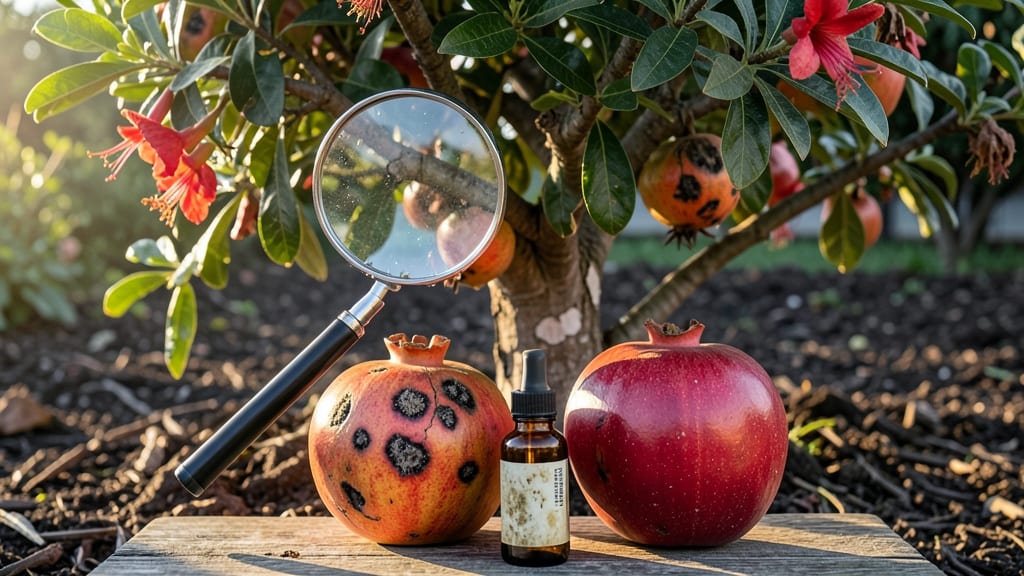
Black spots on pomegranate fruit can turn your harvest from stunning to spoiled in a heartbeat. 🌿 I’ve wrestled with this problem for years—first thinking it was sun damage, then assuming it was just how my fruit ripened.
Turns out, fungal diseases like Alternaria or anthracnose are the usual culprits, and they thrive when humidity and poor airflow team up against your plants.
The good news? You don’t need a chemistry degree to fix it. Start by inspecting your fruit closely—black spots with a fuzzy texture or sunken centers are classic fungal red flags. Prune for better airflow, space plants properly, and avoid overhead watering.
For existing infections, organic sprays like neem oil or copper fungicide can work wonders if applied every 7-10 days during wet seasons.
What you’ll end up with is fruit that stays vibrant, juicy, and blemish-free—no more bitter surprises when you crack open a pomegranate. The key is acting fast: once spots appear, the damage is done, but prevention keeps your next harvest spotless. This works for home gardeners and small-scale growers alike.
Fair warning: if your spots are raised and oozy, you might be dealing with bacterial issues, which need even stricter hygiene. But for most cases, these organic fixes deliver results without harsh chemicals. Let’s get your pomegranates back on track!
Root Causes of Dark Blemishes
Black spots on pomegranates aren’t just cosmetic—they’re often a red flag from nature’s warning system. Understanding why these discolorations appear helps you tackle them before they spread. Below, we break down the most common culprits, from microbial invaders to environmental stress, with science-backed explanations and actionable insights.
Pomegranates are particularly vulnerable to fungal pathogens, which thrive in warm, humid conditions. These microscopic troublemakers don’t just mar your fruit—they can weaken the plant over time. Here’s how they strike:
1. Alternaria Fruit Spot (Alternaria alternata)
🔬 What’s Happening: This fungus produces tiny, dark, sunken spots (often with concentric rings) on the fruit’s skin. Under humid conditions, it releases spores that germinate when moisture lingers on the surface.
- 🌡️ Ideal Conditions: Temperatures between 77–86°F (25–30°C) and high humidity (above 70%) create a fungal paradise. Rainy seasons or overhead irrigation worsen the problem.
- 🍇 Weak Entry Points: Damaged skin (from hail, pests, or poor handling) gives spores a direct path to invade. Even minor bruises can trigger infections.
- 📊 Spread Pattern: Starts as small, isolated spots but can merge into larger, necrotic (dead) patches if untreated.
2. Botrytis Rot (Botrytis cinerea)
🔬 What’s Happening: Known as “gray mold,” this fungus causes soft, water-soaked spots that turn brown or black and develop a fuzzy gray coating. It’s especially aggressive during flowering or fruit maturation.
- 🌿 How It Starts: Spores land on flowers or injured fruit, then germinate when humidity exceeds 90% for prolonged periods. Poor air circulation (e.g., dense canopies) traps moisture, accelerating infection.
- 🍓 Post-Harvest Risk: If fruit is stored in damp conditions, Botrytis can flare up even after picking, ruining storage quality.
- 💡 Pro Tip: Prune pomegranate bushes to improve airflow—this reduces humidity near the fruit and discourages fungal growth.
3. Anthracnose (Colletotrichum spp.)
🔬 What’s Happening: This fungus creates sunken, dark lesions with a reddish-brown halo, often appearing near the fruit’s stem end. It’s a major issue in tropical and subtropical climates.
- 🌧️ Rainy Season Trigger: Heavy rainfall or frequent overhead watering splashes spores onto the fruit, causing infections. Unlike Alternaria, Anthracnose prefers consistent moisture rather than just humidity.
- 🍒 Fruit Maturity Factor: Young, green fruit is more resistant, but as pomegranates ripen, their skin softens, making them prime targets.
- 🔄 Cyclical Spread: Infected fruit can release spores for months, reinfecting healthy fruit in the same orchard.
Not all black spots are fungal—sometimes, the problem is purely physical. Pomegranates are sensitive to extreme conditions, and their skin can react with unsightly (but non-contagious) blemishes.
1. Sunburn and Heat Stress
☀️ What’s Happening: Pomegranates grown in hot, arid climates often develop scorch marks—small, dark, crusty spots—when excessive sunlight dehydrates the fruit’s skin. These spots are dry to the touch and don’t spread.
- 🌡️ Critical Threshold: Temperatures above 95°F (35°C) for prolonged periods, combined with low humidity, trigger cell damage.
- 🍇 Fruit Position Matters: Fruit exposed to direct midday sun (especially on the south or west side of the plant) is most at risk.
- 💡 Prevention Hack: Use shade cloth (30–50% coverage) during peak summer months to protect young fruit without stunting growth.
2. Water Stress and Osmotic Damage
💧 What’s Happening: Inconsistent watering—whether drought or overwatering—can cause physiological spots. These appear as small, dark, water-soaked areas that later turn leathery or cracked.
- 🚰 Overwatering Risks: Soggy soil leads to anaerobic conditions, where root oxygen deprivation forces the plant to divert energy to survival, neglecting fruit development.
- 🌵 Drought Stress: When roots can’t absorb enough water, the fruit’s skin cells collapse, creating dark, sunken patches.
- 📊 Ideal Watering: Aim for 1–1.5 inches of water per week, delivered deeply at the soil level (drip irrigation is best). Avoid wetting the foliage to prevent fungal hitchhikers.
3. Chemical Burn from Fertilizers or Pesticides
🧪 What’s Happening: Misapplied herbicides, fungicides, or even over-fertilization can leave behind necrotic spots—dark, irregular patches where plant tissue has died from chemical exposure.
- 💥 Common Culprits:
- High-salt fertilizers (e.g., overuse of synthetic nitrogen or potassium).
- Herbicides drift or residual soil chemicals absorbed by roots.
- Copper-based fungicides (used for disease control) can cause phytotoxicity if overapplied.
- 🔍 How to Spot It: Spots often appear within 24–48 hours of treatment and may have a burnt edge.
- 🛡️ Safety First: Always follow label rates and use a buffer (like water or a surfactant) when spraying to dilute concentration.
Pomegranates may look tough, but their skin is delicate. Even minor trauma can lead to blackened areas where pathogens or decay set in.
1. Hail, Wind, or Animal Scratches
⚡ What’s Happening: Physical trauma breaks the skin’s protective waxy coating, exposing the fruit to secondary infections. Dark spots often appear days after the initial damage.
- 🐿️ Wildlife Role: Rodents, birds, or even curious pets can gnaw on fruit, creating entry points for fungi.
- 🌬️ Windburn: Strong gusts can abrade the skin, leading to dry, corky spots—especially on fruit facing the wind.
- 🛡️ Protective Measures:
- Use netting during hail season.
- Prune branches to reduce wind exposure.
- Inspect fruit regularly and remove damaged specimens immediately.
2. Poor Harvesting or Handling
🍇 What’s Happening: Bruises from rough handling (dropping, squeezing, or using dull tools) can turn black within days as cells die and oxidize.
- 🔪 Tool Time: Always use clean, sharp pruners
Fixing pomegranate blemishes naturally
Now that you’ve identified the cause of those pesky black spots on your pomegranates—whether it’s fungal infections, sun scorch, or environmental stress—it’s time to take action. The good news? Most issues can be resolved with simple, organic fixes that won’t harm your plants or the fruit.
Below, we’ve mapped out practical solutions for each common cause, plus prevention tips to keep your pomegranates spot-free in the future.
---
Fungal diseases like alternaria, anthracnose, or botrytis thrive in damp, warm conditions. The key to stopping them? Improving airflow, reducing moisture, and applying natural fungicides before the problem spreads.
#### 🔥 Step 1: Prune for Better Airflow Fungal spores love hiding in dense foliage. Thin out crowded branches to let sunlight and air circulate—this dries leaves faster and discourages fungal growth. - When to do it: Early morning or late afternoon (avoid midday heat). - How much to trim? Remove 20-30% of the thickest branches.
#### 🍳 Step 2: Apply Copper or Neem Oil Spray Both copper fungicide (like copper sulfate) and neem oil are effective, organic ways to stop fungal spores in their tracks. - DIY Neem Oil Spray Recipe: - 1 tbsp neem oil - 1 tsp dish soap (as an emulsifier) - 1 quart water - Mix and spray directly on affected leaves and fruit (avoid over-spraying flowers if blooming). - Copper Fungicide: Use a 1% copper solution (follow label instructions) every 7-10 days until the issue clears.
#### 👨🍳 Step 3: Remove and Dispose of Infected Fruit Don’t let diseased fruit linger—pick off any black-spotted pomegranates and compost them separately (not in your regular garden compost, as spores can survive). - Pro Tip: 💡 Wear gloves when handling infected fruit to avoid spreading spores to healthy plants.
#### 🥘 Step 4: Prevent Future Fungal Outbreaks - Water wisely: Deep-water in the morning (not overhead) and avoid wet leaves at night. - Mulch properly: Use straw or wood chips (not thick layers) to keep soil moist but not soggy. - Sanitize tools: Wipe pruners with rubbing alcohol between cuts to prevent cross-contamination.
---
If your pomegranates are developing blackened patches from too much sun, they need shade and consistent moisture to recover.
#### 🔪 Step 1: Provide Temporary Shade - Use shade cloth (30-50% coverage) over young or sensitive varieties. - Plant near taller trees (like fig or olive trees) for natural shade during peak sun (10 AM–4 PM). - Avoid sudden shade changes—gradually acclimate plants over a week.
#### 💧 Step 2: Water Deeply and Regularly Sunburn often happens when roots can’t keep up with water loss. Water deeply 2-3 times per week (depending on heat) to encourage strong root growth. - Best time to water: Early morning (before 8 AM) to let foliage dry before evening. - Mulch with straw to retain moisture and protect roots.
#### 🌡️ Step 3: Adjust Fertilizer for Heat Tolerance Too much nitrogen can weaken plants in hot weather, making them more prone to sun stress. - Switch to a balanced fertilizer (like 5-5-5) or kelp meal for heat resilience. - Avoid fresh manure in summer—it can burn roots and worsen stress.
---
If black spots are due to nutrient deficiencies, pests, or poor soil, focus on strengthening the plant’s defenses rather than just treating symptoms.
#### 📊 Step 1: Test and Amend Soil Pomegranates need well-draining, slightly acidic soil (pH 5.5-7.0).
If your soil is compacted or lacking nutrients: - Add compost (2-3 inches) and perlite/sand for drainage. - Test pH with a home kit—adjust with sulfur (to lower pH) or lime (to raise pH) if needed.
#### 💪 Step 2: Feed with Potassium and Calcium Black spots from blossom end rot (calcium deficiency) or weakened immunity respond well to: - Epsom salt (magnesium sulfate): 1 tbsp per gallon of water, sprayed on leaves. - Calcium nitrate: 1 tbsp per gallon, applied to soil. - Banana peel tea: Soak peels in water for 3 days, strain, and use as a potassium-rich foliar spray.
#### 🐞 Step 3: Control Pests Naturally Pests like aphids or spider mites can weaken pomegranates, making them susceptible to black spots. - Neem oil spray (again!) deters pests and prevents secondary infections. - Introduce beneficial insects: Ladybugs or lacewings eat aphids naturally.
---
Once you’ve treated the issue, keep these habits to prevent recurrence: - ✅ Prune regularly to improve airflow. - ✅ Water at the base (not overhead) to keep leaves dry. - ✅ Harvest promptly—ripe pomegranates are less prone to fungal issues. - ✅ Rotate crops if growing in the same spot yearly (fungal spores build up in soil). - ✅ Choose resistant varieties like ‘Wonderful’ or ‘Eversweet’ if fungal diseases are recurrent.
Final Thought: 🎯 With the right care, your pomegranates can bounce back—and next season, you’ll enjoy juicy, blemish-free fruit! Start with one or two fixes based on your plant’s needs, and monitor progress over a few weeks.
Frequently asked questions
1Are black spots on pomegranates always a sign of disease?
Not always! While fungal infections like Alternaria or anthracnose often cause black spots, they can also result from sunburn, physical damage (like hail or rough handling), or even nutrient deficiencies. Check for fuzzy textures (fungal) or dry, crusty patches (sunburn) to help identify the cause.
2Can I still eat pomegranates with black spots?
It depends! Small, isolated spots from sunburn or minor damage are usually safe to eat—just peel around the affected area. However, if the spots are fuzzy, oozy, or widespread (signs of fungal/bacterial rot), discard the fruit to avoid spreading pathogens. When in doubt, cut open the pomegranate and check for soft, discolored seeds inside.
3How often should I spray neem oil to prevent black spots?
For prevention, apply a neem oil spray every 2-3 weeks during humid seasons or after heavy rains. If you're treating an active infection, spray every 7-10 days until new growth appears healthy. Always mix with water and a drop of dish soap to help it stick to leaves.
4Will pruning my pomegranate tree help stop black spots?
Pruning improves air circulation, which reduces humidity near the fruit—fungi like Alternaria thrive in damp conditions. Thin out crowded branches by 20-30% during dormant season (late winter) or lightly prune in early morning/late afternoon during growing season. This also helps sunlight reach all fruit, preventing uneven ripening.
5What's the fastest way to fix black spots caused by sunburn?
Provide immediate shade with 30-50% shade cloth and water deeply 2-3 times per week at the base (not overhead). Avoid fertilizing with high nitrogen—switch to a balanced 5-5-5 fertilizer instead. New growth should recover within 2-4 weeks if roots stay hydrated.