
Size
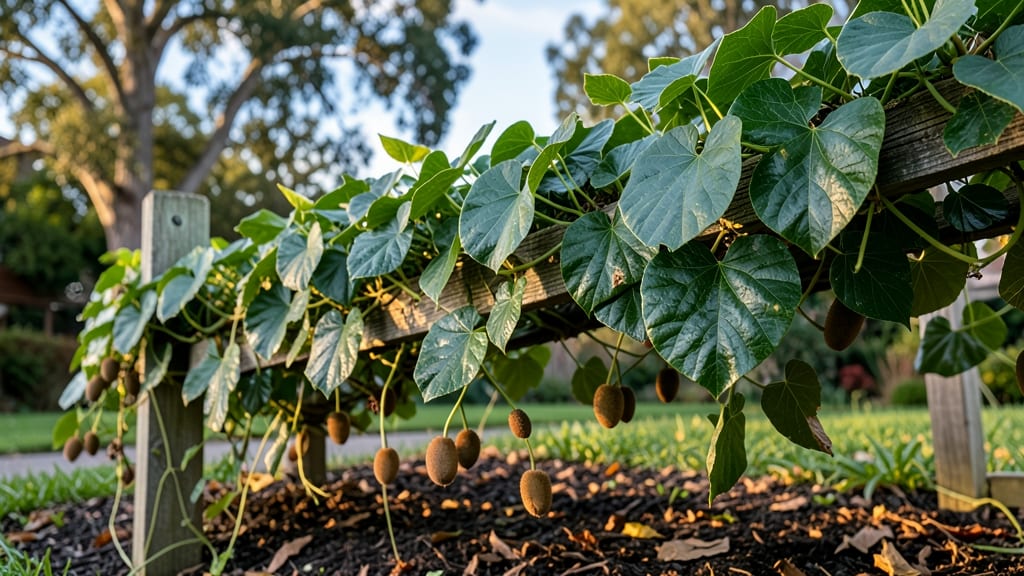
Growing kiwi fruit in containers lets you enjoy tropical flavors even in small spaces—no backyard required. 🌿 I’ve grown both hardy and tropical varieties in pots for years, and the secret is matching the right vine to your climate while keeping roots happy in confined spaces.
The vines climb aggressively, so a sturdy trellis or fence becomes part of the fun. You’ll need a male and female plant (they’re separate!) for pollination, well-draining soil mixed with compost, and a 15-20 gallon container for each vine.
Tropical kiwis (like Hayward) need winter protection in colder zones, while hardy kiwis (like Issai) produce fruit without a male plant. Pruning in late winter keeps vines manageable and encourages better fruit set.
By summer, you’ll watch fuzzy green fruits swell on the vines—harvest time arrives when they soften slightly and pull away from the stem. The flavor? Nothing like store-bought kiwis. Sweet, tangy, and packed with vitamin C, these homegrown fruits become the star of smoothies or fresh slices.
Works for balconies, patios, or even a sunny windowsill with grow lights. The key is patience—kiwis take 2-3 years to bear fruit, but the payoff makes every pruned vine worth it.
📚 In This Guide
- What you need
- Instructions
- Tips and common mistakes
- Wrapping up and next steps
What you need
- ● Kiwi Vines: Choose Actinidia deliciosa (hardy kiwi) or Actinidia arguta (hardy kiwi, smaller fruit). Buy 1 male and 1 female plant (kiwis need both for pollination!).
- ● Large Containers: 15–20 gallon pots (minimum) with drainage holes. Use fabric grow bags or heavy-duty plastic for durability.
- ● Well-Draining Soil: Mix 60% potting soil, 30% compost, and 10% perlite or coarse sand to prevent root rot.
- ● Fertilizer: Balanced 10-10-10 or 5-5-5 (organic options like fish emulsion work too!). Start with a slow-release granular fertilizer at planting.
- ● Support System: Install a 6–10 ft trellis or sturdy wire cage (kiwi vines are vigorous climbers!). Use galvanized metal or UV-resistant plastic for longevity.
- ● Mulch: 2–3 inches of organic mulch (straw, wood chips, or shredded leaves) to retain moisture and regulate soil temp.
- ● Watering Can or Hose: A soaker hose or drip irrigation is ideal for deep, consistent watering.
- ● Pruning Shears: Sharp, bypass pruners (sterilize with rubbing alcohol between cuts).
- ● pH Test Kit: Kiwis thrive in soil pH 5.5–6.5. Adjust with lime (to raise pH) or sulfur (to lower pH) if needed.
- ● Grow Lights: If growing indoors, use full-spectrum LEDs (12–16 hours/day) for young vines.
- ● Hand Gloves: Protect your hands from thorns (kiwi vines have sharp ones!).
- ● Frost Cloth: Essential for USDA Zones 5–7—cover vines when temps drop below 20°F (-6°C).
- ● Compost Tea: Boosts soil microbes and vine health. Brew at home or buy pre-made.
- ● Pollination Aid: A soft paintbrush to manually pollinate flowers if bees are scarce.
Step-by-step instructions for growing kiwi fruit in containers
Here’s the container-friendly method I’ve used to grow sweet, homegrown kiwi vines—no yard required.
🌱 Step 1: Choose the Right Variety and Container
Start with a self-pollinating variety like ‘Issai’ or ‘Matua’—they produce fruit without needing a second vine. A 5-gallon container is the minimum, but 10-15 gallons gives roots room to thrive. Make sure it has drainage holes (kiwi roots rot easily in soggy soil). I use a fabric grow bag for my patio vine—it’s breathable and prevents root circling.
Position the container where it gets full sun (6+ hours daily). Kiwi vines are frost-sensitive, so move them indoors or to a garage when temperatures drop below 20°F. A south-facing window or balcony works well, but supplement with a grow light in winter if natural light is weak.
🌿 Step 2: Plant and Support the Vine
Plant your kiwi vine in well-draining potting mix (avoid garden soil—it compacts in containers). Dig a hole twice as wide as the root ball and place the vine so the crown sits just above soil level. Gently backfill and water deeply until moisture runs from the drainage holes.
Kiwi vines need strong support—install a trellis or sturdy post immediately. The vine will grow aggressively, so secure it with soft ties or twine as it climbs. I use a 4-foot tall A-frame trellis for my patio vine, which gives it enough height to produce fruit without sprawling.
💧 Step 3: Water and Fertilize for Maximum Fruit
Water when the top 2 inches of soil feel dry—kiwi vines need consistent moisture but hate soggy roots. In summer, I water every 2-3 days, but reduce to once a week in winter when growth slows. Mulch with 2-3 inches of straw or bark to retain moisture and keep roots cool.
Feed with a balanced fertilizer (10-10-10) every 4-6 weeks during the growing season. Kiwi vines are heavy feeders, so I also add compost tea monthly for extra nutrients. Stop fertilizing in late summer to encourage fruit ripening.
✂️ Step 4: Prune for Health and Fruit Production
Prune in late winter or early spring before new growth starts. Remove dead, weak, or crossing branches to improve airflow. I also cut back overly long shoots to encourage bushier growth—this leads to more fruit. Leave 2-3 strong canes as the main structure for the vine to focus energy on.
In summer, pinch back new growth tips to redirect energy to fruit development. Watch for suckers (small shoots at the base) and remove them—they drain energy from the main vine. A well-pruned kiwi vine produces sweeter, larger fruit and stays more compact in containers.
🍈 Step 5: Harvest and Overwinter for Next Year
Kiwi fruit ripens in late summer to fall, depending on your variety. Harvest when the skin turns golden-brown and the fruit gives slightly when gently squeezed. Cut stems with clean pruners, leaving a small portion attached to the vine. Store in a cool, dark place until fully ripe—unripe kiwi won’t soften like store-bought ones.
Before winter, move the container to a bright, cool indoor space (40-50°F). Reduce watering but keep soil slightly moist. If your vine loses leaves, don’t worry—kiwi vines are deciduous and will regrow in spring. Prune again in late winter to shape the vine for the next growing season.
Tips & tricks for growing kiwi fruit in containers
Growing kiwi fruit in containers takes patience, but these tricks will help you avoid common pitfalls and maximize your vine's potential.
Container Selection: While the instructions mention a 5-gallon minimum, I've found that 10-gallon containers make a noticeable difference in fruit production. The extra space gives roots room to develop without becoming root-bound. If you're using a fabric grow bag, choose one with reinforced bottoms—kiwi roots can be aggressive and may tear weaker materials over time.
Lighting Strategy: The 6+ hours of daily sun requirement can be tricky in urban settings. If your balcony or patio doesn't get enough sunlight, supplement with a full-spectrum LED grow light for 12-14 hours daily during winter. Position the light 6-12 inches above the plant and adjust as the vine grows. I use a timer to automate this—kiwi vines thrive on consistent light cycles.
Support System: While a 4-foot trellis works for patio vines, I recommend installing a 6-foot tall trellis for maximum fruit production. The extra height gives the vine room to develop more canes, which translates to more fruit. Use soft plant ties or twine to secure the vine, but avoid anything that might cut into the bark as it grows. I've seen vines double in height within a single growing season!
Winter Care: The 40-50°F indoor overwintering range is ideal, but I've found that adding a humidifier nearby helps prevent leaf drop. Kiwi vines are native to humid climates, and indoor heating can dry out the air. Also, check the soil moisture weekly during winter—even though growth slows, the roots still need consistent moisture to survive dormancy.
Pro Tips for Kiwi Fruit Grow
- Growing kiwi fruit in containers takes patience, but these tricks will help you avoid common pitfalls and maximize yo...
- Container Selection: While the instructions mention a 5-gallon minimum, I've found that 10-gallon containers make a n...
- Lighting Strategy: The 6+ hours of daily sun requirement can be tricky in urban settings. If your balcony or patio do...
Frequently asked questions
Got questions about growing your own kiwi fruit?
You’re not alone! Whether you’re a container gardener or dreaming of a backyard vine, here are answers to the most common kiwi-growing curiosities—straight from the vine to your plate.
How long does it take for a kiwi vine to bear fruit?
A kiwi vine typically takes 2–3 years to produce fruit after planting, but patience pays off! Female vines need a male pollinator nearby (even if it’s a different variety). For container growers, choose dwarf or self-pollinating varieties like ‘Issai’ to skip the wait—some yield fruit in just 1–2 years!
Can I grow kiwi fruit in a container year-round?
Yes, but with a twist! Kiwi vines thrive in USDA Zones 7–9, but containers let you move them indoors (or to a garage) in winter. Use a large pot (15+ gallons), well-draining soil, and a trellis. In colder climates, protect roots with mulch or frost cloth. Pro tip: Prune aggressively in fall to encourage new growth for spring.
What pests or diseases should I watch for in container-grown kiwi?
Kiwi vines are tough, but keep an eye out for:
- Spider mites: Tiny red pests that drain sap—spray with water or neem oil.
- Scale insects: Sticky residue on leaves? Scrape them off or use horticultural oil.
- Fungal issues: Overwatering causes root rot. Ensure pots have drainage holes and avoid soggy soil.
Do I need both male and female kiwi plants to get fruit?
Most kiwi varieties (Actinidia deliciosa) require separate male and female vines for pollination. However, self-pollinating types like ‘Issai’ or ‘Ken’s Red’ produce fruit solo—perfect for containers! If planting two vines, place them within 15 feet for cross-pollination.
How do I know if my kiwi vine is getting enough sun?
Kiwi vines are sun-worshippers! They need 6–8 hours of direct sunlight daily for best fruit production. Signs of too little light:
- Slow growth or leggy vines.
- Small, sparse leaves.
- Few to no flowers/fruit.
Can I grow kiwi fruit from store-bought fruit?
Short answer: No, but you can try! Kiwi seeds are non-viable (they won’t sprout). Your best bet is to buy a bare-root vine from a nursery or order a grafted plant online. Pro move: Choose a dwarf variety like ‘Saichu’ for containers—it stays compact and productive!
Wrapping up and next steps
Growing kiwi fruit in containers is totally doable—even in small spaces! 🌱 With the right variety, container setup, and a little patience, you’ll soon be harvesting sweet, tangy fruit year-round. Remember: male and female vines, proper pruning, and winter care are your best friends for success.
Ready to turn your balcony or patio into a kiwi oasis? Start small—plant your first vine today, and in a few years, you’ll be rewarded with homegrown kiwis! For extra inspiration, check out container gardening guides or join a local gardening community to share your progress. Happy growing! 🍈✨