
Size
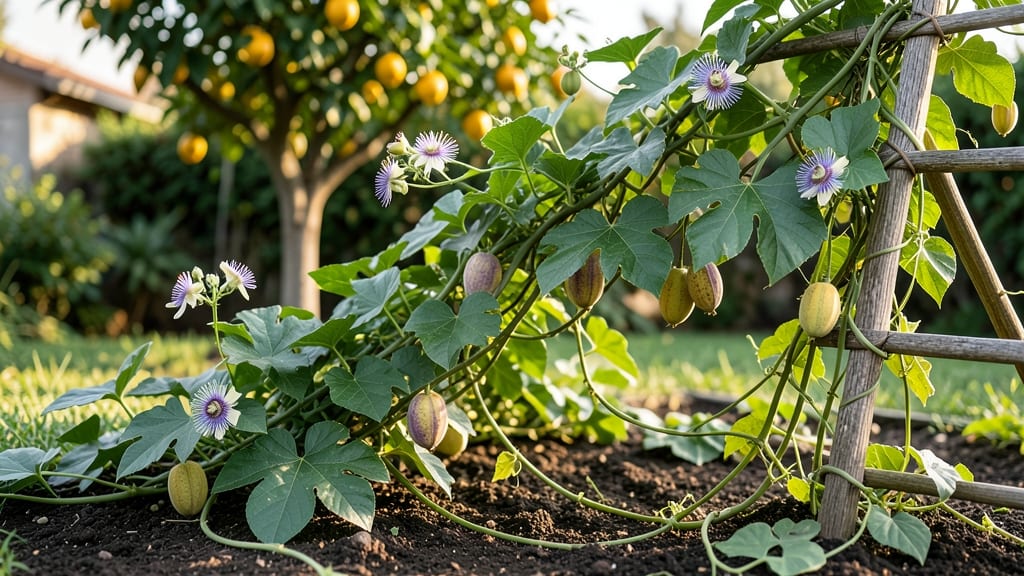
Growing passion fruit trees 🍈 can transform your garden into a tropical paradise—but only if you plan for their sprawling nature. These vines can reach heights of 15 to 30 feet and spread just as wide, turning even a small yard into a jungle if left unchecked.
If you’ve ever dreamed of growing tropical passion fruit but worry about space constraints, you’re in luck—passion fruit vines can thrive in containers while still delivering jaw-dropping harvests. But how much room do they really need?
The answer depends on the variety: purple passion fruit vines tend to be slightly more compact, while yellow varieties can stretch even longer. With the right pruning and trellising, you can keep them manageable—even in a balcony planter.
In this guide, I’ll break down the growth habits of passion fruit trees, from sprawling giants to compact varieties perfect for small spaces. You’ll learn how to control their size, choose the right container, and maximize your harvest—no matter how limited your garden is.


Passion fruit tree growth sizes: from vines to trees (and everything in between)
Passion fruit vines are often misunderstood as "trees," but they’re actually fast-growing perennial vines that climb using tendrils. Without support, they sprawl aggressively, while trained vines can reach tree-like heights of 15–30 feet.
The key to managing their size lies in understanding your variety, climate, and training method—all of which dramatically alter growth patterns.
In tropical climates like Florida or Hawaii, passion fruit vines grow 3–5 feet in their first year and can double in height annually. In subtropical zones (like California or Australia), growth slows slightly but still averages 10–15 feet per year with proper care.
The Giant Granadilla variety, for example, can stretch up to 40 feet if left unchecked, while Purple Passionfruit (Passiflora edulis) typically tops out at 20 feet.
Root depth is another critical factor: passion fruit roots spread 3–5 feet wide and penetrate 2–3 feet deep, making them ideal for large containers (at least 15–20 gallons) if grown in pots. Their shallow but expansive root systems also mean they’re sensitive to drought stress and compacted soil, which can stunt growth.
| Variety | Mature Height | Spread (Untrained) | Spread (Trellised) | Growth Rate | Climate Adaptation |
|---|---|---|---|---|---|
| Purple Passionfruit (Passiflora edulis) | 15–20 ft | 10–15 ft wide | 5–8 ft wide | 3–5 ft/year | Tropical/Subtropical |
| Yellow Passionfruit (Passiflora edulis flaveed) | 12–18 ft | 8–12 ft wide | 4–6 ft wide | 2–4 ft/year | Subtropical (cooler tolerance) |
| Giant Granadilla (Passiflora quadrangularis) | 25–40 ft | 20–30 ft wide | 10–15 ft wide | 5–8 ft/year | Tropical (heat-loving) |
| Panama Red (Passiflora tripartita) | 10–15 ft | 6–10 ft wide | 3–5 ft wide | 2–3 ft/year | Subtropical (drought-tolerant) |
A trellis or sturdy arbor can transform a sprawling vine into a manageable "tree," reducing spread by 50–70% while encouraging upward growth. For example, a Purple Passionfruit trained on a 10-foot trellis will focus its energy on height rather than width, making it ideal for small gardens.
In contrast, free-standing vines (like Giant Granadilla) can become unruly, requiring regular pruning to control their reach.
Pruning isn’t just about size control—it’s essential for fruit production. Overgrown vines produce fewer, smaller fruits because energy is diverted to leafy growth. In tropical zones, prune twice yearly (spring and fall), while subtropical growers should prune once in late winter to avoid frost damage.
Always remove dead or diseased wood first, then thin out excessive shoots to improve airflow and sunlight penetration.
Climate plays a surprising role in growth rates. In tropical regions, passion fruit vines grow aggressively year-round, while in subtropical zones, growth slows in winter but rebounds sharply in spring.
For instance, a Yellow Passionfruit in California may only grow 1–2 feet in winter but 5+ feet in summer. If you’re in a cooler climate, choose drought-tolerant varieties like Panama Red, which handle milder winters better than tropical types.
Container growth is entirely
Best space-saving passion fruit varieties for containers (with size guides)
If you’re short on space but still want to grow passion fruit, container-friendly varieties are your best bet. These compact vines can produce just as many fruits as their sprawling cousins—if you choose the right variety and give them proper support.
The key is selecting a dwarf variety or hybrid designed for limited spaces, along with a sturdy trellis to control their growth.
Most passion fruit vines can reach 15-30 feet when left unchecked, but container varieties stay between 6-12 feet with proper pruning. The trick is pairing the right vine with a minimum 15-gallon pot and a trellis that’s at least 6 feet tall.
This setup can cut their spread by 50%+ while maximizing fruit production.
Here’s a comparison of the best space-saving passion fruit varieties for containers, including their mature sizes, container needs, and yield potential:
For containers, prioritize drainage holes and lightweight potting mix to prevent root rot. A 5-gallon pot might work for the first year, but upgrade to 15+ gallons by year two to support root growth and fruit production.
Trellises should be installed early—even young vines need guidance to grow vertically and save space.
With the right variety and care, you can enjoy homegrown passion fruit in a fraction of the space. Just remember: prune regularly to control growth, and fertilize every 4-6 weeks during the growing season for the best yields. Your balcony or patio will thank you!