
Fertilization
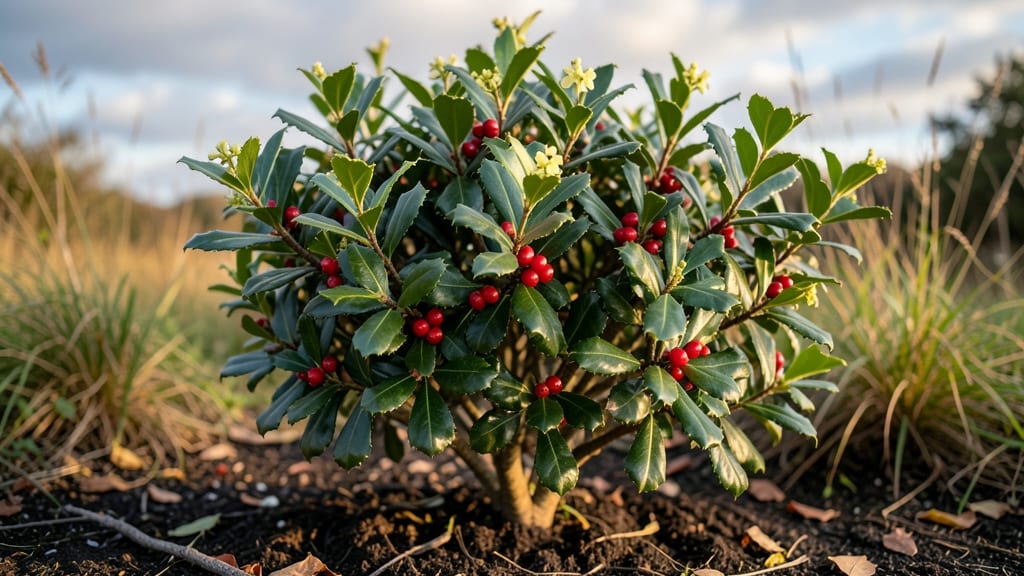
Growing holly berry fruit that stays vibrant all winter is easier than you think—just give them sun, patience, and the right soil. 🌿 I’ve turned my shady corner into a berry-producing powerhouse by following these simple rules, and now my neighbors ask for cuttings every holiday season.
The key starts with full sun to partial shade and well-draining soil—holly hates soggy roots. Choose between glossy Ilex aquifolium (classic Christmas holly) or Ilex verticillata (winterberry, with stunning red berries). Male and female plants are needed for berries, so plant at least one of each nearby.
Once established, holly thrives with minimal fuss: water deeply once a week (more in summer), mulch to keep roots cool, and prune in late winter to shape the plant. The berries form in late summer, ripening by fall, and stay on the branches until spring—nature’s built-in ornament.
For best results, fertilize lightly in spring with compost or slow-release granules. Watch for spider mites (they love dry conditions) and scale insects, but a strong plant resists most pests. With these steps, your holly will reward you with bold berries and glossy leaves for years.
📚 In This Guide
- What you need
- Instructions
- Tips and common mistakes
- Wrapping up and next steps
What you need
- ● Holly berry plants (Ilex spp.) – Choose between: 1–3 female plants (berry producers, e.g., Ilex verticillata or Ilex aquifolium)
- ● 1 male plant (pollinator, e.g., Ilex glabra or Ilex opaca) for cross-pollination (if growing from seed or cuttings)
- ● Well-draining soil mix – 50% native soil + 50% compost or peat moss (pH 5.0–6.5)
- ● Organic fertilizer – Balanced 10-10-10 or slow-release granular (e.g., fish emulsion or bone meal for phosphorus)
- ● Mulch – 2–3 inches of pine straw, wood chips, or shredded leaves (acid-loving plants thrive with organic mulch!)
- ● Gardening tools: Trowel or hand shovel
- ● Pruning shears (sterilized with rubbing alcohol)
- ○ Grafting knife (optional, for advanced propagation)
- ● Containers (if not planting in-ground) – 5–15 gallon pots with drainage holes (for dwarf varieties)
- ● pH testing kit (to monitor soil acidity)
- ● Watering can or hose with nozzle (holly berries hate soggy roots!)
- ● Pollination aid – A small paintbrush (to hand-pollinate flowers if bees are scarce)
- ● Bird netting – 1/2-inch mesh to protect berries from hungry birds
- ● Slow-release fertilizer spikes (for convenience)
- ● Garden journal – To track growth, pruning dates, and berry production
Step-by-step guide to growing holly berry fruit
Here's how to cultivate vibrant holly berries in your sunny garden—no advanced skills required.
🌱 Step 1: Select the Right Holly Variety and Planting Site
Choose a female holly cultivar (like 'Nellie R. Stevens' or 'Sky Pencil') since only females produce berries. Plant in full sun to partial shade—at least 6 hours of sunlight daily—with well-draining soil. Holly thrives in USDA Zones 5-9, so check your climate zone before selecting a variety.
Dig a hole twice as wide as the root ball but only as deep—burying too deeply suffocates roots. Mix the removed soil with compost to improve fertility. Space plants 15-20 feet apart for mature size, as holly grows into a dense, multi-stemmed shrub. Avoid planting near sidewalks or driveways—mature holly roots spread aggressively.
☀️ Step 2: Plant and Establish for Optimal Berry Production
Place the holly in the hole, ensuring the root flare (where roots meet the trunk) sits above soil level. Backfill with amended soil, tamping gently to remove air pockets. Water deeply to settle the soil, then add 2-3 inches of mulch (wood chips or pine straw) to retain moisture and suppress weeds. Keep mulch 6 inches away from the trunk to prevent rot.
Water 2-3 times per week during the first growing season, aiming for 1-2 inches of water weekly. Holly is drought-tolerant once established, but young plants need consistent moisture. You’ll know it’s thriving when new growth appears in spring and leaves stay glossy green—dull or yellowing leaves signal overwatering or poor drainage.
✂️ Step 3: Prune and Fertilize for Year-Round Berries
Prune in late winter or early spring before new growth begins. Remove dead, diseased, or crossing branches first, then shape the shrub by cutting back overly dense growth to improve airflow. Never prune more than one-third of the plant in a single season—holly responds poorly to aggressive pruning.
Fertilize in early spring with a balanced, slow-release fertilizer (10-10-10 or similar). Apply ½ cup per year of plant maturity (e.g., ¼ cup for young shrubs). Holly berries develop on old wood, so avoid heavy pruning in fall—this removes next year’s potential berry-bearing branches. If berries fail to appear, check for male pollinators nearby or plant one yourself.
🍇 Step 4: Protect and Harvest for Long-Term Success
Holly berries are toxic to humans and pets, so plant in areas where children and animals can’t access them. Birds love them, so expect some natural thinning—this actually improves berry size. Harvest in late fall to winter (November–January) when berries turn deep red or black, depending on the variety. Twist berries gently from stems or cut clusters with clean pruners to avoid damaging the plant.
Store harvested berries in a cool, dry place (like a paper bag) for up to 2 weeks. Use them for holiday decorations, bird feeders, or craft projects—just keep them out of reach! If your holly stops producing berries, it may need rejuvenation pruning (cutting back all stems to 6-12 inches in early spring) to stimulate new growth and fruit-bearing branches.
Tips & tricks for perfect holly berry fruit cultivation
Here's what nobody tells you about growing holly berries that'll make all the difference in your garden success.
Variety Selection: When choosing your female holly cultivar, consider planting a male pollinator nearby if you don't already have one established. I learned this the hard way after years of no berries—some female varieties need cross-pollination for optimal fruit set. Look for male cultivars like 'Southern Gentleman' that thrive in the same zones as your female plant.
Planting Depth: The root flare must stay above soil level—this is non-negotiable. I've seen gardeners bury the flare too deeply, which suffocates the plant and leads to poor growth. If your hole isn't deep enough, simply add more soil around the sides rather than pushing the plant deeper. A good test is that the flare should be visible above the finished soil line.
Watering Wisdom: Those 2-3 waterings per week during the first year are critical, but timing matters just as much. Water deeply in the morning to allow foliage to dry before evening—this prevents fungal issues. I've noticed holly leaves develop brown spots when watered late in the day, especially in humid climates. Aim for that 1-2 inches weekly, but check soil moisture by sticking your finger 2 inches deep; if it's dry, water again.
Pruning Precision: When pruning in late winter, focus on removing only dead or crossing branches first. The one-third rule is strict—holly responds poorly to aggressive cuts. I've seen gardeners over-prune and end up with sparse, leggy plants. For shaping, make cuts just above outward-facing buds to encourage fuller growth. And remember, berries form on old wood, so avoid heavy cuts that remove potential fruit-bearing branches.
Pro Tips for Holly Berry Fruit
- Here's what nobody tells you about growing holly berries that'll make all the difference in your garden success.
- Variety Selection: When choosing your female holly cultivar, consider planting a male pollinator nearby if you don't ...
- Planting Depth: The root flare must stay above soil level—this is non-negotiable. I've seen gardeners bury the flare ...
Frequently asked questions
When is the best time to plant holly berry bushes?
The ideal time to plant holly berry bushes is in early spring (after the last frost) or fall (6-8 weeks before the first expected frost). This gives roots time to establish before extreme temperatures hit. Avoid planting in summer heat or winter freezes for best survival rates!
How long does it take for a holly berry bush to bear fruit?
Patience is key! Holly berry bushes typically take 3-5 years to produce fruit after planting. Young bushes focus on root and branch growth first. Choose established nursery plants (2-3 years old) to cut down wait time—some may fruit within 1-2 years with proper care.
Are holly berries edible, and how do I prepare them?
Not all holly berries are edible—only those from Ilex verticillata (winterberry) or Ilex aquifolium (European holly) varieties are safe for consumption. Cook them first! Simmer in water for 10 minutes, then blend into jams, sauces, or ferment for wine. Never eat raw berries—they can be toxic.
Why aren’t birds eating my holly berries?
Birds might skip your berries if they’re unripe, underfed, or sprayed with pesticides. Ensure your bush is healthy (well-watered, fertilized with low-nitrogen, high-phosphorus fertilizer), and wait until berries turn fully red/black. If birds still ignore them, hand-pollinate with a small brush to boost fruit set!
Can I grow holly berries in containers, and what size pot do I need?
Yes! Holly berries thrive in containers with at least 15-gallon pots (bigger for dwarf varieties). Use well-draining soil, and repot every 2-3 years. Place in full sun, and water consistently—containers dry out faster. Just know that container-grown bushes may produce smaller fruit yields than in-ground plants.
What’s the best fertilizer for holly berry bushes?
Use a balanced, acidic fertilizer (e.g., 10-10-10 or 8-3-9) in early spring to encourage blooms. For established bushes, switch to a low-nitrogen, high-phosphorus formula (like 5-10-5) in late spring to support fruit development. Avoid high-nitrogen fertilizers—they promote leafy growth over berries!
Wrapping up and next steps
Growing holly berry fruit in sunny spots is a rewarding journey that blends patience with nature’s bounty!
With the right soil, fertilization, and care, you can enjoy a year-round harvest of vibrant berries—whether for culinary delights or stunning holiday decor. Start small, stay consistent, and soon your garden will thrive with lush holly bushes.
Ready to take the next step? Plant your first holly bush this season and watch your sunny spot transform into a berry-filled paradise! 🌿 For extra tips, check out our fertilization schedule guide to keep those bushes flourishing.