
Pruning
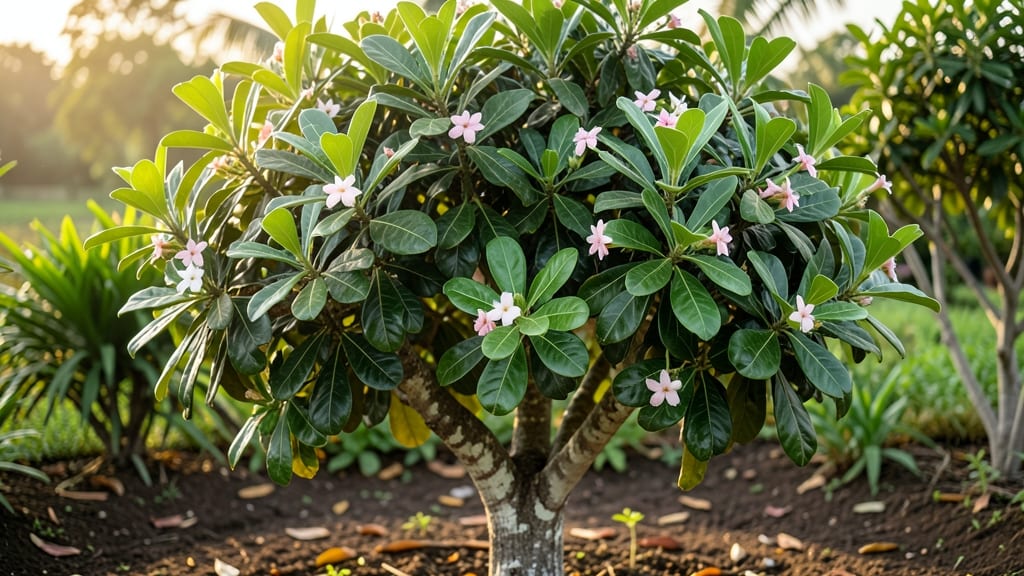
Strategic pruning turns your guava tree into a fruit-producing machine. ✂️ I’ve watched my tree go from sparse branches to heavy with fruit just by making a few key cuts at the right time—no fancy tools or horticultural degree required.
The secret lies in shaping the tree to maximize sunlight exposure and airflow, which directly translates to more blossoms and fruit.
Guava trees thrive in warm climates (zones 9-11) but can handle brief cold snaps if protected. They love well-draining soil and full sun, though they’ll tolerate partial shade in hotter areas.
Most varieties—like the sweet white-fleshed ‘White Supreme’ or the aromatic ‘Red Malaysian’—produce fruit year-round in ideal conditions, but pruning in late winter or early spring kickstarts the process. Start with clean, sharp pruners and focus on removing dead wood, crossing branches, and thinning out crowded areas.
Within 6-8 weeks after pruning, you’ll see fresh green shoots bursting with energy, followed by clusters of fragrant white flowers. The fruit that follows will be sweeter and more abundant than ever, with fewer pests and diseases thanks to improved airflow.
The best part? You’ll harvest fruit at different stages, giving you a continuous supply from summer through winter.
This method works for container-grown guavas too—just scale back the pruning to avoid stressing smaller trees. Whether you’re growing in the ground or a large pot, the same principles apply. Ready to transform your tree into a fruiting powerhouse? Let’s get those pruners out!
📚 In This Guide
- What you need
- Instructions
- Tips and common mistakes
- Wrapping up and next steps
What you need
- ● Pruning shears: Bypass shears (for clean cuts on small branches) or anvil shears (for thicker branches up to ½ inch). Must be sharp!
- ● Loppers: 1 pair (for branches ½–1½ inches thick). Look for ratcheting or bypass-style for precision.
- ● Pruning saw: 1 (for branches >1½ inches thick). A curved-tooth saw minimizes tear-out.
- ● Disinfectant: 70% isopropyl alcohol or a 10% bleach solution (1 part bleach to 9 parts water) to sterilize tools between cuts.
- ● Gloves: Heavy-duty gardening gloves (cut-resistant if your tree has thorns!).
- ● Safety gear: Safety goggles (to protect from debris) and long sleeves/pants (for thorny varieties like Psidium guajava).
- ● 5-gallon bucket: 1 (to collect pruned branches and debris).
- ● Rope or ladder: Sturdy 3-step ladder (if tree is >6 feet tall) + non-slip rope (to secure branches during pruning).
- ● Pruning sealant: Tree wound paint (controversial—skip if your tree is Psidium guajava, as it’s non-essential for most guavas).
- ● Marking spray: White spray paint (to mark branches for removal before cutting).
- ● Compost bin: For repurposing small branches as mulch or compost.
- ● Camera/phone: To document your tree’s progress before/after pruning!
- ● ✅ Best time to prune: Late winter/early spring (just before new growth) or right after harvest to avoid stressing the tree.
- ● 🌡️ Weather check: Prune on a dry, overcast day (humidity can spread disease).
- ● 🔥 Tree age matters: Young trees (minimal pruning—focus on shaping. Mature trees can handle 25–30% of their canopy removed per session.
- ● 🎯 Tool prep: Sharpen blades before pruning to avoid crushing branches (which slows healing).
Step-by-step guide to pruning a guava tree for maximum fruit
Here's how I prune my guava tree every year to keep it healthy and bursting with fruit.
✂️ Step 1: Remove Dead, Diseased, or Crossing Branches First
Start by identifying any branches that are dead, diseased, or rubbing against each other. These are your top priorities—removing them first opens up the tree's energy for fruit production. Use sharp pruning shears to make clean cuts just outside the branch collar (that swollen area where the branch meets the trunk).
I always work from the bottom up, so I can see the tree's structure better as I go. If you see a branch with brown, brittle wood or signs of fungal spots, cut it off immediately. Crossing branches compete for sunlight and nutrients, so removing one of them helps the remaining branches grow stronger.
✂️ Step 2: Thin Out the Canopy for Better Airflow
Guava trees love sunlight, but they also need good airflow to prevent fungal diseases. Aim to thin the canopy so light can reach the inner branches. Look for branches growing inward or upward—these are the ones to remove. Start by cutting back branches that are growing toward the center of the tree, leaving only the strongest, outward-growing branches.
I like to keep the tree's shape open and rounded. This not only improves airflow but also makes it easier to harvest fruit. Cut back any branches that are growing too close together, leaving at least 6-8 inches of space between them. If a branch is too thick to cut with hand shears, use a pruning saw.
☀️ Step 3: Prune for Light Penetration and Fruit Production
Now focus on the branches that are shading the interior of the tree. Guava trees produce fruit on new growth, so you want to encourage plenty of sunlight to reach all parts of the canopy. Cut back any overly dense branches that are blocking light from the center. Aim to reduce the canopy by about 20-30%—this might sound drastic, but it pays off in better fruit production.
Pay special attention to the lower branches. If they’re too crowded, remove some to allow sunlight to reach the lower fruit. You’ll see the difference in just a few months—more sunlight means more flowers, which means more fruit. Just remember, guava trees are sensitive to heavy pruning, so don’t overdo it.
⏰ Step 4: Shape the Tree and Encourage New Growth
This is where you fine-tune the tree’s shape. Guava trees naturally grow into a rounded form, so I focus on maintaining that while encouraging new growth. Cut back any branches that are growing too long or leggy—these often produce fewer fruits. Instead, encourage shorter, bushier branches by trimming back the tips slightly.
If your guava tree has any water sprouts (those fast-growing, vertical shoots), remove them completely. They drain energy from the tree and don’t contribute much to fruit production. After pruning, step back and admire your work—you should see an open, well-lit canopy ready to produce a bountiful harvest.
🌱 Step 5: Clean Up and Monitor for New Growth
Once you’ve finished pruning, clean up all the debris from the ground. This helps prevent fungal diseases from spreading. I also like to sterilize my pruning tools with rubbing alcohol to keep them clean for the next cut. After pruning, water the tree deeply to help it recover and encourage new growth.
Over the next few weeks, watch for new shoots emerging from the branches you’ve pruned. These are a sign that the tree is healing well and will soon be producing new flowers and fruit. If you notice any signs of stress, like yellowing leaves or wilting, give the tree a little extra care—it’s just adjusting to its new shape.
Tips & tricks for perfect guava tree pruning
These simple strategies will help you prune like a pro and keep your guava tree thriving all year.
Tool Selection: Invest in a good pair of bypass pruning shears—they make clean cuts that heal faster than jagged ones. For branches thicker than your wrist, use a pruning saw with a curved blade to avoid tearing the bark. I keep a small bottle of rubbing alcohol in my toolkit to sterilize between cuts, which prevents spreading disease from one branch to another.
Season Timing: The best time to prune is right after your guava tree finishes fruiting, usually in late winter or early spring. This gives the tree plenty of time to recover and produce new growth before the next fruiting season. Avoid heavy pruning during the fruiting season—it stresses the tree when it's already working hard to produce fruit.
Visual Cues for Pruning: When you're thinning the canopy in Step 2, imagine sunlight streaming through the branches. You want to create an open, airy structure where light can reach all parts of the tree. Look for branches that cross each other—these will rub and create wounds that invite disease. Also watch for branches growing straight up (water sprouts)—these rarely produce fruit and should be removed completely.
Post-Pruning Care: After you finish cutting, don't just leave the debris on the ground. Rake up all the clippings and either compost them or dispose of them away from your tree. This prevents fungal spores from spreading back to the tree. I also like to give my tree a deep watering right after pruning to help it recover and encourage new growth.
Pro Tips for Fruit Guava Tree
- These simple strategies will help you prune like a pro and keep your guava tree thriving all year.
- Tool Selection: Invest in a good pair of bypass pruning shears—they make clean cuts that heal faster than jagged ones...
- Season Timing: The best time to prune is right after your guava tree finishes fruiting, usually in late winter or ear...
Frequently asked questions
Got questions about pruning your fruit guava tree? You’re not alone! Here are answers to the most common concerns—so you can keep your tree thriving and fruiting like a pro.
When is the best time to prune a guava tree for maximum fruit production?
The ideal time is late winter or early spring (just before new growth starts). Avoid pruning during heavy fruiting seasons—this can stress the tree and reduce yield. If you must prune during fruiting, do so lightly to minimize impact. For tropical climates, prune after the rainy season for balanced growth.
How much can I cut back a guava tree without harming it?
Guava trees are resilient, but never remove more than 25-30% of the canopy in one session. Over-pruning weakens the tree and can lead to fewer flowers/fruit. Focus on shaping (removing dead or crossing branches) and thinning (opening the center for airflow). For young trees, you can be bolder—up to 50%—to encourage a strong structure.
Why did my guava tree stop producing fruit after pruning?
If your tree suddenly stops fruiting, it’s often due to over-pruning or cutting back too aggressively. Guava trees need leafy branches to photosynthesize and fuel fruit production. Try light pruning in the next cycle, prioritize watering, and add a balanced fertilizer (high in potassium). Patience helps—new growth can take 1-2 seasons to rebound!
Can I prune a guava tree in hot or cold weather?
Avoid pruning during extreme heatwaves (above 90°F/32°C) or freezing temperatures (below 40°F/4°C). Heat stress slows healing, while cold can shock the tree. If you must prune in heat, do it early morning or late evening. In cold climates, wait until after the last frost—guava trees are tropical and sensitive to chilly snaps!
What should I do if my guava tree has too many “water sprouts” or weak branches?
Water sprouts (fast-growing, vertical shoots) steal energy from fruit production. Simply cut them back to a healthy bud or branch junction. For weak branches, thin them out to improve airflow and sunlight penetration. Use sterilized shears to prevent disease, and don’t leave stubs—cut at a 45° angle just above a leaf node for cleaner healing.
Wrapping up and next steps
Pruning your fruit guava tree isn’t just about shaping—it’s your secret weapon for a bountiful harvest all year long! 🌱 By mastering strategic cuts, you’ll boost airflow, encourage vibrant growth, and keep pests at bay.
Whether you’re a seasoned gardener or just starting, every snip brings you closer to a tree that rewards you with sweet, juicy fruit.
Ready to transform your guava tree into a fruit-producing powerhouse? Grab your pruners, roll up your sleeves, and get pruning—your future harvest will thank you! For extra guidance, check out our guava tree care guide to keep your tree thriving.