
Watering
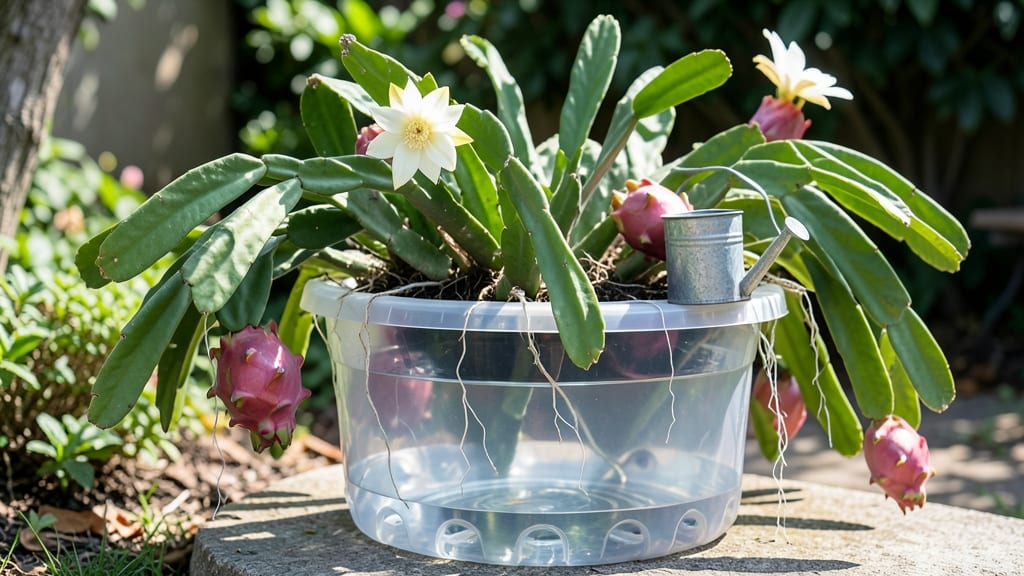
A self-watering rolling planter turns dragon fruit from a tropical luxury into your backyard reality. 🌱 I’ve grown dragon fruit in mine for two seasons now, and the difference between hauling water and rolling it to sunlight is night-and-day—no more heavy pots or missed watering days.
The magic happens in the 15-20 gallon capacity (big enough for one vine but not so large it’s unmanageable). Roll it to follow the sun’s path, and the built-in reservoir keeps roots hydrated for 2-3 weeks without refilling. No more guessing if you’ve over- or under-watered—just consistent growth.
By summer’s end, you’ll have vibrant pink or yellow fruit hanging from your patio, and the vine itself becomes a stunning vertical display. The rolling design also makes it perfect for small spaces or renters—just move it when you need to.
Best part? It works for other tropical plants too—like hibiscus or papaya. Here’s how to pick the right one and keep your dragon fruit thriving all season long.
📚 In This Guide
- What you need
- Instructions
- Tips and common mistakes
- Wrapping up and next steps
What you need
- ○ Rolling planter base: 1 large plastic or wooden barrel (20–30 gallons, with a lid for drainage holes). Optional: Add wheels for mobility!
- ● Self-watering reservoir: 1 waterproof container (e.g., a 5-gallon bucket or PVC pipe) with a spigot or wicking system.
- ● Gravel or pebbles: 2–3 lbs for drainage and wicking between soil and water.
- ● Potting mix: 10–15 lbs of well-draining cactus/succulent soil (or DIY mix: 60% potting soil + 30% perlite + 10% compost).
- ● Dragon fruit plant: 1 healthy cutting or young plant (ensure it’s Hylocereus species for best results).
- ● Drill + bits (for drainage holes in the planter lid/base).
- ● Scissors or utility knife (to cut wicking material, if using fabric).
- ● Measuring tape and level (for precision assembly).
- ○ Wicking material (optional): 1–2 ft of landscape fabric or thick rope to connect soil and water reservoir.
- ○ Support stake (optional): 1 bamboo or metal stake for young vines.
- ● Basic DIY skills (or patience to follow step-by-step guides!).
- ● Access to a sunny spot (dragon fruit loves 6+ hours of direct sunlight daily).
- ● Time to assemble (about 1–2 hours, depending on customizations).
Step-by-Step instructions for assembling your dragon fruit rolling planter
Here’s how to set up your self-watering rolling planter for dragon fruit—no fuss, just growth.
🪴 Step 1: Assemble the Planter Base and Reservoir
Start by laying out all parts: the outer planter shell, inner reservoir tray, and any grommets or drainage holes. If your kit includes a rolling base, attach it to the bottom of the outer shell using the provided hardware. Make sure the reservoir tray fits snugly inside the outer shell—it should sit about 1-2 inches from the bottom to create space for roots to access moisture.
Test the fit by pouring 1 cup of water into the reservoir. The water should rise to just below the soil level when the planter is upright, but not overflow. If it does, adjust the tray height or check for gaps in the seal. I always do a quick leak test here—tilt the planter slightly and watch for water pooling at the base. A dry base means you’re good to go.
💧 Step 2: Add the Self-Watering Wick System
Most rolling planters come with a cotton or synthetic wick that connects the reservoir to the soil. Thread the wick through the drainage holes in the reservoir tray and up into the soil compartment. The wick should reach the bottom of the outer planter but not drag on the sides—this ensures steady moisture without clogging.
If your planter doesn’t include a wick, cut a strip of 1-inch wide felt or thick fabric (like an old towel) to the length of the planter’s depth. Soak it in water, then place it vertically along the inside wall of the reservoir tray. This DIY version works just as well and costs pennies. The key is keeping the wick/fabric moist but not soggy—over-saturation leads to root rot.
🌱 Step 3: Fill the Planter with Soil and Plant Your Dragon Fruit
Use a well-draining cactus or succulent mix (never regular potting soil—it holds too much moisture). Fill the outer planter to about 2 inches below the rim, leaving space for your dragon fruit plant. Gently press the soil down to remove air pockets, but don’t compact it tightly—roots need room to breathe.
Place your dragon fruit cutting or young plant in the center of the soil. Dragon fruit roots are shallow but spread wide, so position the plant slightly off-center if the planter is round. Water the soil lightly until it’s evenly moist but not dripping. The reservoir should now hold enough water to last 2-3 weeks without refilling, depending on your climate. I like to fill the reservoir halfway at first—too much water upfront can drown the roots before they adjust.
☀️ Step 4: Position for Light and Roll Into Place
Dragon fruit thrives in full sun (6+ hours daily), so place your rolling planter in the brightest spot you have—like a sunny patio, balcony, or even a south-facing window if outdoors isn’t an option. The rolling base makes it easy to move the planter as the sun shifts with the seasons. I keep mine on wheels near my kitchen so I can roll it into shade during heatwaves or when I’m cooking up a storm outside.
Check the reservoir water level every 1-2 weeks—top it off with fresh water if it’s below the halfway mark. You’ll know the system is working when the soil stays consistently moist but not waterlogged. If you notice mold or a musty smell, your wick might be over-saturated—let the soil dry out slightly and adjust the reservoir level. Dragon fruit is drought-tolerant once established, so err on the side of slightly drier soil rather than soggy.
⏰ Step 5: Maintain and Watch It Grow
Fertilize your dragon fruit every 4-6 weeks during growing season (spring to fall) with a balanced liquid fertilizer diluted to half-strength. The rolling planter’s limited space means nutrients deplete faster than in-ground plants. I use a slow-release fertilizer in early spring and supplement with fish emulsion mid-summer—this keeps the plant fed without overloading the roots.
Roll the planter occasionally to encourage even growth. Dragon fruit vines naturally seek light, so rotating it a quarter turn weekly prevents lopsided growth. You’ll see new leaves and buds forming within 6-8 weeks if everything’s right. If your plant starts dropping leaves, it’s usually a sign of overwatering—let the soil dry out more between water checks. With this setup, you’ll have your first dragon fruit in 18-24 months, and the rolling planter makes harvesting a breeze.
Tips & tricks for perfect dragon fruit rolling planter setup
Here’s what I wish I knew before setting up my first rolling planter—these little tricks make all the difference for happy, thriving dragon fruit.
Wick Placement Matters: When threading your wick through the drainage holes in Step 2, make sure it reaches the very bottom of the outer planter but doesn’t touch the sides. I learned this the hard way—wicks that drag on the sides can create dead zones where roots won’t grow. Also, if using fabric as a DIY wick, fold the edges slightly so they don’t fray and clog the system. A frayed wick can’t do its job properly, leading to uneven moisture distribution.
Soil Level Check: In Step 3, when filling your planter to 2 inches below the rim, use a pencil or dowel to check the depth before adding your plant. Dragon fruit roots spread wide but stay shallow, so you want that top 2 inches to be pure soil—no plant material touching the sides. This prevents mold and gives roots room to establish. I also like to sprinkle a thin layer of perlite on top of the cactus mix before planting; it helps with aeration and keeps the soil from compacting too much.
Reservoir Water Balance: The instructions mention filling the reservoir halfway at first, but here’s the real trick: fill it to about 2/3 capacity when you first set up the planter. This gives your dragon fruit enough moisture to establish its root system without the risk of overwatering. After the first 2-3 weeks, you can adjust based on your plant’s needs—just check the soil moisture before refilling. A good rule of thumb is to keep the soil consistently moist but never soggy; you should be able to stick your finger about an inch into the soil and feel slight resistance, not wetness.
Light Rotation Strategy: While the instructions mention rotating your planter weekly, I’ve found that dragon fruit responds even better to a slightly more aggressive approach. Every 3-4 days during peak growing season (spring and summer), give your planter a full 180-degree turn. This mimics natural sunlight patterns and prevents the plant from leaning toward one direction. You’ll notice new growth becomes more uniform, and the plant develops a stronger, bushier structure over time.
Pro Tips for Dragon Fruit Self Watering Rolling Planter
- Here’s what I wish I knew before setting up my first rolling planter—these little tricks make all the difference for happy, thriving dragon fruit.
- Wick Placement Matters: When threading your wick through the drainage holes in Step 2, make sure it reaches the very bottom of the outer planter but doesn’t touch the sides.
- Soil Level Check: In Step 3, when filling your planter to 2 inches below the rim, use a pencil or dowel to check the depth before adding your plant.
Frequently asked questions
Got questions about your dragon fruit self-watering rolling planter? We’ve got answers!
Here are some of the most common queries—plus quick tips to keep your plant thriving with minimal effort.
How often do I need to refill the water reservoir?
For a dragon fruit plant in a self-watering rolling planter, check the reservoir every 7–10 days during warm weather or every 2–3 weeks in cooler months. Fill it until the water level is just below the soil surface—overfilling can drown roots, while too little means the plant won’t get enough hydration.
What do I do if my dragon fruit plant looks wilted?
Wilted leaves usually mean underwatering or root stress. First, check the water reservoir—if it’s empty, refill it immediately. If the soil feels dry, run water through the planter’s drainage holes to flush out excess salts. Roll the planter to different spots for sunlight exposure, as dragon fruit vines need 6+ hours of direct light daily.
Can I use this planter indoors?
Yes! But dragon fruit plants thrive outdoors—they need warmth, humidity, and strong sunlight (a south- or west-facing window won’t cut it). If you’re indoors, supplement with a grow light (12+ hours/day) and keep the planter near a humidifier. Rolling it near an open window or balcony helps too!
What’s the best soil mix for a dragon fruit rolling planter?
Use a well-draining, airy mix like:
- 60% cactus/succulent soil
- 30% perlite or pumice (for aeration)
- 10% compost or worm castings (for nutrients)
How do I clean or maintain the self-watering system?
Every 2–3 months, empty the reservoir and rinse it with vinegar or hydrogen peroxide (1:3 ratio) to kill algae/bacteria. Scrub the wick or capillary mat (if your planter has one) gently with a soft brush. For clogged drainage holes, soak the planter in warm water with a bit of baking soda, then rinse thoroughly.
Pro tip: Place a mesh screen over the reservoir’s fill hole to keep pests (like mosquitoes) out while letting water in!
Wrapping up and next steps
Growing dragon fruit has never been easier—or more rewarding! With a self-watering rolling planter, you’re not just saving time and effort; you’re creating a thriving, low-maintenance garden that brings vibrant color and delicious fruit to your space.
Whether you’re a beginner or a seasoned gardener, this setup makes it simple to nurture your plants without the daily fuss.
Ready to take the next step? Grab your supplies, follow the steps, and watch your dragon fruit vine flourish! 🌱✨ Happy planting!