
How To
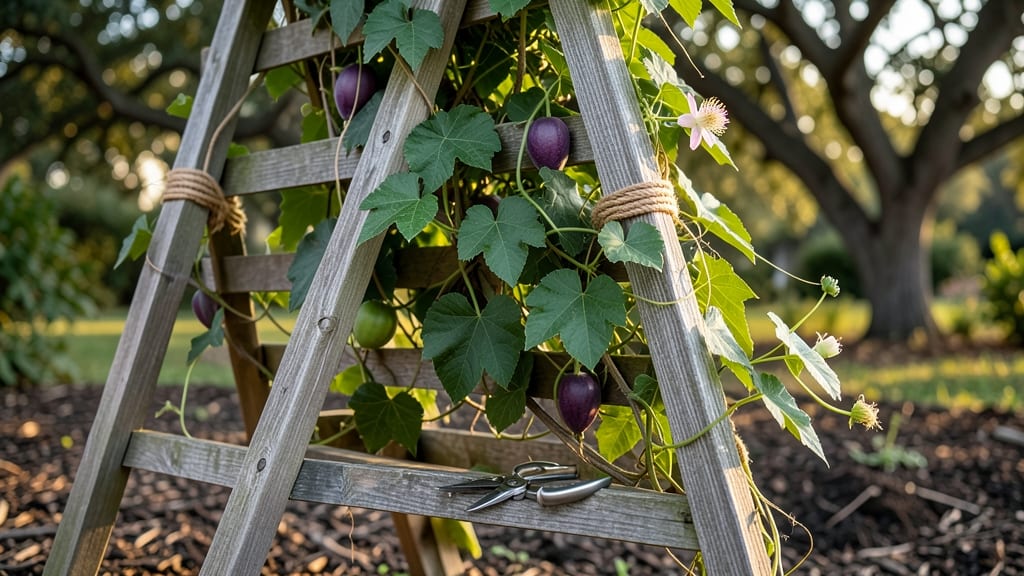
Your passion fruit vine support system makes or breaks that 50-pound harvest you're dreaming of. 🌱 I learned this the hard way when my first vine snapped under the weight of fruit—now I know exactly what works to keep those vines climbing strong and producing heavy loads without breaking.
The right support isn't just about strength—it's about guiding the vine's natural growth pattern. A sturdy 8-foot tall trellis with 12-inch spacing between horizontal slats gives vines room to sprawl while keeping fruit accessible.
Wood or metal frames last years, but bamboo poles work too if you're on a budget and plan to replace them every couple of seasons. Once installed, you'll see the difference immediately: vines grow faster, fruit ripens more evenly, and harvesting becomes a breeze.
The key is training those tendrils properly from the start—skip this, and you'll end up with tangled messes that collapse under fruit weight. For tropical climates, add shade cloth during peak summer to prevent leaf scorch, and prune aggressively in late winter to keep the structure manageable. The payoff?
A vine that produces for 10+ years with minimal effort.
📚 In This Guide
- What you need
- Instructions
- Tips and common mistakes
- Wrapping up and next steps
What you need
- ● Trellis Framework: 4–6 T-posts (5–6 ft tall, galvanized or cedar-treated wood) – for stability
- ● 2–4 horizontal support beams (2x4 lumber, 6–8 ft long) – spaced 3–4 ft apart vertically
- ● Cross braces (2x2 lumber, cut to 4–5 ft lengths) – for diagonal reinforcement
- ● Vine Support: Jute twine, soft plastic ties, or garden clips (50–100 ft) – for securing vines without damage
- ○ Wire mesh or wooden slats (optional but ideal for heavy fruit clusters)
- ● Fasteners: Galvanized screws/nails (2–3 inches) – for wood-to-wood connections
- ● Heavy-duty zip ties (for securing beams to posts)
- ● Tools: Drill/driver + drill bits (for pre-drilling holes)
- ● Tape measure, pencil, and level – precision is key!
- ● Saw (hand saw or circular saw) – for cutting lumber to size
- ○ Staple gun (optional) – for attaching mesh/slats
- ● Coconut coir or burlap strips – gentler alternative to twine for young vines
- ● Post caps or decorative finishes – to blend the trellis into your garden aesthetic
- ● Concrete or gravel – for anchoring T-posts in windy areas
- ● Pruning shears – for trimming vines as they grow
How to build a sturdy trellis for passion fruit vines
Passion fruit vines grow like jungle vines—strong but need the right support to handle their weight.
🪴 Step 1: Choose the Right Trellis Structure
Passion fruit vines need a strong, durable trellis that can support 20-30 pounds per vine once loaded with fruit. I recommend a wooden A-frame trellis or metal T-posts with horizontal wires for best stability. For 4 vines, use two 8-foot wooden posts (4x4 inches) set 6 feet apart—this creates a sturdy base for climbing.
If you're working with limited space, a freestanding pyramid trellis (4 posts connected at the top) works beautifully. Just ensure the posts are buried 2 feet deep or anchored with concrete footings to prevent tipping. The vine will twine around the structure, so leave at least 6 inches of space between the trellis and any walls or fences.
🌿 Step 2: Install the Trellis Framework
Start by digging holes for your posts—12 inches deep for smaller trellises, 24 inches deep for heavier wooden structures. If using T-posts with wires, drive them into the ground at 4-foot intervals along a 10-foot row (for 4 vines). Attach 3 horizontal wires at 2-foot intervals (top, middle, bottom) to create climbing levels.
For a wooden A-frame, cut two 8-foot vertical posts and two 6-foot horizontal beams (2x4 inches). Secure the beams 3 feet from the top and 1 foot from the base to form a ladder-like structure. Use galvanized screws (not nails) to attach everything—rust weakens metal over time. Test stability by gently shaking the frame before planting.
✂️ Step 3: Train the Vine for Maximum Support
Once your vine reaches 3-4 feet tall, gently weave the main stem around the trellis wires or beams. Use soft garden twine to loosely tie the vine at 12-inch intervals—never wrap tightly, or you’ll damage the stem. Passion fruit vines grow aggressively, so prune side shoots that don’t reach the trellis to encourage upward growth.
Here’s the thing—you’ll need to adjust ties as the vine thickens. Check every 2 weeks during growing season and loosen or replace twine that’s digging into the bark. If a section of the vine grows too heavy, add a secondary support wire between two posts to distribute weight. You’ll know it’s working when the vine climbs confidently and the fruit hangs evenly along the structure.
💧 Step 4: Maintain and Reinforce Over Time
Passion fruit vines double in size during fruiting season, so reinforce your trellis before harvest. Add extra horizontal supports if you notice sagging, and tighten any loose connections. I like to spray the wood with a sealant every 2 years to prevent rot—especially in humid climates.
Watch for wind damage—if your area gets strong gusts, tie the trellis to a sturdy anchor point (like a buried rebar rod). You’ll also want to prune old growth in late winter to keep the vine aerated and manageable. A well-maintained trellis lasts 5-7 years, but check for cracks or rust annually and repair as needed.
Tips & tricks for passion fruit vine support
Building a trellis that actually holds up under passion fruit's weight isn't just about nailing the dimensions—it's about the little details that make all the difference.
Material Matters: For wooden trellises, pressure-treated lumber lasts longer than untreated wood, especially in damp climates. I've learned this the hard way—untreated wood can rot within a year in humid conditions. If using metal, galvanized hardware prevents rust from weakening connections over time. For the A-frame beams at 3 feet from the top and 1 foot from the base, use 2x4 lumber—it's the perfect balance of strength and weight.
Digging Deep Enough: The 12-inch depth for smaller trellises might seem like overkill, but trust me on this—passion fruit vines develop serious weight when fruiting. For the heavier wooden structures, those 24 inches of buried post aren't optional. I've seen trellises topple when posts weren't deep enough to resist leverage from heavy fruit. Use a level to ensure posts are perfectly vertical before backfilling with gravel for drainage.
Tie-Tight Technique: When tying the vine at 12-inch intervals in Step 3, use the "figure-eight" method with soft garden twine. This creates gentle pressure that guides growth without constricting. The key is to make the ties loose enough that you can slip two fingers between the twine and vine stem—too tight and you'll girdle the vine. I check these ties every two weeks during growing season, adjusting as the vine thickens. For extra support, add a secondary wire between posts when you notice heavy fruit clusters forming.
Wind Resistance: If you're in a windy area, don't wait until after planting to secure your trellis. Before assembling, bury a ½-inch rebar rod at a 45-degree angle from each post into the ground, then attach the trellis to it with heavy-duty zip ties. This creates a guy-wire effect that prevents tipping. I've seen trellises survive 60 mph winds with this simple modification—something I wish I'd known before my first hurricane season.
Pro Tips for Passion Fruit Vine Support
- Building a trellis that actually holds up under passion fruit's weight isn't just about nailing the dimensions—it's about the little details that make all the difference.
- Material Matters: For wooden trellises, pressure-treated lumber lasts longer than untreated wood, especially in damp climates.
- Digging Deep Enough: The 12-inch depth for smaller trellises might seem like overkill, but trust me on this—passion fruit vines develop serious weight when fruiting.
Frequently asked questions
Got questions about keeping your passion fruit vine strong and supported? You’re not alone! Here are some of the most common concerns—plus quick, practical answers to help you grow like a pro.
What’s the best material for a passion fruit vine support?
A sturdy trellis made from galvanized metal, bamboo, or wooden posts works best. Avoid untreated wood, as it can rot over time. For heavy vines, opt for powder-coated metal frames or cattle panels—they’re durable and won’t rust easily. If you’re DIY-ing, PVC pipes or concrete posts are budget-friendly alternatives!
When should I start supporting my passion fruit vine?
Start as soon as you plant or when vines reach 3–4 feet tall. Passion fruit vines grow aggressively (up to 20+ feet!) and need support early to prevent breakage. Use soft ties (like old T-shirts or horticultural tape) to gently guide vines upward—never wire, which can damage stems. Pro tip: Train vines vertically to improve air circulation and fruit quality!
Can I grow passion fruit vines on a fence or chain-link?
Yes! A chain-link fence (4–6 ft tall) or wooden fence works well, but avoid barbed wire—it can snag and harm the vines. If using chain-link, add horizontal wires or a mesh screen for extra grip. For smaller spaces, a freestanding trellis (like a teepee or A-frame) is a great alternative. Just ensure the structure can handle 20+ lbs of fruit per vine!
Why is my passion fruit vine sagging or breaking?
Sagging usually means insufficient support or overloaded branches. Check for:
- Vine weight: Prune excess fruit (leave 3–4 per stem) to reduce strain.
- Tie frequency: Add supports every 3–5 feet as vines grow.
- Storm damage: Reinforce trellises in windy areas with stakes or guy wires.
What’s the best way to support passion fruit vines in small spaces?
For balconies or patios, try:
- Wall-mounted trellises (use L-brackets for security).
- Container training: Grow in a large pot (15+ gallons) with a freestanding obelisk trellis.
- Dwarf varieties: Some hybrids (like ‘Panama Red’) stay compact—ideal for small gardens!
Wrapping up and next steps
Growing a thriving passion fruit vine is all about balance—strong support meets tender care.
With the right trellis or stake system, you’ll not only protect your vine from damage but also boost productivity and make harvesting a breeze. 🌱 Whether you’re a beginner or a seasoned gardener, these sturdy support tricks will set you up for a bountiful, low-stress harvest.
Now that you’re armed with the know-how, it’s time to roll up your sleeves!
Start by choosing the perfect support for your space, then assemble it with confidence. Watch your vine climb, flourish, and reward you with sweet, tropical treats—your future self (and taste buds) will thank you! 🍈✨