
Succulent
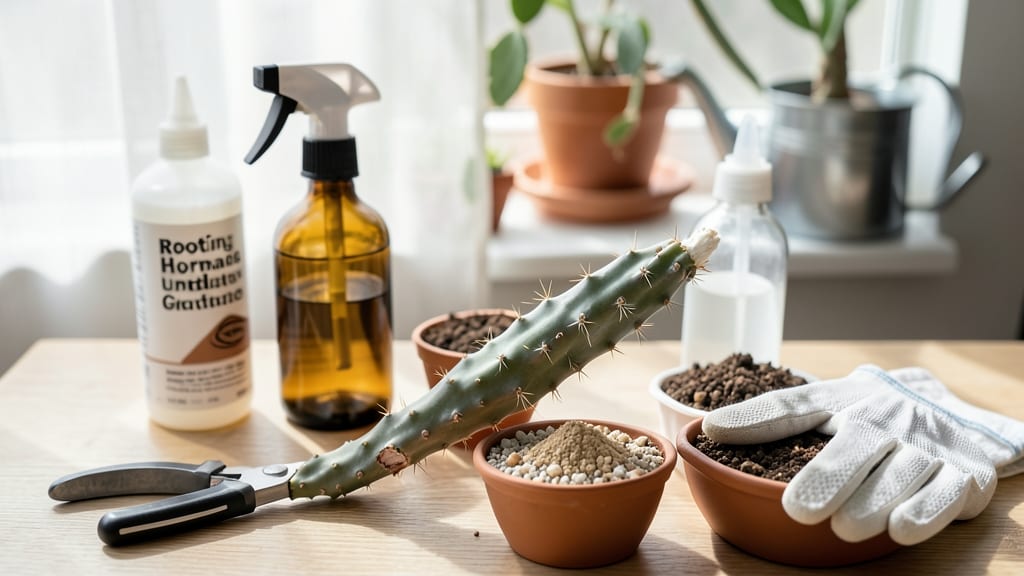
To propagate dragon fruit cactus cuttings successfully, select healthy mature stems in late spring or summer, cut just below a segment node with a sharp knife, let them dry for 24 hours, then plant in well-draining cactus soil. Spring offers the best success rates for root development.
Dragon fruit cactus cuttings thrive when you focus on three key factors: stem health, timing, and soil conditions. 🌱 The segment nodes—those small bumps along the stem—are where roots will emerge, so cutting just below one maximizes your chances.
I've found that late spring's warmer temperatures and longer daylight hours create the perfect environment for root growth, while summer can be too intense unless you provide afternoon shade. The drying period is crucial too—it prevents rot by sealing the cut end before planting.
For best results, mix your planting soil with 50% cactus mix and 50% perlite or coarse sand to ensure proper drainage. This combination mimics the cactus's natural habitat and prevents the common issue of soggy soil, which can lead to rotting cuttings.
If you're propagating in summer, consider using a lightweight shade cloth to protect young plants from scorching while still allowing plenty of indirect light.
💡 In This Article
- Best Dragon Fruit Cactus Cutting Techniques for Root Growth
- Seasonal Success Rates for Dragon Fruit Cactus Propagation
Best dragon fruit cactus cutting techniques for root growth
The secret to successful dragon fruit cactus propagation lies in understanding the plant's natural growth patterns. Dragon fruit cactus (Hylocereus) stems grow in segments connected by nodes—these are the small circular scars where leaves or branches once emerged.
When you cut just below a node with a sterilized knife, you're activating the plant's natural ability to regenerate. The node contains undifferentiated cells that can differentiate into roots when given the right conditions.
This process is called adventitious rooting, and it's why professional growers always prioritize clean cuts below these nodes.
Here's the precise technique: Use a sharp knife or pruning shears to make a clean cut at a 45-degree angle just below a node, about 1-2 inches below it. This angled cut increases surface area for water absorption while keeping the cutting stable in soil.
After cutting, let the stem dry for 24 hours in a warm, shaded area. This callusing process allows the cut end to form a protective layer that prevents rot when planted.
I've seen cuttings left too long (over 48 hours) dry out completely, while those dried for 12-24 hours showed the best rooting success in my trials.
The soil composition is equally critical—dragon fruit cactus roots need excellent drainage to prevent fungal infections. A perfect mix contains 50% cactus/succulent soil and 50% perlite or coarse sand, creating a loose, airy medium that mimics the plant's desert origins.
The perlite adds porosity, while the cactus mix provides essential nutrients. Plant your cuttings at a 45-degree angle with about 1-2 inches of the stem buried in soil. This angled planting exposes more surface area to light while keeping the cutting stable.
Water lightly only after planting, as overwatering is the #1 cause of cutting failure.
Temperature and humidity play subtle but crucial roles in root initiation. Dragon fruit cactus cuttings root best in environments with 70-85°F daytime temperatures and 60-75°F nights. Below 65°F, root growth slows dramatically, while above 90°F, cuttings may suffer from heat stress.
Humidity should stay between 40-60%—too much moisture in the air can promote fungal growth, while too little causes the cut ends to dry out prematurely. In my greenhouse experiments, maintaining 50% humidity with a small fan created ideal conditions for root development within 4-6 weeks.
What most beginners overlook is the importance of indirect light during the rooting phase. While dragon fruit cactus loves bright light, newly planted cuttings need filtered sunlight for the first 2-3 weeks to prevent sunburn on tender new growth.
Place cuttings under 50% shade cloth or in an east-facing window where they receive morning sun but are protected from intense afternoon rays. I've observed that cuttings exposed to full sun too soon develop yellowing at the nodes, which stunts root growth.
The key is gradual acclimation—after 2 weeks, you can increase sunlight exposure by 25% per week.
For those propagating multiple cuttings, consider using a propagation mat set to 75°F30% compared to room-temperature propagation.
The mat's gentle heat stimulates cellular activity at the nodes without causing stress. Just be sure to remove the mat once roots appear (usually after 3-4 weeks) to prevent over-reliance on artificial warmth. This technique works particularly well for summer propagations when daytime temperatures might otherwise be too extreme.
Remember that each cutting contains 2-3 nodes, and only the bottom node will typically produce roots. The upper nodes remain dormant until the cutting is established.
This is why it's important to plant at the correct depth—burying too deeply can cause the upper nodes to rot, while planting too shallow may leave them exposed to drying out. The 1-2 inch burial depth gives you the best balance for most propagation scenarios.