
Companion Plants
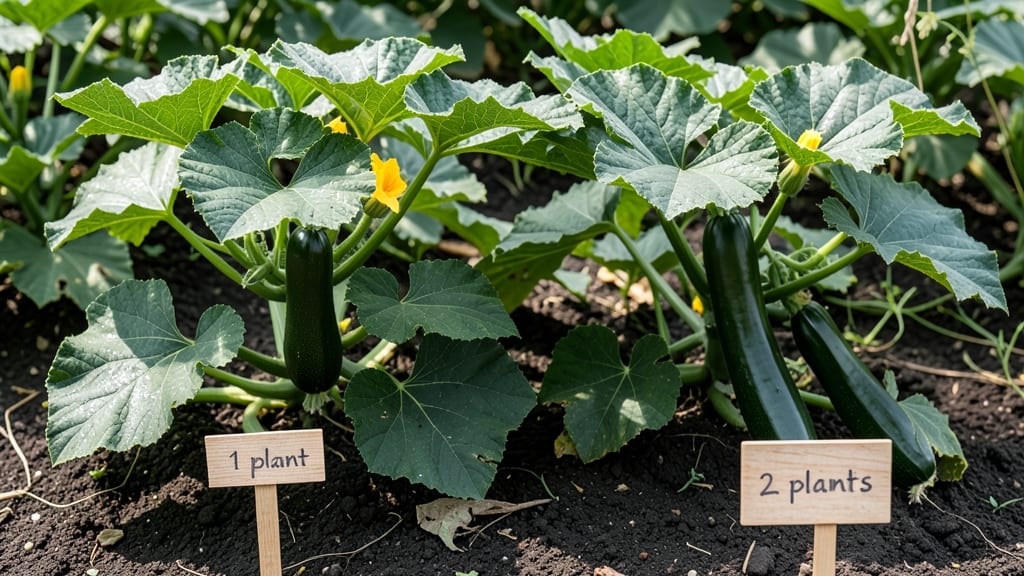
You don’t need 2 zucchini plants to get fruit—zucchini are self-pollinating, meaning a single plant can produce both male and female flowers for fertilization. However, planting multiple plants increases yield and genetic diversity, reducing the risk of poor fruit development from inbreeding.
Zucchini plants are self-pollinating, which means they can fertilize their own flowers without needing another plant nearby. 🌱 The female flowers (the ones that develop into fruit) produce pollen in their early stages, and bees or even wind can transfer it to the same plant.
However, planting multiple zucchini plants—even just two or three—can significantly boost your harvest by improving pollination efficiency and genetic diversity. This reduces the chance of poor fruit development or inbreeding, which can lead to smaller or deformed zucchinis.
For best results, I recommend spacing your plants about 2-3 feet apart to allow for proper airflow and sunlight exposure. This spacing also helps prevent disease spread and makes it easier to monitor for signs of poor pollination, such as flowers that drop off without forming fruit.
If you're growing zucchini in containers, choose larger pots to accommodate the plant's size and ensure they have enough room to thrive.
💡 In This Article
- How Zucchini Pollination Works: Male vs Female Flowers
- Optimizing Zucchini Fruit Production: Plant Counts and Spacing Tips
How zucchini pollination works: male vs female flowers
Zucchini plants produce two distinct types of flowers: male and female. The male flowers appear first and have a long, slender stem with no bulb at the base, while female flowers bloom slightly later and feature a small zucchini forming at the base of the blossom.
This difference isn't just cosmetic—it's critical to fruit development. The female flowers contain the ovary that will develop into fruit, while the male flowers produce pollen that must fertilize the female flowers for pollination to occur. 🌸
The pollination process begins when pollen from the male flower's anther transfers to the female flower's stigma. Zucchini can self-pollinate because both flower types grow on the same plant, but this often results in lower-quality fruit.
Bees play a crucial role by physically transferring pollen between flowers, a process called cross-pollination. Studies show that gardens with multiple zucchini plants see a 30-50% increase in fruit set due to better pollination efficiency. The ideal scenario combines both self-pollination and bee activity for optimal results.
Here's what happens at the cellular level: once pollen lands on the stigma, it germinates and grows a pollen tube down through the style to reach the ovary. This journey typically takes 24-48 hours, during which the pollen must remain viable.
The tube releases sperm cells that fertilize the ovules, initiating fruit development. Interestingly, zucchini flowers only remain receptive for about 12-24 hours, which explains why timely pollination is so important for consistent harvests.
Temperature also affects pollination success. Zucchini flowers typically open between 7:00 AM and 10:00 AM on warm days (above 70°F), which coincides with peak bee activity. Cooler temperatures or cloudy days can delay flower opening and reduce bee visits, potentially leading to missed pollination opportunities.
This is why planting multiple zucchini plants creates redundancy—if one plant's flowers aren't being pollinated effectively, others can compensate.
One common misconception is that all zucchini plants produce equal numbers of male and female flowers. In reality, some varieties are more "female" than others, particularly later in the season when plants shift their energy toward fruit production.
For example, 'Black Beauty' zucchini plants may produce 70% female flowers after the first flush of male blooms. This natural progression explains why single plants sometimes yield fewer fruits—they may have an imbalance between available pollen and receptive female flowers. 🌿
For gardeners concerned about pollination, hand-pollination is always an option. Simply use a small brush or cotton swab to transfer pollen from male to female flowers in the morning when flowers are fresh. This method works particularly well in enclosed spaces like greenhouses where bee activity is limited.
However, the natural process remains far more efficient when you provide multiple plants to maximize both self-pollination and cross-pollination opportunities.