
Pests and Diseases
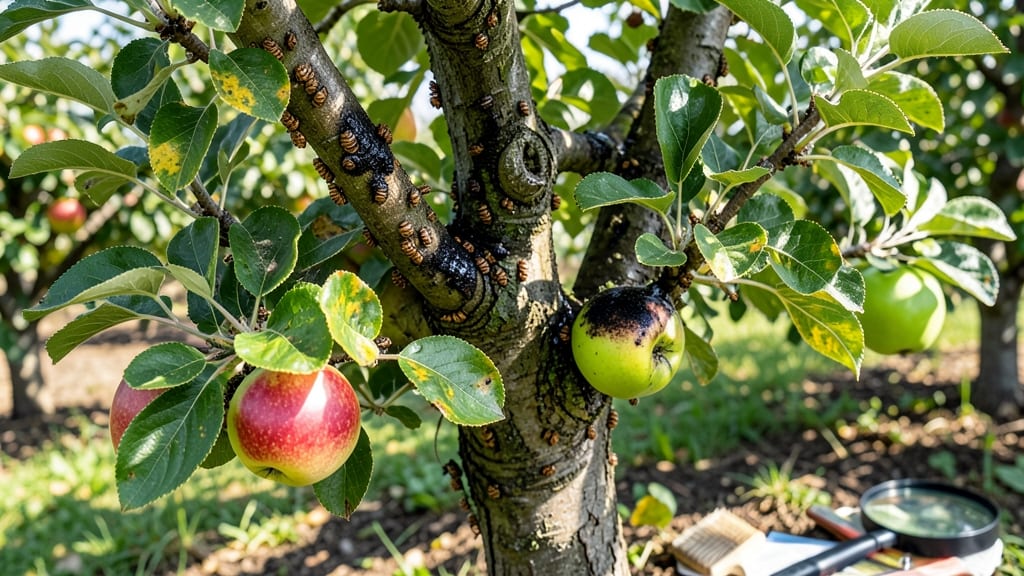
Apple scale insects turn your fruit into sticky, shriveled messes if you don’t act fast. 🍏 I’ve battled these stubborn pests on my apple trees, and the right organic spray can stop them in their tracks before they ruin your harvest.
These tiny armored bugs suck sap from branches and fruit, leaving behind a shiny, waxy residue that attracts soot mold. The key to beating them is timing—spray when they’re most vulnerable (late spring to early summer) with a mix of horticultural oil and neem oil for maximum impact.
Within 1-2 weeks of treatment, you’ll see new growth free of scale, and your fruit will stay firm and sweet. The secret is consistency: reapply every 2-3 weeks until harvest. Works for apple, pear, and citrus trees too. Here’s the exact spray recipe that saved my crop last year.
Root Causes Of Fruit Scaling
Understanding why your apples develop unsightly scales or waxy buildup is the first step toward effective control. These issues often stem from a combination of natural plant processes, environmental factors, and pest activity. Below, we break down the key reasons why your fruit may be scaling—and how to identify them.
Apples naturally produce a protective wax coating to retain moisture and prevent dehydration. However, certain conditions can trigger excessive wax secretion, leading to thick, flaky scales.
- Why it happens: Stress factors like drought, extreme heat, or sudden temperature shifts signal the fruit to produce more wax as a defense mechanism.
Some apple varieties (e.g., Granny Smith or Honeycrisp) are genetically prone to heavier wax buildup. - Visual clues: Look for glossy, uneven patches that later peel into thin, papery scales.
The scales may appear yellowish or brownish as they dry. - Actionable fix: Maintain consistent soil moisture (1–1.5 inches of water per week) and avoid late-season water stress. Prune trees to improve airflow, reducing heat-related stress.
Certain insects, like apple scales (Quadraspidiotus perniciosus) or aphids, feed on plant sap and disrupt normal wax production. Their saliva and honeydew can stimulate abnormal wax growth, creating sticky, crusty scales.
- Why it happens: Pests inject toxins into the fruit while feeding, triggering a defensive overreaction in the plant.
Their honeydew (a sugary waste product) also ferments on the fruit, creating a sticky medium that traps wax and debris. - Visual clues: Scales may appear sticky or gummy, with black sooty mold (a fungus fed by honeydew) growing underneath.
Infested areas often have tiny white or brown insect shells clinging to the fruit. - Actionable fix: - Inspect leaves and fruit early (use a magnifying glass for tiny crawlers). - Apply neem oil or horticultural oil (follow label rates) to smother eggs and nymphs. - Introduce beneficial insects like ladybugs or lacewings to control populations organically.
Some pathogens, such as apple scab (Venturia inaequalis) or powdery mildew (Podosphaera leucotricha), can mimic or worsen scaling by altering the fruit’s surface structure.
- Why it happens:
- Apple scab creates olive-green, velvety lesions that later turn scaly as the fungus matures.
- Powdery mildew forms white, powdery patches that can harden into crusty scales, especially in humid conditions (70–80°F with high moisture).
- Visual clues:
- Scab scales are often raised, cracked, or leathery with a fuzzy texture.
- Mildew scales are superficial and chalky, easily brushed off but recurring.
- Actionable fix:
- Preventative sprays: Use baking soda spray (1 tbsp baking soda + 1 tsp oil per gallon of water) or copper fungicide (for severe cases).
- Improve airflow by pruning dense branches and avoiding overhead watering.
- Remove and destroy infected fruit to prevent spore spread.
Nutritional deficiencies or excesses can lead to abnormal fruit development, including scaling. Specifically, calcium or boron deficiencies or over-fertilization with nitrogen disrupt cell wall formation.
- Why it happens: - Calcium deficiency causes bitter pit (internal breakdown) and external scaling as cells fail to regulate moisture. - Boron deficiency leads to cracked, scaly skin due to poor cell division. - Excess nitrogen promotes soft, thin skin that’s prone to tearing and scaling. - Visual clues: Scales may appear irregular, sunken, or accompanied by dimpling.
Leaves may show yellowing (chlorosis) or stunted growth. - Actionable fix: - Soil test to check pH and nutrient levels (ideal pH: 6.0–6.5). - Apply calcium (e.g., crushed eggshells or calcium nitrate) or boron (1–2 ppm in soil) during bloom. - Balance fertilizer: Use a low-nitrogen, high-potassium formula (e.g., 5-10-10) mid-season.
Mechanical injury or harsh conditions can damage the fruit’s epidermis, prompting the plant to lay down protective (but unsightly) wax layers.
- Why it happens:
- Hail, wind, or bird pecking tears the skin, triggering rapid wax regeneration.
- Sudden frost or sun scald (from intense afternoon sun) kills surface cells, causing the fruit to "seal" with thick scales.
- Visual clues: Scales often follow a pattern (e.g., sun-exposed sides) or appear raised and irregular.
- Actionable fix:
- Protect trees with frost cloth in late spring or shade cloth during peak sun hours.
- Use netting to deter birds and reduce physical damage.
- Hand-pollinate (if needed) to ensure even fruit set and reduce stress.
Quick Fixes for Scale Fruit Problems
Apple scale fruit infestations can feel overwhelming, but with the right approach, you can reclaim your orchard or garden—fast. Below, we break down practical, organic solutions tailored to the root cause of your issue, from early detection to long-term prevention.
No harsh chemicals here—just smart, eco-friendly fixes that work.
If your trees are already covered in sticky residue, white waxy spots, or weakened foliage, act now with these emergency steps:
🔥 Step 1: Prune and Clean (Immediate Action)
- Remove heavily infested branches (up to 2 feet beyond visible damage) with sterilized pruners (wipe with rubbing alcohol between cuts).
- Bag and dispose of pruned material in sealed trash—do not compost (eggs and nymphs can survive).
- Rake and remove fallen leaves, fruit, and debris from under trees (scales hide here!).
🍳 Step 2: Apply a Knockdown Spray (Organic Powerhouse)
Use one of these DIY or store-bought sprays for fast results: - Neem Oil Blast (1 tbsp neem oil + 1 tsp mild soap + 1 quart water).
Spray thoroughly (top/bottom of leaves, bark crevices). Reapply every 5–7 days for 3–4 weeks. - Horticultural Oil Spray (like JMS Stylet Oil or Safer® Crop Oil). Best in cool weather (below 85°F)—scales suffocate in the oil film. - Kaolin Clay Spray (e.g., Surround WP).
Creates a physical barrier that repels scales and disrupts their feeding. Reapply after rain.
👨🍳 Step 3: Introduce Natural Predators (Long-Term Defense)
Scales hate parasitoid wasps and ladybugs!
Order or attract them with: - Ladybugs (release 1 per square yard of infestation). - Parasitic wasps (like Aphytis melinus—check with local agricultural extensions for suppliers). - Praying mantises (they snack on scales too!).
🌡️ Climate Control: Break the Scale’s Cycle
Scales thrive in warm, dry conditions—disrupt their comfort zone:
- Mulch trees with wood chips or straw to retain moisture and deter crawlers.
- Drip irrigation (avoid overhead watering—scales hate humidity on their backs).
- Reflective mulch (aluminum foil or white plastic) confuses scales and reduces egg-laying.
✨ Proactive Spray Schedule (Before They Strike)
- Dormant Season (Winter): Apply horticultural oil to smother overwintering eggs.
- Spring (Before Bud Break): Spray kaolin clay to repel new crawlers.
- Summer (Every 2 Weeks): Rotate neem oil and soapy water spray (1 tsp castile soap per gallon).
🎯 Monitor & Maintain (Ongoing Vigilance)
- Inspect trees weekly (use a 10x magnifying glass to spot tiny crawlers).
- Sticky traps (yellow or blue) near trees catch adult scales before they multiply.
- Healthy trees = fewer pests! Boost immunity with:
- Compost tea (foliar spray).
- Fish emulsion (balanced nitrogen for growth).
| Problem | Cause | Fast Solution |
|---|---|---|
| Sticky Honeydew | Sap-sucking scales feeding | Spray soapy water (1 tsp dish soap + 1 gal water) to disrupt feeding. |
| Wilting Leaves | Root scales weakening roots | Drench soil with beneficial nematodes (Steinernema feltiae). |
| Black Sooty Mold | Fungal growth from honeydew | Clean trees with baking soda spray (1 tbsp + 1 quart water + soap). |
| New Crawlers (Tiny Bumps) | Eggs hatching in spring | Kaolin clay spray (creates a slippery barrier). |
Remember: Consistency is key! Scales are persistent, but you’re smarter—combine sprays, predators, and prevention for a scale-free orchard in no time. 🚀
Frequently asked questions
What do apple scale insects look like on fruit?
Apple scales appear as tiny, 1-3mm oval bumps that are usually white, gray, or brown with a waxy shell. They’re often clustered on branches, twigs, or fruit stems. Look for their honeydew residue (sticky substance) or black sooty mold growing underneath—this confirms an infestation.
Can I still eat fruit with apple scales?
Yes, but you’ll need to wash it thoroughly. Scales themselves don’t transmit disease, but their honeydew can attract mold. Scrub fruit with warm, soapy water (1 tsp dish soap per gallon) and rinse well. For heavy infestations, peel the skin if possible.
How often should I spray for apple scales?
For best results, spray every 5–7 days during active infestations (spring to early summer). Use a mix of neem oil and horticultural oil in rotation. Apply sprays in the early morning or late afternoon to avoid burning leaves in direct sun.
Will apple scales kill my tree?
Not immediately, but severe infestations can weaken trees over time. Heavy feeding reduces fruit quality and growth. If left unchecked, scales can lead to sooty mold (black fungus) and root decline. Act fast with organic sprays and pruning to protect your tree’s health.
Do apple scales affect other fruit trees?
Yes! Apple scales also target pear, peach, plum, and citrus trees. The same control methods work—use kaolin clay, neem oil, or beneficial insects like ladybugs. Always monitor multiple trees in your orchard, as scales spread easily through wind and wildlife.