
Propagation
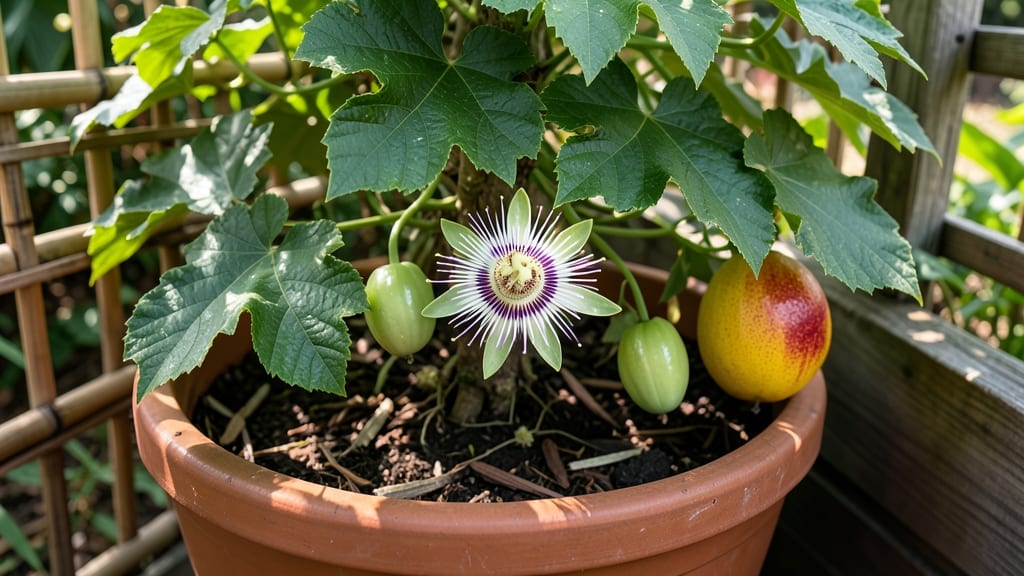
Understanding the stages of passion fruit growth is your roadmap to a bountiful harvest 🍈, from the first sprouts to the sweetest fruit.
Watching passion fruit vines transform from delicate seedlings into heavy-fruited powerhouses is one of gardening’s most rewarding experiences—but knowing exactly what to expect at each stage is the secret to maximizing your harvest.
In General (Tropical/Subtropical Regions), where these vines thrive in USDA zones 9a-11, the journey from seed to ripe fruit spans 6 distinct phases, each with its own care needs and telltale signs.
Below, I’ll walk you through every phase—from the first tender leaves to the moment your fruit is ready to pick—plus the 3 most common mistakes that keep gardeners from success.
6 Stages of passion fruit growth: visual guide with key characteristics
Growing passion fruit is like nurturing a tropical treasure—each stage reveals dramatic transformations from tiny seeds to vibrant, fragrant fruit. Understanding these 6 distinct growth phases helps you anticipate needs, troubleshoot issues, and double your harvest.
In USDA zones 9a-11, these stages unfold over 6-10 months, but timing varies with climate and variety.
Whether you're growing purple passion fruit (Passiflora edulis) or yellow varieties (Passiflora edulis flavicarpa), recognizing physical markers at each phase ensures you provide the right care. From the first seedling leaves to the final ripening, I’ll walk you through what to expect—and when to act.
In the seedling stage, your passion fruit starts as a fragile 1-3 inch sprout with 2-4 lobed leaves. This phase lasts 2-4 weeks and requires high humidity (70%+) to prevent wilting.
I use a clear plastic dome over seedlings until true leaves appear—this mimics the tropical conditions they crave.
Once your vine enters the vegetative stage, growth explodes! Expect 6-10 feet of vine per year with 3+ lobed leaves and tendrils for climbing. This is when you’ll need a trellis or arbor—passion fruit vines can reach 20-30 feet if unchecked.
I prune aggressively here to direct energy toward fruit production rather than excessive foliage.
The flowering stage is the most magical—3-inch exotic blooms with 5 petals and a fringed corona appear overnight. Flowers open at dawn and last just 24 hours, so hand-pollinate with a soft brush if your garden lacks bees. Purple varieties bloom first, followed by yellow types.
I fertilize with phosphorus-rich compost during this phase to encourage more flowers.
After pollination, you’ll spot fruit set as green marble-sized bumps form. This stage is critical—thin fruit if overcrowded (leave 1 fruit per 12 inches of vine) to prevent premature drop.
The fruit’s stem attachment weakens as it matures, which is your first clue it’s progressing. I tie heavy vines to the trellis here to avoid breakage.
During fruit development, passion fruit
How to identify ripe passion fruit: 5 non-negotiable signs (and 3 common mistakes)
Picking passion fruit at the perfect moment is an art—and a science. One wrong move, and you’ll end up with mealy, underripe fruit or overly soft, mushy ones that spoil faster. I’ve learned the hard way that color alone isn’t enough to judge ripeness.
You need to combine visual cues, texture tests, and even aroma checks to get it right every time.
For example, my first harvest had me reaching for fruit that looked yellow-orange but turned out to be woody and bland inside. That’s when I realized I needed a more systematic approach. Here’s how I now identify ripe passion fruit without fail—and what mistakes to avoid at all costs.
Ripe vs. Unripe Passion Fruit: Quick Comparison
- 🟠 Color: Deep purple (purple varieties) or golden yellow (yellow varieties)
- 🤏 Texture: Skin gives slightly when pressed (not mushy)
- 👃 Scent: Sweet, tropical aroma near the stem
- 🍈 Weight: Feels heavy for its size
- 🌱 Stem: Detaches easily from the vine
- 🟢 Color: Green or pale yellow
- ⚖️ Texture: Hard and firm (no give)
- 🤥 Scent: No sweet smell (may smell bland)
- 🍎 Weight: Light for its size
- 🪴 Stem: Tightly attached to vine
Let’s break down the 5 non-negotiable signs of ripe passion fruit. First, color is your first clue, but it varies by variety. Purple passion fruit turns a deep, eggplant-like hue, while yellow varieties develop a golden, almost citrusy shade.
I once mistook a half-ripe yellow fruit for ripe because it had a few yellow patches—don’t make that mistake!
The texture test is where most gardeners go wrong. A ripe passion fruit should yield slightly when you press it gently with your thumb. Think of it like a very soft tennis ball—not mushy, not hard.
Overripe fruit will feel squishy and may leak juice when pressed, while unripe fruit will feel rock-hard.
Next, trust your nose. A ripe passion fruit releases a sweet, tropical aroma near the stem—almost like a mix of pineapple and citrus. If you sniff a fruit and get nothing, it’s not ready.
Pro tip: Hold the fruit up to your nose and take a deep breath near the stem. This is the most reliable test for me, especially in humid climates where visual cues can be misleading.
Weight matters too. Ripe passion fruit feels surprisingly heavy for its size because the flesh is packed with juice. Hold two fruits—one ripe and one unripe—and you’ll notice the difference immediately.
I’ve found that yellow varieties tend to be slightly lighter at ripeness than purple ones, so adjust your expectations accordingly.
Finally, check the stem attachment. When a passion fruit is ripe, the stem will detach easily from the vine with a slight twist. If it resists, the fruit needs more time.
This is my favorite trick because it’s instant feedback. Just grab a cluster of fruit, give them a gentle twist, and the ripe ones will pop off like magic.
Now, let’s talk about the 3 common mistakes that lead to wasted harvests. First, ignoring the variety. Purple and yellow passion fruit ripen differently—purple ones often stay green longer, while yellow ones may turn pale if overripe. Second, harvesting in the heat.
Passion fruit softens quickly when exposed to sun, so pick them early in the morning or late afternoon. Third, assuming all fruit on a vine ripens at once. Vines produce fruit in waves, so check daily for consistency.