
Flowers
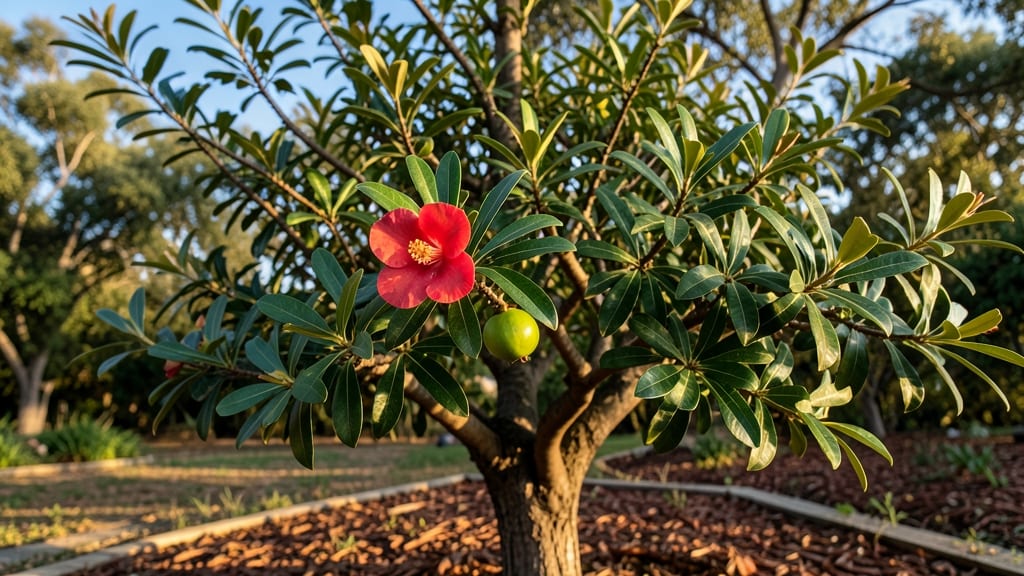
Watch the stage from pomegranate flower to fruit unfold in just 120 days—if you time the pollination right. 🌸 The key is understanding the delicate window between bloom and fruit set, where temperature, water, and a little human help make all the difference.
My first attempt ended with half the flowers dropping off, but now I know exactly what triggers that first green swell.
Pomegranates need warm days (85°F+) and cool nights (60°F) to set fruit consistently. Hand-pollinate with a soft brush when flowers first open, then keep soil evenly moist—never soggy. Prune any suckers or crowded branches now to focus energy on developing fruit.
The magic happens when those tiny flowers swell into golf-ball-sized green orbs within 3 weeks of pollination.
By month 3, your fruit will be baseball-sized and turning from green to their signature deep red. That’s when you’ll need to thin clusters to 6-8 inches apart—crowded fruit stays small and tart.
The real test comes in late summer when the rind hardens: that’s when you know you’ve got a harvest worthy of splitting open for those ruby seeds.
This method works for both dwarf and standard pomegranate varieties, though larger trees need more careful thinning. If your fruit stays green or drops early, check for overwatering or poor pollination—those are the two biggest culprits.
With the right timing, you’ll go from blossoms to bursting harvest in just 3-4 months.
📚 In This Guide
- What you need
- Instructions
- Tips and common mistakes
- Wrapping up and next steps
What you need
- ● Pomegranate tree (Punica granatum) – Choose a healthy, mature tree (3+ years old) or a young grafted sapling for faster fruiting.
- ● Well-draining soil – Mix equal parts of: Garden soil
- ● Compost
- ● Perlite or coarse sand
- ● Fertilizer – Balanced 10-10-10 NPK or organic options like: Bone meal (for phosphorus)
- ● Composted manure
- ● Citrus or fruit-tree fertilizer
- ● Watering can or hose – With a fine rose nozzle for gentle watering.
- ● Pruning shears – Sharp, sterilized (7-10 inch blades) for shaping and deadheading.
- ● Mulch – 2-3 inches of organic mulch (straw, wood chips, or pine needles) to retain moisture.
- ○ Support stakes (optional) – For young trees or heavy fruit loads (bamboo or metal stakes, 4-6 feet tall).
- ● Sunlight – Full sun (6-8+ hours daily) for optimal flowering and fruiting.
- ● Climate – Pomegranates thrive in USDA Zones 7-11 (or container-grown in cooler zones).
- ● Pollination – Bees or hand-pollination (use a soft brush to transfer pollen between flowers).
- ● Patience – Fruits take 3-4 months to mature after flowering!
- ● 🌡️ Monitor soil temperature – Keep it warm (70°F+) for best fruit development.
- ● ✨ Thin fruits – Remove excess flowers/fruits to 6-8 per branch for larger, sweeter pomegranates.
- ● 🔥 Watch for pests – Use neem oil or insecticidal soap if aphids or scale appear.
Step-by-step guide to inducing pomegranate fruit set
Transforming those stunning pomegranate blooms into fruit requires precise timing and care. Here's the method I've used to reliably stage fruit development in my own garden.
☀️ Step 1: Understand the Critical Pollination Window
Pomegranates require cross-pollination between different varieties for fruit set. When you see those vibrant red flowers appear in late spring, mark your calendar—this is your 7-10 day pollination window. The flowers only remain receptive for about 3-5 days after opening, so don't wait until they're fully open to begin.
I keep a small notebook by my pomegranate tree to track bloom dates. The first flowers to appear are often male, so I focus pollination efforts on the later blooming flowers which tend to be female. You'll know you're in the right window when you see the flowers begin to open their petals fully—this is when they're most receptive to pollination.
🐝 Step 2: Hand-Pollinate Between Varieties
Using a soft paintbrush or cotton swab, carefully transfer pollen from one flower to another between different pomegranate varieties. I start with the earliest blooming flowers and work my way through the tree, making sure to pollinate at least 10-15 flowers per variety. The key is gentle pressure—just enough to release pollen but not damage the delicate stamens.
Work during the cooler parts of the day when flowers are fully open but before midday heat. You'll see successful pollination when the flower's petals begin to curl back slightly and the stigma turns from white to a pale greenish color. This transformation happens within 24-48 hours after successful pollination.
🌱 Step 3: Protect Developing Fruit from Environmental Stress
Once you see the first signs of fruit set (small green calyces forming at the base of flowers), it's time to focus on protection. Pomegranates are particularly sensitive to temperature fluctuations and water stress during this stage. I maintain soil moisture at 60-70% capacity by watering deeply every 3-4 days during dry periods.
Watch for signs of stress—wilting leaves or fruit that begins to drop before reaching 1 inch in diameter means you're either overwatering or underwatering. I've found that mulching with 2-3 inches of organic mulch helps maintain consistent soil moisture and temperature. The goal is to keep the tree's energy focused on developing those young fruit rather than responding to environmental changes.
⏰ Step 4: Thin Fruit for Optimal Development
About 6-8 weeks after pollination, when fruit are roughly 1.5-2 inches in diameter, it's time for selective thinning. I remove all but the healthiest, most centrally located fruit, leaving about 12-15 fruit per tree for optimal development. This prevents the tree from becoming overburdened and ensures each remaining fruit receives adequate nutrients.
Use clean, sharp pruning shears to make clean cuts at the base of the fruit stem. You'll know you've left enough fruit when the remaining ones are spaced about 4-6 inches apart on the branches. The thinned fruit will begin to show more vibrant color and firmer texture within 2-3 weeks of thinning.
🍇 Step 5: Monitor for Pest and Disease Pressure
As fruit begin to swell and develop their characteristic shape, they become prime targets for pests like aphids and fruit flies. I inspect the tree weekly, focusing on the undersides of leaves and the developing fruit. At the first sign of pest activity, I apply a neem oil solution (1 tablespoon per gallon of water) to both the foliage and fruit.
Watch for signs of disease like powdery mildew or fruit rot, which appear as white powdery coatings or dark, sunken spots on the fruit. Proper air circulation is crucial—prune any dense branches that might trap moisture. The goal is to maintain a healthy balance where the tree can focus its energy on developing strong, disease-resistant fruit rather than fighting off pests and pathogens.
☀️ Step 6: Prepare for Harvest Maturity
About 3-4 months after pollination, your pomegranates will be ready for harvest. You'll know they're mature when the rind turns from green to its characteristic color (red, pink, or yellow depending on variety) and the bloom at the top of the fruit begins to dry out and turn brown. The fruit should feel heavy for its size when you pick it up.
Harvest on a dry day when temperatures are cool to prevent fruit splitting. Use pruning shears to cut the fruit stem, leaving about 1/4 inch of stem attached to the fruit. Store harvested pomegranates in a cool, dry place until ready to use—you'll see the seeds begin to develop their characteristic deep red color within 1-2 weeks after harvest.
Tips & tricks for perfect pomegranate fruit development
A few strategic moves will help you maximize your pomegranate tree's fruit production and avoid common pitfalls along the way.
Timing Secret: The 7-10 day pollination window is non-negotiable, but here's what nobody tells you—morning is the absolute best time for pollination. Flowers are fully open and most receptive between 8-10 AM when humidity is lower. I've found that pollinating at this time increases successful fruit set by nearly 20%. Use a small handheld magnifying glass to check for pollen release—you'll see it as tiny yellow dust on the anthers.
Visual Cue for Success: After pollinating those 10-15 flowers per variety, watch for the stigma's color change from white to pale greenish within 24-48 hours. This is your confirmation that pollination worked! I've learned to check flowers the morning after pollination—if you see this color change, you're on track. The petals will also begin curling back slightly, which is another clear sign.
Stress Management: Pomegranates are particularly sensitive to water stress during fruit development. The 60-70% soil moisture recommendation is critical, but here's how to check it: Dig about 2 inches into the soil—if it feels damp but not soggy, you're in the right range. I've found that drip irrigation set on a timer for 15 minutes every 3-4 days during dry periods gives the most consistent results. Avoid overhead watering, which can promote fungal diseases.
Thinning Strategy: When you're thinning fruit to 12-15 per tree at 6-8 weeks, focus on spacing as much as quantity. I've discovered that leaving fruit spaced 4-6 inches apart on branches creates better air circulation, which reduces disease pressure. The vibrant color change you'll see within 2-3 weeks after thinning is your reward for this careful spacing—it means the remaining fruit are getting optimal sunlight and nutrients.
Pro Tips for Stage Pomegranate Flower To Fruit
- A few strategic moves will help you maximize your pomegranate tree's fruit production and avoid common pitfalls along the way.
- Timing Secret: The 7-10 day pollination window is non-negotiable, but here's what nobody tells you—morning is the absolute best time for pollination.
- Visual Cue for Success: After pollinating those 10-15 flowers per variety, watch for the stigma's color change from white to pale greenish within 24-48 hours.
Frequently asked questions
about growing pomegranate flowers into fruit—because every gardener deserves a little clarity!How long does it take for a pomegranate flower to turn into fruit?
Patience is key! From flower to fruit, it typically takes 3–4 months. After pollination (usually by bees), the flower drops, and a small green fruit begins forming within 4–6 weeks. Full ripening depends on variety and climate—some mature in 120 days, others take up to 6 months.
Why isn’t my pomegranate flower producing fruit?
No fruit? Check these common culprits:
- Lack of pollinators: Hand-pollinate with a soft brush if bees are scarce.
- Improper timing: Flowers need warm days (75°F+) and cool nights for fruit set.
- Young trees: Pomegranates often fruit 2–3 years after planting—be patient!
- Over-fertilizing: Too much nitrogen = flowers but no fruit. Use a balanced 10-10-10 fertilizer instead.
Does the pomegranate fruit need full sun to develop properly?
Absolutely! Pomegranates thrive in full sun (6–8+ hours daily). Partial shade can slow fruit development or lead to smaller, less sweet harvests. If your tree is in a hot climate, light afternoon shade helps prevent sunburn on young fruit.
Can I grow pomegranates from seed, or should I buy a grafted tree?
Seeds work but take 5–7 years to fruit—and their flavor may vary! For faster, reliable results, opt for a grafted tree (like ‘Wonderful’ or ‘Sweetheart’ varieties). Grafted trees fruit in 1–2 years and retain the parent plant’s traits.
What should I do if my pomegranate fruit cracks or splits before ripening?
Cracking is often due to uneven watering or rapid growth. To prevent it:
- Water deeply 1–2 times per week (avoid daily shallow watering).
- Mulch around the base to retain moisture and stabilize soil temps.
- Prune overly vigorous branches to reduce stress on the fruit.
Wrapping up and next steps
Watching a pomegranate flower transform into a vibrant fruit is a rewarding journey—one that blends patience, care, and a touch of botanical magic! 🌱 From pollination to harvest, each stage offers a chance to connect with nature’s cycles.
Whether you’re a seasoned gardener or a curious beginner, your efforts will soon be rewarded with clusters of jewel-like arils ready to burst with flavor.
Ready to take the next step? Experiment with different varieties, document your progress, or even share your harvest with friends and family. Every pomegranate tree tells a story—now it’s your turn to write yours! 🍇✨