
Pruning
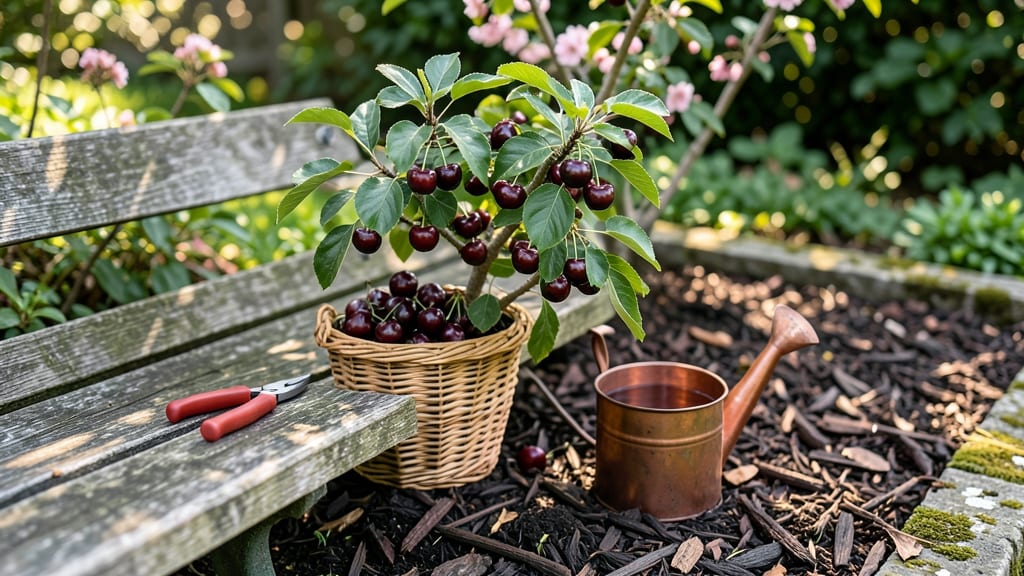
Pruning your small cherry-like fruit tree transforms it from a wild shrub into a neat, productive centerpiece that fits any yard. 🌿 I learned the hard way—skipping pruning turned my compact 'Stella' cherry into a tangled mess with fewer fruits.
The right cuts now give me sweet, abundant cherries while keeping the tree small enough for even tiny patios.
Start with the basics: 3-4 main branches form your tree's skeleton, and you'll shape it in late winter before buds swell. Use sharp pruners to make clean cuts just above outward-facing buds—this encourages new growth where you want it.
My tree now produces more fruit than it did before pruning, and the branches stay strong enough to support the weight.
You'll see the difference within a season: branches fill out evenly, sunlight reaches all fruit, and pests have fewer hiding spots. The key is consistency—10-15 minutes every February prevents the winter's weight from snapping branches and keeps the tree at your ideal height.
Works for dwarf varieties like 'Stella', 'Compact Stella', or 'Morello', but avoid pruning too late in spring—you'll risk losing next year's blossoms. Even urban gardeners with just a balcony can grow these beauties with the right care.
📚 In This Guide
- What you need
- Instructions
- Tips and common mistakes
- Wrapping up and next steps
What you need
- ● Pruning shears: Bypass pruners (sharp, clean, and disinfected with rubbing alcohol or bleach solution).
- ● Loppers: For thicker branches (1.5"–2" cutting capacity).
- ● Hand saw: Pruning saw with a fine-tooth blade for stubborn branches.
- ● Gloves: Heavy-duty, cut-resistant gloves (e.g., leather or Kevlar).
- ● Disinfectant: 1 part bleach to 9 parts water (for sterilizing tools between cuts).
- ○ Pruning sealant: Optional but helpful for large wounds (e.g., tree wound dressing).
- ● Ladder or stool: Sturdy, non-slip (height depends on tree size).
- ● Bucket or bag: For collecting pruned branches (5+ gallon size).
- ● Extension pole saw: For high branches (if ladder access is limited).
- ● Tree pruning spray: Natural fungicide (e.g., copper-based) to prevent disease.
- ● Marking twine or tape: To flag branches for removal (helpful for complex pruning).
- ● Safety glasses: Protects eyes from debris (especially when using a saw).
Step-by-Step guide to pruning dwarf cherry-like fruit trees
Dwarf varieties need precision pruning to stay compact and productive—here’s how I keep mine thriving.
✂️ Step 1: Time Your Pruning for Optimal Growth
Prune your dwarf cherry-like tree during its dormant season, typically in late winter or early spring before buds swell. This timing ensures you’re not removing growth that could support next year’s fruit production. I wait until the threat of frost has passed but before new leaves emerge—usually February to March in most climates.
If you must prune later, avoid heavy cuts after June to prevent new growth from struggling to harden off before winter. Light shaping trims can be done in summer, but keep them minimal to avoid stressing the tree.
🌿 Step 2: Assess the Tree’s Structure and Remove Dead Wood
Start by examining the tree for dead, diseased, or crossing branches. Dead wood is easy to spot—it’s brittle, dark, or lacks bark. Use sharp pruning shears to make clean cuts just outside the branch collar (the swollen area where the branch meets the trunk). I always sanitize my tools with rubbing alcohol between cuts to prevent spreading disease.
Next, identify branches that rub against each other or grow inward. These compete for sunlight and can create wounds. Remove the smaller of the two branches at its base to open the canopy for better airflow and light penetration.
✂️ Step 3: Shape for Compact Growth and Light Penetration
Dwarf trees benefit from an open-center shape, where the center remains slightly open to allow light to reach inner branches. Focus on removing branches that grow straight up or downward—these rarely produce fruit and create a dense, unmanageable canopy. Aim to keep the tree’s width slightly wider than its height to encourage a balanced, bushy form.
For lateral branches, cut back to a bud or side shoot facing outward. This encourages growth in the right direction and prevents the tree from becoming top-heavy. Avoid leaving stubs—always cut just above a bud or branch collar to promote healing.
🌱 Step 4: Thin Out Overcrowded Branches for Fruit Production
Thinning is key to fruit quality. Remove 1 in 4 to 1 in 5 branches that are too close together, especially those growing toward the center. This reduces competition for nutrients and improves air circulation, which is critical for preventing fungal diseases like brown rot.
Look for branches with fruit spurs (short, stubby branches where cherries form). Preserve these while removing longer, non-fruiting shoots. If a branch has no fruit potential, cut it back to a strong lateral branch or the trunk.
⏰ Step 5: Monitor and Maintain Growth Throughout the Season
After pruning, keep an eye on the tree’s recovery. New growth should appear within 4-6 weeks if conditions are right. Water deeply after pruning to help the tree recover, especially if spring is dry. Mulch around the base with 2-3 inches of organic material to retain moisture and regulate soil temperature.
If you notice suckers (shoots growing from the base or roots), remove them promptly. These divert energy from the main tree. Light trims can be done in summer to adjust shape, but avoid heavy cuts—let the tree focus on fruiting rather than regrowing lost branches.
Tips & tricks for perfectly pruned dwarf fruit trees
Keeping your dwarf cherry-like tree thriving requires precision—here’s how to avoid common pitfalls and elevate your pruning game.
Timing is Everything: The late winter to early spring window (February-March) is non-negotiable for dormant-season pruning. I’ve learned this the hard way after seeing buds swell on branches I pruned too early. Watch for the first signs of bud swelling—this is your cue to stop cutting. For summer trims, remember the June cutoff: any heavy pruning after this risks stressing the tree before winter hardiness sets in.
The Branch Collar Technique: When removing branches in Step 2, never leave stubs—always cut just outside the branch collar. This swollen area contains healing cells that protect the tree from disease. I use a small paint mark to identify collars on tricky branches before making cuts. For crossing branches, remove the smaller one at its base to maintain the tree’s natural shape while improving airflow.
Fruit Quality Starts with Thinning: The 1 in 4 to 1 in 5 branch removal ratio in Step 4 might seem drastic, but it’s what transforms a dense tangle into a productive orchard. Focus on removing branches growing toward the center first—they’ll compete with fruit spurs for sunlight and nutrients. I mark branches with tape before cutting to visualize the open-center shape we’re aiming for.
Post-Pruning Care Makes All the Difference: After your work, the tree needs recovery support. Water deeply within 48 hours of pruning to replenish lost moisture, then apply 2-3 inches of organic mulch to regulate soil temperature. I’ve seen trees recover faster when given this immediate post-pruning care, especially in dry springs. Monitor for suckers—those aggressive root shoots can drain energy from your fruit production.
Pro Tips for Small Cherry Like Fruit Tree
- Keeping your dwarf cherry-like tree thriving requires precision—here’s how to avoid common pitfalls and elevate your pruning game.
- Timing is Everything: The late winter to early spring window (February-March) is non-negotiable for dormant-season pruning.
- The Branch Collar Technique: When removing branches in Step 2, never leave stubs—always cut just outside the branch collar.
Frequently asked questions
Got questions about growing and pruning your small cherry-like fruit tree? You’re not alone! Here are some of the most common queries—and their straightforward answers—to help you keep your dwarf tree thriving.
What’s the best time of year to prune a dwarf cherry-like fruit tree?
Prune your tree during late winter or early spring (before buds swell) to avoid stressing the plant. This timing encourages strong new growth and better fruit production. Avoid heavy pruning in fall, as it can leave wounds vulnerable to disease. Light shaping in summer is fine, but focus on major cuts in dormancy.
How much can I trim off without harming the tree?
For dwarf varieties, aim to remove no more than 25-30% of the canopy per year. This prevents shock and ensures the tree retains enough leaves for photosynthesis. Prioritize dead, crossing, or overcrowded branches first. If your tree is young, you can be slightly more aggressive to establish shape.
How long does it take for a pruned dwarf tree to recover?
Most dwarf cherry-like trees show noticeable recovery within 4-6 weeks after pruning, with new shoots emerging. Full structural strength returns in 1-2 growing seasons, especially if pruned correctly. Monitor for signs of stress (yellowing leaves, slow regrowth) and adjust care as needed.
Can I grow a dwarf cherry-like tree in a container?
Many dwarf varieties thrive in containers with well-draining soil and a pot at least 18-24 inches wide. Use a mix of potting soil and compost, and ensure the container has drainage holes. Repot every 2-3 years to refresh nutrients. Just remember: container-grown trees may need more frequent watering and winter protection in cold climates.
Why are my tree’s leaves curling or dropping after pruning?
Curling or dropping leaves often signal stress from over-pruning, pests, or disease. Check for:
- Spider mites or aphids (use neem oil or insecticidal soap).
- Fungal infections (prune infected branches immediately and sterilize tools).
- Underwatering (dwarf trees in containers dry out faster).
Wrapping up and next steps
Growing a small cherry-like fruit tree in a compact space is totally doable—with the right pruning techniques, you’ll enjoy luscious fruit and a tidy garden! Remember, consistency is key: regular trimming, proper tools, and seasonal care will keep your dwarf tree thriving.
Whether you’re a beginner or a seasoned gardener, these tips will help you master the art of pruning for bountiful, manageable harvests.
Ready to take the next step? Start small—try pruning just one branch this weekend, then gradually expand your skills. Before you know it, you’ll be the proud owner of a fruit-bearing masterpiece that fits perfectly in your backyard (or even a pot!). 🌱✂️